Posts

Showing posts with the label NFL

Could Super Bowl 59 Influence Your 401(k)’s Future?

Image
   Will your 401(k) be chopped by the Chiefs — or soar with the Eagles? That’s what adherents of the so-called Super Bowl Indicator[1] would likely conclude, after all. It’s a “theory” that when a team from the old National Football League wins the Super Bowl, the S&P 500 will rise, and when a team from the old American Football League prevails, stock prices will fall. It’s a “theory” that has been found to be correct nearly 80% of the time — for 41 of the 58 Super Bowls, in fact. Not that it hasn’t been tackled short of the goal line. Portfolio Prognostications One needs to look back no further than last year’s victory by the (original AFL) Kansas City Chiefs that, according to the Indicator, should have predicated a portfolio predicament for the S&P 500 — but wound up with a 23% gain for the year. Or the year before that when those (same) Kansas City Chiefs prevailed over the original NFL 49ers — but the S&P 500 still rose 25%. On the other hand, the year before ...
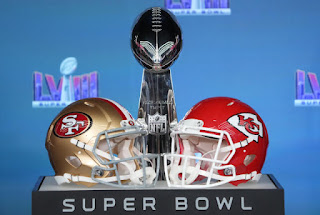
Could Your 401(k)’s Fate Rest on the Winner of Super Bowl 58?

Image
Will your 401(k) be chopped by the Chiefs—or find gold with the 49ers? That’s what adherents of the so-called Super Bowl Indicator [1] would likely conclude, after all. It’s a “theory” that when a team from the old National Football League wins the Super Bowl, the S&P 500 will rise, and when a team from the old American Football League prevails, stock prices will fall. It’s a “theory” that has been found to be correct nearly 80% of the time—for 41 of the 57 Super Bowls, in fact. Not that it hasn’t been tackled short of the goal line.  Portfolio Prognostications One needs to look back no further than last year’s victory by the (original AFL) Kansas City Chiefs that, according to the Indicator, should have predicted a portfolio predicament for the S&P 500—but wound up with a 25% gain for the year. Or the year before that when the victory by the Los Angeles Rams “should” have been a portent of good times, only to see the S&P 500 slump more than 19% for its ...

Could Super Bowl LVII Flummox Your 401(k)?

Image
Will your 401(k) be chipped by the Chiefs—or soar with the Eagles? That’s what adherents of the so-called Super Bowl Indicator [1] would likely conclude, after all. It’s a “theory” that when a team from the old National Football League wins the Super Bowl, the S&P 500 will rise, and when a team from the old American Football League prevails, stock prices will fall. It’s a “theory” that has been found to be correct nearly 80% of the time—for 41 of the 56 Super Bowls, in fact. Not that it hasn’t had its shortcomings. One need to look back no further than last year’s victory by the Los Angeles Rams that should have been a portent of good times, only to see the S&P 500 slump more than 19% for its biggest loss since 2008.  And while the previous year’s victory by the NFC’s Tampa Bay Buccaneers bolstered the premise behind the “theory,” the year before that the win by the AFC’s (and original AFL) Kansas City Chiefs over the then-NFC Champion San Francisco 49ers...

Your Retirement Might Have a Stake in the Super Bowl’s Outcome…

Image
Will your 401(k) be bitten by the Bengals—or rally with the Rams? That’s what adherents of the so-called Super Bowl Indicator [i]  would likely conclude, after all. It’s a “theory” that when a team from the old National Football League wins the Super Bowl, the S&P 500 will rise, and when a team from the old American Football League prevails, stock prices will fall. It’s a “theory” that has been found to be correct nearly 80% of the time—for 41 of the 55 Super Bowls, in fact. And sure enough, last year’s win by the NFC’s Tampa Bay Buccaneers provided support for that notion, as the S&P 500 gained ground.   Not that it hasn’t had its shortcomings. One need look back no further than the previous year’s win by the AFC’s (and original AFL) Kansas City Chiefs over the then-NFC Champion San Francisco 49ers to refute the applicability (or did your 401(k) miss that 18.4% rise in the S&P 500?). Or how about the year before that when the AFC’s New England Pat...

Stocks Swayed by the Super Bowl?

Image
Will your portfolio soar with the Seahawks, or get pummeled by the Patriots? That’s what adherents of the so-called Super Bowl Theory would likely predict. The Super Bowl Theory holds that when a team from the old National Football League wins the Super Bowl, the S&P 500 will rise, whereas when a team from the old American Football League prevails, stock prices will fall. It’s a “theory” that has been found to be correct nearly 80% of the time; for 38 of the 48 Super Bowls, in fact. It certainly “worked” in 2014, when these same Seattle Seahawks bumped the Broncos, a legacy AFL team, and in 2013, when a dramatic fourth quarter comeback rescued a victory by the Baltimore Ravens who, though representing the AFC, are technically a legacy NFL team via their Cleveland Browns roots. Admittedly, that the markets fared well in 2013 was hardly a true test of the Super Bowl Theory since, as it turned out, both teams in Super Bowl XLVII — the Ravens and the San Francisco 49ers — were ...

Stocks Swayed by the Super Bowl?

Image
Will your portfolio soar with the Seahawks, or get kicked by the Broncos?   That’s what adherents of the so-called Super Bowl Theory—which maintains that when a team from the old National Football League wins the Super Bowl, the S&P 500 will rise, whereas should a team from the old American Football League prevail, stock prices would be expected to fall—would likely predict. Sure enough, last year’s victory by the Baltimore Ravens (who, it might be recalled, are really a legacy NFL team via their Cleveland Brown roots) coincided with a 29.6 percent gain for the S&P 500.   Moreover, the indicator has been correct 37 of the last 47 years, or nearly 79 percent of the time. Not only has the Super Bowl Indicator consistently predicted the direction of the market, but returns when the old NFL wins and when the AFL wins are dramatically different, according to a recent report in the Wall Street Journal , which notes that the Dow has averaged a healthy 11.6 percent...