Posts

Showing posts with the label tenure

Things That the ‘Common Wisdom’ About Millennials Gets Wrong

Image
To judge by the headlines, if there’s anybody in more trouble when it comes to retirement planning than Boomers, it’s Millennials. But are they really? Consider this: Millennials are saving for retirement – likely earlier, and at higher rates than you did when you were their age. I’ve seen a number of surveys that suggest that Millennials are, in fact, saving earlier – and saving at higher rates than their Boomer parents. A recent Natixis survey says that on average, Millennials first enrolled in a retirement savings plan at age 23, while Boomers didn’t until 31. Another – this one by Ramsey Solutions – finds 58% of Millennials are actively saving for retirement, and they began saving at an average age of 23. Consider also that, of the Millennials who are actively saving, 39% set aside up to 9% of their income for retirement — $5,000 of the average annual Millennial household income of $55,200. This higher and earlier rate of saving exists despite high levels of college debt...
6 Things Boomers Need to Know About Saving for Retirement

Image
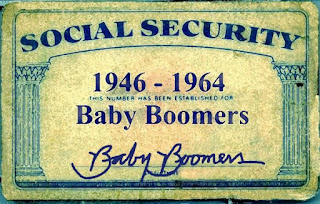
Several weeks back, I wrote a column entitled, “ 5 Things Millennials Need to Know About Saving for Retirement .” But what about those at the brink of retirement? Retirement seems close — perhaps too close for the comfort of Boomers, some of whom have already begun cycling into retirement. In fact, the youngest element of this cohort (born in 1964) is now already 51, and it’s said that 10,000 Boomers roll into retirement every day. That said, whether you’ve been saving or not, or not saving enough — here are six things Boomers need to know about saving for retirement. 1. Social Security won’t be as much as you think it will be. When you were your kids’ age(s), you too were likely disdainful about the long-term prospects for Social Security (and hey, your kids weren’t around for the  real  funding crisis back in the early 1980s!). That said, you’re not only close enough to collecting; many of you are probably in the age group where when politicians talk about making c...

3 Pervasive Retirement Industry Myths

Image
Ours is a complex and complicated business — constantly changing and evolving. And yet, there are key fallacies about today’s retirement system — and how it compares with what used to be — that will not go away. Back in the good old days being “covered” by a pension plan meant you would actually get a full pension benefit. We’re routinely told that “once upon a time” individuals used to work for a single employer their entire career, and that most of those workers were “covered by a workplace retirement plan, frequently a defined benefit pension.” While defined benefit plans were certainly more common a generation ago, they were not as ubiquitous as is often assumed (see here ).   Moreover, while some workers did spend their working career at a single employer (and some still do, particularly in the public sector), the data show that for the very most part we have long been a nation of relatively short-tenured workers. How short? Well, the median job tenure in the United St...

Use It or “Lose” It

Image
At the time that EBRI was founded 35 years ago, I was about six months into a job doing pension accountings for a large Midwestern bank. At the time, I didn’t realize I’d still be working with those kinds of issues in 2013—in fairness, like most recent college graduates, I wasn’t really thinking about anything that was 35 years in the future. I had a job, a car that ran, and a reasonably nice stereo in an apartment in the Chicago suburbs that didn’t have much else. My employer had a nice defined benefit (DB) pension, and an extraordinarily generous thrift-savings plan, but those weren’t big considerations at the time. I had to wait a year to participate in the latter (pretty much standard at the time), and as for the former—well, you know how exciting pension accruals are to 22-year-olds (even those who get paid to do pension accountings). Turns out, I worked there for nearly a decade, and walked away with a pretty nice nest egg in that thrift savings plan (that by then had beco...

Tenure, Tracked

Image
Sooner or later as a parent you’ll be told—as you doubtless you told YOUR parents—that “that’s not the way things are now!” It’s a potent retort to whatever social more is at issue because, whether it involves a choice in dress, curfew, or even resumé preparation, our perspectives are often shaped (and sometimes distorted) by our recollection of the way things were for us at comparable points in time. Or, as we must sometimes admit, “the way things used to be.” When it comes to things like working careers, there is a widespread assumption that past generations worked for a single employer for all, or most of his/her working years, and then retired with a pension and a gold watch. In contrast, current American workers are believed to change jobs (much) more frequently. In fact, many champion the defined contribution plan design as a better “fit” for today’s workforce, which—certainly in the private sector—is seen as lacking the kind of tenure necessary to accrue sufficient benefits un...

The Good Old Days

Image
There’s been a lot of talk lately about the need to fix the “broken” 401(k) plan.   Some say it disproportionately benefits higher-paid workers, some claim it can’t provide a level of retirement income sufficient to meet lower-income needs, and still others maintain it can’t provide that level of security for anyone .   And, as often as not, those sentiments arise as part of a discussion where folks wistfully talk about the “good old days” when everybody had a defined benefit pension, and people didn’t have to worry about saving for retirement.   Only problem is—those “good old days” never really existed, nor were they as good as we “remember” them. Consider that only a quarter of those age 65 or older had pension income in 1975, the year after ERISA was signed into law.   The highest level ever was the early 1990s, when fewer than   4 in 10 (both public- and private-sector workers) reported pension income, according to EBRI tabulations of the 1976–2011 Cu...