Posts

Showing posts with the label Rothification

Polling "Places"

Image
If you have turned on a TV, walked by a radio, driven down a residential street, or answered a phone (or more likely let it go unanswered) in the past month, you will, of course, be aware that our nation will officially go to the polls today.  Of course, our nation has been “going” to the polls—or at least casting votes—for several weeks now. And while some states (and voters) have done so in elections past, a combination of factors (not the least, concerns about the current pandemic) means that the process of voting, like so much of our lives this year, is going to be “unprecedented,” both in terms of the breadth and volume of votes cast prior to election “day”—and perhaps on that day itself. And yes, it’s been a particularly nasty—one feels compelled to say “unprecedented”—election cycle.  In that regard, I recently came across this:  “Certainly, politics has never been a pretty business, but I doubt that I would get much argument in stating that this p...

'Tacts' Treatment

Image
Roth 401(k)s are more prevalent—and popular—than ever. But is that good—or bad—for retirement? A recent op-ed [i]  in  The Wall Street Journal  explored the potential implications— “What ‘Rothifying’ 401(k)s Would Mean for Retirees” — (subscription required), though the focus is on tax policy as well. You’ll remember that so-called “Rothification”—essentially the elimination of the pre-tax treatment currently accorded 401(k) contributions—was quite the controversial issue back in 2017 when the Republican-controlled House of Representatives was looking for ways to raise revenue to help pay for tax cuts. [ii]  And while it’s not been an active focus of late, it seems likely to resurface as the nation’s budget deficit widens, and the field of 2020 presidential aspirants seem determined to find ways to spend more or, in the case of the incumbent, collect less in taxes. ‘Out’ Comes  As for the WSJ treatment, I’ll spare you the short read (longer ...

5 Key Industry Trends You May Have Missed

Image
The Plan Sponsor Council of America recently released its 60th Annual Survey of Profit-Sharing and 401(k) Plans , documenting increases in participation, deferral rates, target-date funds, automatic enrollment and advisor hiring, among other key trends. Here are five key trends highlighted in the survey that you may have missed. Automatic enrollment is still (mostly) a large plan thing. One of the most celebrated plan design features of the 401(k) era is automatic enrollment. Nearly as old as the 401(k) itself, once upon a time (when it wasn’t as popular) it was called a “negative election.” Regardless of the name, the concept has been extraordinarily effective at not only getting, but keeping, workers saving via their workplace retirement plans. However, adoption of the design, after a surge in the wake of the passage of the Pension Protection Act of 2006, now seems to have plateaued. A decade ago, only about a third (35.6%) of respondents to the PSCA su...

Tax Reform – ‘Tricks’ or Treat?

Image
A few weeks back, my wife and I went to see the updated version of It . Now, I’ve been a fan of King’s work ever since a friend shared a copy of Salem’s Lot with me, though his work doesn’t always translate as well to the big screen. “It” is a malevolent entity that emerges about once every 27 years to feed, during which period it takes on various shapes designed to lure its prey – generally children, and then it returns to a hibernation of sorts. “It”’s most notorious incarnation is, of course, Pennywise the Dancing Clown (the lovely visage below). Ironically, tax reform too seems to be a once-in-a-generational thing. It’s been 30 years since the Tax Reform of 1986 cut tax rates 1 – and cut into retirement plan saving and formation with the creation of the 402(g) limit (and its tepid COLA pace), not to mention the cost and timing issues associated with multiple iterations of the nondiscrimination testing that often produced problematic refunds for the highly compensated group. T...

Foreseeable Consequences

Image
It is all too common in human affairs to make choices that have “unforeseeable consequences.” And then there are those situations where people should have known better. Like the current rumors about capping employee pre-tax contributions at $2,400. Having the opportunity to put off paying taxes is something that most Americans relish — even those whose tax bracket means they really don’t wind up owing taxes. While there’s plenty of evidence to suggest that it is the employer match, rather than the (temporary) tax deduction that influences worker savings, most are happy to get both. Indeed, the ability to defer paying taxes on pay that you set aside for retirement is part and parcel of the 401(k) (though cash or deferred arrangements predated that change to the Internal Revenue Code). Enter the talk about “Rothification” — the limit, or perhaps even complete elimination, of pre-tax contributions to 401(k)s. While a definitive notion of how participants would respond remains elusive...

Hypothetically Speaking

Image
A new academic study offers some insights on taxpayer preferences for pre-tax versus Roth savings – at least in certain conditions. The study – which carries the somewhat unwieldy title “The Relative Effects of Economic and Non-Economic Factors on Taxpayers’ Preferences Between Front-Loaded and Back-Loaded Retirement Savings Plans” – takes a look at the various factors influencing preferences for paying taxes “up front” on retirement savings (this is termed “back-loaded by the researchers, in that the tax advantages come in retirement) versus pre-tax treatment as with a 401(k). Writ large, and pretty much across the board, the researchers – Andrew D. Cuccia, associate professor and a Grant Thornton faculty fellow at the University of Oklahoma, and Marcus M. Doxey and Shane R. Stinson, both assistant professors at the University of Alabama – found that individuals preferred Roth (back-loaded) – even in circumstances in which they thought a rational determination would favor a pre-t...

Pay Me Now, or Pay Me Later

Image
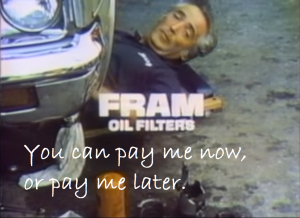
Many years ago, there was a commercial (for car oil filters, as I recall) that cautioned, “You can pay me now, or pay me later” – in other words, spend a little now on an oil filter, or pay lots later on to fix the damage done by not doing so. It’s a mantra that I’ve heard employed to encourage retirement savings – but these days it might have a new twist. We now have a second survey of plan sponsors expressing concern about the impact that switch from the current pre-tax preferences accorded 401(k)s would have on participation. That member survey by the Committee on Investment of Employee Benefit Assets (CIEBA) found that 78% of the 61 member respondents believed that a switch to an all-Roth system would negatively affect participation rates in their 401(k) plans. In that sense, it roughly mirrored the findings of a survey by the Plan Sponsor Council of America (PSCA) which found that more than three-quarters of the 443 employer respondents to the survey said they stron...