Posts

Showing posts with the label tax reform

'Puzzle' Pieces

Image
Academics have long agonized over something they call the annuitization puzzle. Simply stated, the thing academics can’t quite understand is the reluctance of American workers to embrace annuities as a distribution option for their retirement savings. Some of that is because they assume workers are “rational” when it comes to complex financial decisions, specifically because “rational choice theory” suggests that at the onset of retirement, individuals will be drawn to annuities because they provide a steady stream of income and address the risk of outliving their income. Compounding, if not contributing to that belief, are surveys – albeit surveys generally published , if not conducted by, annuity providers (or supporters) that consistently find support from participants for the notion of reporting benefits as a monthly payout sum, if not the notion of providing a retirement income option. And yet, despite those assertions, in the “real” world where participant...

Tax Reform – ‘Tricks’ or Treat?

Image
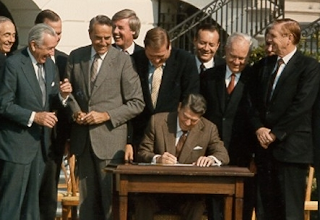
A few weeks back, my wife and I went to see the updated version of It . Now, I’ve been a fan of King’s work ever since a friend shared a copy of Salem’s Lot with me, though his work doesn’t always translate as well to the big screen. “It” is a malevolent entity that emerges about once every 27 years to feed, during which period it takes on various shapes designed to lure its prey – generally children, and then it returns to a hibernation of sorts. “It”’s most notorious incarnation is, of course, Pennywise the Dancing Clown (the lovely visage below). Ironically, tax reform too seems to be a once-in-a-generational thing. It’s been 30 years since the Tax Reform of 1986 cut tax rates 1 – and cut into retirement plan saving and formation with the creation of the 402(g) limit (and its tepid COLA pace), not to mention the cost and timing issues associated with multiple iterations of the nondiscrimination testing that often produced problematic refunds for the highly compensated group. T...

Foreseeable Consequences

Image
It is all too common in human affairs to make choices that have “unforeseeable consequences.” And then there are those situations where people should have known better. Like the current rumors about capping employee pre-tax contributions at $2,400. Having the opportunity to put off paying taxes is something that most Americans relish — even those whose tax bracket means they really don’t wind up owing taxes. While there’s plenty of evidence to suggest that it is the employer match, rather than the (temporary) tax deduction that influences worker savings, most are happy to get both. Indeed, the ability to defer paying taxes on pay that you set aside for retirement is part and parcel of the 401(k) (though cash or deferred arrangements predated that change to the Internal Revenue Code). Enter the talk about “Rothification” — the limit, or perhaps even complete elimination, of pre-tax contributions to 401(k)s. While a definitive notion of how participants would respond remains elusive...

"Checks" and Balances

Image
In about a month, the IRS will announce the new contribution and benefit limits for 2018 – and that could be good news even for those who don’t bump against those thresholds. These are limits that are adjusted for inflation, after all – designed to help retirement savings (and benefits) keep pace with increases in the cost of living. In other words, if today you could only defer on a pre-tax basis that same $7,000 that highly compensated workers were permitted in 1986 – well, let’s just say that you’d lose a lot of purchasing power in retirement. But since industry surveys suggest that “only” about 9%-12% currently contribute to the maximum levels, one might well wonder if raising the current limits matters. Indeed, one of the comments you hear frequently from those who want to do away with the current retirement system is that the tax incentives for 401(k)s are “upside down,” that they go primarily to those at higher income levels, who perhaps don’t need the encouragement to save....

Hypothetically Speaking

Image
A new academic study offers some insights on taxpayer preferences for pre-tax versus Roth savings – at least in certain conditions. The study – which carries the somewhat unwieldy title “The Relative Effects of Economic and Non-Economic Factors on Taxpayers’ Preferences Between Front-Loaded and Back-Loaded Retirement Savings Plans” – takes a look at the various factors influencing preferences for paying taxes “up front” on retirement savings (this is termed “back-loaded by the researchers, in that the tax advantages come in retirement) versus pre-tax treatment as with a 401(k). Writ large, and pretty much across the board, the researchers – Andrew D. Cuccia, associate professor and a Grant Thornton faculty fellow at the University of Oklahoma, and Marcus M. Doxey and Shane R. Stinson, both assistant professors at the University of Alabama – found that individuals preferred Roth (back-loaded) – even in circumstances in which they thought a rational determination would favor a pre-t...

Pay Me Now, or Pay Me Later

Image
Many years ago, there was a commercial (for car oil filters, as I recall) that cautioned, “You can pay me now, or pay me later” – in other words, spend a little now on an oil filter, or pay lots later on to fix the damage done by not doing so. It’s a mantra that I’ve heard employed to encourage retirement savings – but these days it might have a new twist. We now have a second survey of plan sponsors expressing concern about the impact that switch from the current pre-tax preferences accorded 401(k)s would have on participation. That member survey by the Committee on Investment of Employee Benefit Assets (CIEBA) found that 78% of the 61 member respondents believed that a switch to an all-Roth system would negatively affect participation rates in their 401(k) plans. In that sense, it roughly mirrored the findings of a survey by the Plan Sponsor Council of America (PSCA) which found that more than three-quarters of the 443 employer respondents to the survey said they stron...

Here We Go Again...

Image
What were you doing in 1986? It was a big year in my life. I got married, hit one of those birthdays with a zero in it, watched my-then hometown Chicago Bears dominate Super Bowl XX, and picked up and moved my new bride (and our menagerie) several hundred miles south to take on a new job heading up a recordkeeping operation. Before the end of that year, that recordkeeping operation (and, thanks to a recent bank acquisition, the seven different platforms it was running on) would be struggling to understand, implement and communicate a wide array of sweeping changes associated with the Tax Reform Act of 1986. Even though it came during a period when tax code changes (ERTA, TEFRA, DEFRA, REA), were being thrown at us about every 18 months, on average, it’s still difficult to absorb the scope and breadth of the work it took to implement the changes that came with TRA 86. For all the work that had to go into complying with the new regulatory regimen that came with TRA 86, its real imp...

Your Money’s Worth

Image
It’s time to put your money where your mouth is. In just a few weeks, many of you will be at the NAPA 401(k) Summit in Las Vegas. This will be my third Summit since joining the organization, though I have been to, and spoken at, a good number of them over the years. This year, as in years past, the steering committee, agenda team and NAPA leadership have been hard at work for months, developing the program, fleshing out the agenda, lining up speakers, and this year assigning session “owners” to make sure that you get maximum bang for your buck in terms of information and session quality. We’ve taken your feedback on topics and format, expanded the peer-to-peer networking, and added a brand new component called “super” sessions. We’ve got some amazing keynote speakers, enhanced our plan sponsor panel, and, for the first time ever, incorporated a new networking opportunity called “Summit After Dark” which will include some incredible entertainment in world-class environs. Sure, you...

Litigation, Regulation, and Tax Reform – Oh My!

Image
It’s been a busy year, a crazy summer – and we’ve still got a presidential election to go. It has been years since things actually slowed down in the summer (at least in the way we all seem to remember it), but this summer has been busier than any I can remember. Not only has everybody been making preparations for the implementation of the Labor Department’s fiduciary regulation (and it’s affecting different business models very differently), we’ve had the looming prospects of litigation regarding the legality of the regulation itself, and the authority of the Labor Department to undertake it. The challenges to that regulation share certain critical aspects, and yet each has its own unique flavor – and let’s not forget that they are filed in three different federal venues (four, counting the one filed just last week ). Could one prevail in convincing a federal judge to grant a preliminary injunction to stop the rule’s implementation? Could such a ruling actually serve to maintain t...

Thanks Giving - A Retirement Plan Professional's List

Image
Thanksgiving has been called a “uniquely American” holiday, and one on which it seems fitting to reflect on all for which we should be thankful. Here’s my 2014 list: I’m thankful that retirement plan coverage and participation is up, if slightly, and that there seems to be a expanding national dialogue about how to expand that. I’m thankful that a growing number of policy makers are willing to admit that the “deferred” nature of 401(k) tax preferences are, in fact, different from the permanent forbearance of other tax preferences — even if the governmental accountants and academics remain oblivious. I’m thankful that so many employers offer access to a retirement plan in the workplace — and that so many workers, given an opportunity to participate, do. I’m thankful that most workers defaulted into retirement savings programs tend to remain there — and that there are mechanisms in place to help them save and invest better than they might otherwise. I’m thankful that thos...

“Counter” Intuitive?

Image
When one considers the impact of changes in tax policy on retirement plan savings, it is perhaps natural to assume that those who pay more taxes would respond to changes in the taxation of their contributions and/or savings. However, what’s probably not as obvious to many is that lower-income workers could also be significantly impacted. Indeed, as noted in the March 2011 EBRI Notes, “…behavioral economics has shown that the reaction of employees in situations similar to this are often at odds with what would have been predicted by an objective concerned simply with optimizing a financial strategy.” (1) As part of the 2011 Retirement Confidence Survey, workers were asked about the importance of tax deferrals in encouraging them to save for retirement. Quoting from the November 2011 EBRI Issue Brief, “If one were to look at this from a strictly financial perspective, one would assume that the lower-income individuals (those most likely to pay no or low marginal tax rates and ther...