Posts

Showing posts with the label pension funding

A Pension Protection Perspective

Image
It’s hard to believe, but the Pension Protection Act of 2006 will be a decade old next month. And it’s probably done more good for the nation’s retirement security than most realize. The PPA drew its name from the portions targeted at shoring up defined benefit plans (and PBGC funding, I suppose), though at the time I remember most people thinking it was an ironic name, in that it may have been intended to secure the pensions that were already in existence, but might well accelerate the demise of some on the cusp, and in any event was unlikely to help spur any new growth in that area. Some went so far as to call it the Pension Destruction Act. Indeed, at a recent panel session featuring the perspectives of a number of the Hill staffers who shepherded the at times controversial legislation through its passage, the emphasis was largely on the DB aspects that, though well-intentioned, had been overwhelmed (if not undermined) by the onset of the 2008 financial crisis and the “histor...

The Deification of DB-ification

Image
I recently stumbled across another of those “DC plans are becoming like DB plans” articles — you know, the so-called “DB-ification” of 401(k)s? This is all supposed to be a good thing, of course, but is it? We are, of course, routinely told that defined benefit plans do (or did) a better job of providing adequate income in retirement than defined contribution plans — though we aren’t generally reminded that that assumes that workers have actually managed to accumulate service credits sufficient to vest in those benefits, and that those programs are properly funded. However, this interest in emulation of DB plans by DC plans is a relatively recent focus, fueled in no small part by the success of Pension Protection Act-engendered trends, primarily auto-enrollment (after all, nobody asks people to fill out a form to be covered by their DB plan) and asset allocation fund defaults (ditto on asking participants to choose the investments in the DB plan). But while it’s said that imitation...

London “Bridges”

Image
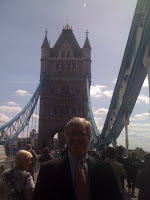
I was in London for a few days last week, and while it afforded a good opportunity to visit with a number of providers in the European retirement plan market, the primary purpose of my trip was to acknowledge the fund manager and consultant standouts recognized by PLANSPONSOR Europe (which has just celebrated its one-year anniversary). The luncheon itself was fascinating: As is often the case with such gatherings here, many of the attendees were well-acquainted with each other, a number had common employment histories and, as in the U.S., even those who worked for competing firms at the moment seemed to sense that it could change at any time. Once we got past the potential impact of the latest Icelandic volcanic ash cloud, the traffic disruptions attendant with President Obama’s visit (which, of course, had been impacted by the latest Icelandic volcanic ash cloud), and the beautiful weather (which, fortunately, was apparently completely unaffected by the latest Icelandic volcanic ash c...

What Lies Ahead - Part 2

Image
If 2010 was not quite the return to “normal” we might have hoped, there was more than enough—both new and old—to draw the attention of plan sponsors. Here is the second part of our look at the trends that were on our mind this past year—and those just over the horizon. Stop Gaps: Closing the Pension Funding Gap What we said last year : It remains more expensive—and complicated—to walk away from pension commitments than most realize, though many employers remain committed to their pension plans for reasons that transcend those financial considerations. Still, it seems likely that freezes, both hard and soft, will continue to be applied, certainly in the private sector. The public sector’s commitment to pensions remains largely unabated—and yet, a sense remains that it may only be a matter of time before fiscal realities bring about a different result. Where we are : For the very most part, little has changed. Pension funding remains a challenge, with the funding gap seemingly cons...

Grecian 'Formula'

Image
While the markets were in an apparent freefall last week, I could hear former Treasury Secretary Hank Paulsen on the TV in the next room telling (lecturing?) the Financial Crisis Inquiry Commission that the problems that led to the 2008 meltdown could, and should, have been dealt with sooner, and that we could, and should, have moved faster—and with more to stave off the crisis. The criticism then—as it was last week in Europe—was that this was a time to act, not to think; that if we didn’t act—act now, act decisively, and without question—well, the results would be catastrophic. It is a theme that runs through Paulsen’s recent book, “On the Brink,” as he drags the reader from one impending crisis to another during those fateful weeks of 2008. In Paulsen’s retelling, those who back his “need for speed” are thoughtful and prescient; those who don’t, well, their motivations are generally painted as either blinded to the seriousness of the situation or hopelessly ideological. From the...

Promises Premises

Image
It was hard not to be struck this past week by that Pew Center on the States report titled “The Trillion Dollar Gap.” That title was a reference to the apparent chasm between the potential obligations of the assorted pension and retiree health-care programs of the 50 states, and the money set aside to pay for them (see “ States Face $1 Trillion Retirement Benefits Funding Gap ”). In some respects, the portrayal was better than it might have been: For one thing, the analysis was based on plan year-ends that predated the Q4 2008 meltdown, and it focused only on state programs, rather than the assortment of local government programs. On the other hand, it suffered—as many of these reviews do—from a lack of context. It combined the obligations represented by retiree health and pensions—and, while both surely are financial obligations, they are driven by different factors. More importantly, most of the public sector has, until very recently, treated retiree-health obligations as a pay-a...