Posts

Showing posts with the label advice

‘Mad Money’s’ Mixed Bag

Image
  Last week a reader brought to my attention an episode of Jim Cramer’s “Mad Money” — an episode wherein he referred to the 401(k) as a “mixed” bag.  In  it , he acknowledged the benefits of tax deferral, the benefit of compounding on returns, and — where it’s found, anyway — the “free” money of an employer match. In that, he was at least more honest about such things than many [i]  who make their living offering investment advice (generally accompanied by a subscription fee to their services — which, to be fair, Mr. Cramer has and mentions in this show).  In point of fact, Mr. Cramer would clearly prefer an IRA option — if the contribution limits were equal to the 401(k) — though they’re not even close (not to worry — he says he’s going to continue to fight to remedy that situation). Indeed, Mr. Cramer counsels that once you’ve gotten the full match in your 401(k), you should just put everything else into an IRA (though he doesn’t get into the “nuances” of cont...

Advisor Value ‘Adds’

Image
 Most of the attempts to affix a value to having an advisor tend to focus on investment returns or cost savings. Both are valid, objective measures that can have a real, substantive impact on retirement security—but, at least with the best advisors—there’s usually more. Indeed, years ago as a fiduciary of another firm’s 401(k) plan, and while I had always felt comfortable with the decisions the plan committee had made, as our little company grew to be less little, I was increasingly aware of the personal liability associated with my role, and the small amount of time I was able to dedicate to the task alongside my “day job.”  That advisor delivered in all the ways I had hoped he would—but there was value well beyond that in terms of the structure he brought not only to our discussions, but to our process. Things like: The Discipline to Meet Internally driven committee meetings are frequently a casualty of whatever crisis emerges on any particular day. As huma...

On Retirement Plans and Plans for Retirement

Image
When is a plan not a plan? When you have a retirement plan at work, apparently. The good news is that the 2015 Retirement Confidence Survey  shows a strengthening of retirement confidence — at least among those who had some kind of retirement plan (DB, DC or IRA). Indeed, among that group, the number saying they were very confident has doubled since 2013. The bad news? Well, there doesn’t seem to be much in terms of substantive savings accumulations 1 or planning behaviors to account for this uptick in confidence. Consider that fewer than half (48%) of workers report they and/or their spouse have tried to calculate — even a single time — how much money they will need to have saved by the time they retire so that they can live comfortably in retirement, a level that has held relatively consistent over the past decade. In other words, while many have (or had) a retirement plan, they don’t seem to have a plan for retirement.  On the other hand, workers reporting that t...

Third Time a Charm for Fiduciary Reproposal?

Image
So, advisors, how does it feel to be compared to a termite? That’s right, a powerful coalition of retirement, union, and so-called consumer protection groups has launched a new attack on retirement plan advisors. They’re doing so ahead of the president’s State of the Union address, and doing so now because he is expected to throw his support behind the Department of Labor’s fiduciary rule (re)proposal. Yes, that one. Not that they yet know what they are supporting. In a new website launched to help promote their position, even they say “If the Department gets the rule right…”, apparently relying on the word of the Department of Labor that “…its goal is to make sure that all financial professionals have a legal obligation to put the interests of their customers first when they offer retirement advice.” We don’t yet know what will be in this latest version. What we do know is that the last version raised significant concerns about its impact on the retirement plan marketplace,...

Direction-Less?

Image
Generalizations are often misleading, but I think it’s fair to say that some people (specifically those of the male gender) are notoriously reluctant to ask for directions—even when it’s painfully clear to everyone else traveling in their company that they are “lost.” If you’re not one of those people, I’ll bet you know someone (and probably more than one someone) who is.¹ The rationalizations offered by those refusing to seek help are as varied and variable as the individual circumstances that bring those hesitations to light: a shortage of time; certainty that, however lost they seem, they actually know where they are (or will be shortly); a lack of trust in the reliability of the instructions they might receive; the inconvenience of stopping…this despite the knowledge (frequently even among those reluctant to ask directions) that the modest investment of time to seek assistance will likely be far less than the time (and aggravation) that they will expend trying to find their own w...

Returns “Engagement”

Image
An acquaintance of mine once remarked, “you can’t solve a savings problem with investment returns.”   Yet, participants frequently focus on the returns of their retirement savings investments. Consider that during the month of May, major stock indexes like the Dow Jones Industrial Average and the S&P 500 were off 6 percent. But, according to an EBRI analysis, the estimated average 401(k) account balance 1 was down less than 3 percent during that same month, both due to the inflow of ongoing contributions and more diversified portfolio holdings. That determination is based on estimates from the EBRI/ICI Participant-Directed Retirement Plan Data Collection Project—the largest, most representative repository of information about individual 401(k) plan participant accounts. In fact, as of December 31, 2010, the EBRI/ICI database included statistical information on about 23.4 million 401(k) plan participants, in nearly 65,000 employer-sponsored 401(k) plans, representing $1.41...

Replacement “Window”

Image
There is an old adage that cautions about the consequences “when you assume…” And yet, the business of retirement planning is replete with any number of so-called “common wisdom” rules of thumb. Doubtless many have well-intentioned origins – to make complicated concepts easier to grasp, and thus to address. One of the more pervasive notions is that a realistic target for retirement savings can be determined by accumulating a sum that will provide an income stream equal to a percentage of one’s pre-retirement earnings – a sum that is generally expressed as 70-80% of what you earn prior to retirement. This starting point - generally called a "replacement ratio" - includes any number of imbedded assumptions, perhaps most significantly that the individual will need to spend less post-retirement, generally understood to be on things such as taxes, housing, and various work-related expenses (including saving for retirement). Moreover, the replacement rate approach represent...

Thanks Giving

Image
After a dozen years here at PLANSPONSOR, effective November 1 , I have joined the Employee Benefit Research Institute (EBRI) in Washington, D.C., as Director, Education and External Relations, and Co-Director of the EBRI Center for Research on Retirement Income. I have long had a strong personal and professional admiration for the work that EBRI does in helping provide our industry with valuable and objective information and am thrilled to be able to be part of those efforts at this critical juncture. It has been my great privilege over this past decade and change to share with you some of my thoughts and observations in this space. You have been generous both with your comments and commentary on those musings, as well as our publications overall. While it’s not quite Thanksgiving, I thought I would dedicate this final “IMHO” to sharing some of the things for which I’m thankful: I’m thankful that the vast majority of plan sponsors continued to support their workplace retirement prog...

IMHO: Catching Your Drift

Image
I recently found myself driving in an unfamiliar city without the aid of a GPS (global positioning system). Sadly, I had become so accustomed to having that device available, I hadn’t even taken the time to print out instructions from any of the usual Internet sources, and while there were maps in the vehicle, none were of the area in question. That didn’t matter, I told myself—because I had made that drive before, had a pretty good idea of where I needed to be and, armed with a pretty reliable memory for such things, I set out with only a little trepidation. Just about the time I was getting pretty confident in my ability to navigate without all the high-tech “crutches,” I was thrown a series of curves. The primary route was closed due to construction, the rerouting didn’t seem to take into account where I was trying to get to, an unexpected one-way street suddenly emerged going the “wrong” way, and then I found myself directed onto a parkway whose designers had apparently never co...

The IKEA “Experience”

Image
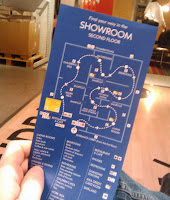
We spent some time this past weekend getting my eldest daughter squared away in her new apartment. It’s her first, and as with nearly all first apartments, there is a lot you need to get that you never needed in your room at home or in your dorm away at college. So we headed out to IKEA. Those who have never had occasion to visit an IKEA store should check it out at least once. They are mammoth stores—big on the outside and seemingly even more massive on the inside. It’s the kind of store you can easily get lost in (not to worry, they have their own food court inside), and yet it’s very hard to simply get from point A to point B, even if you know what you want to buy. About the only way to get through the store is to wander along the winding path the IKEA folks have constructed that takes you—literally—through every display imaginable.1 But the really interesting thing about the IKEA shopping process is that you not only have to find what you want, you must write down the part n...

Hurricane Forces

Image
It’s been a stressful week—and it’s not over yet. Over the past 10 days, I’ve managed to survive three college move-ins, an earthquake in our nation’s capital and—with a little luck—a hurricane bearing down on the Northeast even as I write this column. Now, I know it’s summer—Labor Day is only a week off—and there’s a lot looming over our industry’s head, but the fact is, I am—perhaps like many of you—having trouble focusing on anything other than Hurricane Irene. See, we live in a neighborhood that seems particularly prone to losing power, and we’re frequently the last in our town to have it restored—and that’s when we don’t have a hurricane sweeping the Eastern seaboard! It’s bad enough to be without power for several days, but the last time it happened, it was accompanied by some significant rainfall, and we quickly found out (the hard way) that the sump pump that normally keeps that extra water from pouring into our basement requires electricity to function. Fort...

Expert Opinions

Image
I learned a long time ago that when it comes to things like automobile maintenance, home repair, or gardening, I’m better off hiring an expert. Now, I have friends who derive great pleasure from things like “puttering around” in the backyard, who relish the accomplishment of laying down their own carpet or wallpapering a bathroom, who derive great satisfaction from installing their own car stereo or home entertainment center. But as for me, I’m happy to support our nation’s economy by paying someone who actually knows how to do such things. It’s not that I CAN’T do those things, mind you—it’s just that they take time I don’t have to do things I’m not good at for a final result with which I am never completely satisfied. And, if I’m honest, because I don’t like those tasks, I put off doing them—as long as humanly possible. One of the most common information requests I get from advisers is help in proving to sceptical plan sponsors that they should hire an adviser. While I don’t a...

Mixed Messages

Image
We had wrapped up a very successful half-day adviser event ahead of our annual Awards for Excellence dinner last week. As we closed up the session, a co-worker of mine commented to me as an aside, “Nobody ever told me I needed to be saving 12% before.” Now, this co-worker has nothing to do with our magazines, or the content that fills our Web sites and newsletters. He just happens to work at a company that, among other things, publishes information about retirement plans. He’s a participant in our benefit plans, of course—and so he has probably been exposed to all the same types of education and savings materials as anyone (perhaps more). He’s a smart guy (he’s pursuing his MBA at night), tech-savvy, and he pays attention. And yet, it wasn’t till he was effectively sitting there as a fly on the wall in a room full of the nation’s best retirement plan advisers that he overheard someone put forth a specific savings-target figure. Now, like any good plan sponsor, I can explain that. ...

Making a List

Image
Believe it or not, PLANADVISER Magazine is five years old this year. As such, we wanted to commemorate our fifth anniversary by recognizing as “legends” five individuals who had made a “significant personal impact to the retirement plan industry and the advisers who support it”. Now, perhaps you think that would be easy—but I can promise you it’s harder than it looks. And over the past several weeks we have gone through our list—moving some off, bringing others on, and “sleeping on it” more nights than you might think. First off, we limited the list to five individuals (for five years), and we also tried to focus in on the past five years. Limiting the list to five was hard enough (certainly once we got started), but trying to focus in on the period since we launched the magazine created an even more daunting task. Sure, it was “only” five years ago, but it’s amazing how much has happened during that time. That was the year the Pension Protection Act was signed into law, after all,...

What Lies Ahead - Part 2

Image
If 2010 was not quite the return to “normal” we might have hoped, there was more than enough—both new and old—to draw the attention of plan sponsors. Here is the second part of our look at the trends that were on our mind this past year—and those just over the horizon. Stop Gaps: Closing the Pension Funding Gap What we said last year : It remains more expensive—and complicated—to walk away from pension commitments than most realize, though many employers remain committed to their pension plans for reasons that transcend those financial considerations. Still, it seems likely that freezes, both hard and soft, will continue to be applied, certainly in the private sector. The public sector’s commitment to pensions remains largely unabated—and yet, a sense remains that it may only be a matter of time before fiscal realities bring about a different result. Where we are : For the very most part, little has changed. Pension funding remains a challenge, with the funding gap seemingly cons...

Thanks Giving

Image
Thanksgiving has been called a “uniquely American” holiday, and one on which, IMHO, it is fitting to reflect on all we have to be thankful for. Here's my list for 2010 : I’m thankful that the vast majority of plan sponsors continued to support their workplace retirement programs with the same match and options as they had in previous years—and that so many of those who had to cut back in 2009 made the commitment to restore some or all of it in 2010. I’m thankful that participants, by and large, hung in there with their commitment to retirement savings, despite the lingering economic uncertainty. I’m especially thankful that many who saw their balances reduced by market volatility and, in some cases, a reduction in their employer match were willing and able to fill those gaps, in most cases by increasing their personal deferrals. I’m thankful that most workers defaulted into retirement savings programs tend to remain there—and that there are mechanisms in place to help them save ...

“Sure” Things

Image
In a very real sense, this has been a “rebuilding” year for many plan sponsors and participants: a time spent rebuilding account balances, resurrecting and/or reviving employer matching contributions, a time for shoring up participation rates, and—in some cases—restoring trust. The markets, overall, have been sympathetic to those causes, but in many respects, the still-soft economic trends doubtless weighed on the kinds of dramatic trend shifts that we have seen in recent years. That said, only a quarter (24.9%) of some 6,000 plan sponsor respondents said that “all or nearly all” of their participants were deferring enough to take full advantage of the employer match, a reading that declines sharply with plan size. Additionally, participation rates were roughly flat with a year ago; with responding plans reporting a combined participation rate of 71.5%, compared with 72.3% a year ago. The median participation rate was also lower; 75.0% in 2010, compared with 78% in last year’s surv...

Interests "Bearing"

Image
Last week the Labor Department issued a proposal that would, by its reckoning, provide the first update to the definition of an ERISA fiduciary since shortly after the birth of the federal regulation (see DoL Broadens Fiduciary Net ). The move was much-anticipated and, in the eyes of many, long overdue. Clearly, the Labor Department wanted to narrow the exceptions to that definition (that were, somewhat ironically, put in place by the Labor Department of 1975) and, in the process, subject more advisers to ERISA’s fiduciary standards. At a high level, the Labor Department is seeking to restore the two-part test for fiduciary status found in ERISA, one that was expanded to be a five-part test in the 1975 regulations. The proposal seeks to set aside the additional conditions that the advice be rendered “on a regular basis,” that the advice would serve as a “primary basis” for investment decisions with respect to plan assets, that the recommendations are individualized for the plan, and...

Scale "Model"

Image
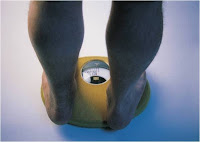
I’ve long had an issue with weight scales, for the perhaps obvious reason that, these days, they frequently deliver a message I’d just as soon not receive. See, even when I’m feeling pretty good about the way I look and feel, those scales generally remind me that is at a weight that I know is not “appropriate” for my height. Over the years, I have rationalized that gap in any number of ways; that those scales are frequently inaccurate, that the definitions of “appropriate” are skewed, even that I’m wearing clothes (or shoes) at the moment that are throwing things off (hey, I’ve got pretty big feet). But since I know, deep down, that those are, after all, mere rationalizations for avoiding the truth, these days I pretty much just treat stepping on scales as I would stepping on a rusty nail—which is to say, I avoid them at all costs…at least until I manage to get back on a regular exercise regimen. My sense has long been that that is how participants approach the issue of figuring ou...

Live Long and Prosper?

Image
I’ve been a huge “Star Trek” fan all the way back to when I had to watch the original episodes on a tiny black-and-white, 13-inch television set with rabbit ear antennas (and, yes, adorned with aluminium foil). Unlike most of my friends at the time, my favorite character was Mr. Spock, whose understated strength, brilliant mind, and quiet commitment to logic had an appeal to a young kid who fancied himself to have all those attributes (thankfully, my ears weren’t pointed). Perhaps as a result, early on, I mastered the “infamous” Vulcan salute that many people struggle to perform unassisted (it consists of raising your hand and spreading your fingers apart between the middle and ring finger), and the Vulcan greeting/blessing that accompanied the gesture—“Live long and prosper”—always struck me as being as elegant as it was simple. While we all hope to prosper and live long, a recent Issue Brief released by the Center for Retirement Research at Boston College reminds us of the financia...