Posts

Showing posts with the label retirement confidence survey

Retirement Realities

Image
Are you confident about your retirement finances? Apparently, and despite responses that undermine a rational level of confidence, many are. Last week, the Employee Benefit Research Institute (EBRI) and Greenwald Research unveiled their 34th annual Retirement Confidence Survey (RCS) . Now, I’ve commented previously about the dubious conclusions one can draw from personal sentiment surveys, not to mention those personal assessments of wealth and needs. Those limitations notwithstanding, over the years, the Retirement Confidence Survey has helped uncover a number of interesting and intriguing perspectives about retirement, real and imagined―and no small number of what would appear to be unrealistic expectations about retirement: expectations around how long individuals think they will be able to work, for example, or that they will be able to work for pay after retirement. Additionally, there have been indications that more individuals expect to receive a pension than would be suggeste...

The Fear of Finding Out

Image
I hadn’t been to the dentist in a long time. A VERY long time. Two weeks ago, and at the encouragement of my wife, I finally went back to the dentist. I hadn’t been since COVID, and that period provided a very good excuse for avoiding that visit. Turns out, I hadn’t been for quite a while before COVID—not so much intentionally, just life getting in the way. That’s not completely accurate, of course. On the best of visits, trips to the dentist had never been exactly “pleasant,” though I’ve been fortunate to be in the hands of friendly, patient and—gentle—staff over the years. That said, my last visit had involved what wound up being a unexpected and relatively involved procedure that, while it remedied a painful (and potentially dangerous) situation, left me with a certain, shall we say, “fear of finding out”… Now, avoiding the dentist didn’t prevent problems, of course. And many’s the day over the past several (gulp!) … years when I would tell myself that it would be b...

The Sure Not-So-Sure Thing

Image
By some accounts, I just spent the past week in “retirement”—driving around sightseeing, reading some good books, hanging out with family, and yes—even walking on a beach. And I have to tell you—if that was retirement, I don’t know how I’m going to afford it. Now, I realize that isn’t the stuff of most “real” retirements, though it is frequently the stuff of retirement planning brochures. My week was a family vacation, and it was spent doing the things that families do on vacations. [i]  And it served as a stark reminder that while sitting on a beach doesn’t cost much, making arrangements to stay—and eat—in proximity to the aforementioned beach is a whole other financial consideration. That said, when those actually  in  retirement are asked about their retirement confidence—well, it’s pretty high. According to the Employee Benefit Research Institute/Greenwald Associates annual  Retirement Confidence Survey , 77% of current retirees report feeling eit...

Conversation "Starters"

Image
This weekend is, of course, Father’s Day—but my dad’s decision to retire was driven more by time than timing.  Like many of his generation, once he got to 65, it was time to “retire.” He didn’t have a pension (fortunately for him, my mother did), though he had Social Security, and savings in a 403(b) plan that he contributed to later in life—reluctantly—once he saw Mom’s modest savings in her 403(b) account grow.   My dad was a man of (very) few words—at least spoken words. Conversations with him generally required… effort. Oh, he’d respond to direct questions, but his answers tended to be short and—well, direct. Again, like many of his generation, mostly he was content to let my mother be the conversationalist in family settings.    So, when Dad turned to me one weekend afternoon for some input on his retirement planning—well, I was surprised. Not that it didn’t warrant a discussion, mind you—but it was not something we had ever discussed—an...

That Sinking Feeling?

Image
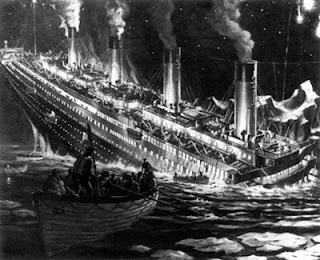
You may have missed it – but we just passed the anniversary of the 1912 sinking of the now iconic RMS  Titanic , at the time the world’s largest ocean liner. Its passengers included some of the wealthiest people in the world, as well as a large number of emigrants seeking a new life in North America. On the ocean liner’s maiden – and only – voyage, it carried 2,244 people, 1,514 of whom would perish in the North Atlantic. In hindsight, the  Titanic  seems a textbook example of a disaster that could have been avoided: There were plenty of warnings about sea ice (as many as six), but the ship was traveling near her maximum speed (though it’s a movie myth that they were trying to set a speed record) when lookouts sighted the iceberg that did her in with a “glancing” blow – that nonetheless opened 6 of her 16 compartments to the sea (the ship was designed to stay afloat with four of her forward compartments flooded). And let’s not forget that she went to ...

The Chicken or the Egg?

Image
It is a question that has puzzled philosophers and scientists for centuries: which came first – the chicken or the egg? Similarly, an updated version of a classic survey of retirement confidence finds some interesting attributes among those who are more confident about their prospects – but are those attributes a result of that confidence, or is it the confidence that preceded them? The 28th annual Retirement Confidence Survey (RCS) from the non-partisan Employee Benefit Research Institute (EBRI) and Greenwald Associates found that Americans are feeling a bit better about their retirement prospects. However, the RCS also found  – as it has in previous years – that certain factors are tied to higher confidence, specifically if they have access to a defined contribution plan, are relatively free from debt, are already retired – or, in a new finding from this year’s RCS – that they are healthy. Now, the connection between access to a retirement plan and saving...

4 Retirement Savings Benchmarks That (Generally) Miss the Mark

Image
Behavioral finance tells us that human beings are prone to relying on heuristics – mental shortcuts, if you will – to solve complex problems. While these may not be very accurate, survey data and anecdotal evidence suggest that participants often rely on these benchmarks. Here are four that workers use more often than we’d perhaps like to admit. The Company Match Survey data and academic research have long suggested a link between the employer match and the level to which workers contribute. Indeed, there has been evidence (frequently invoked by advocates of the so-called “stretch” match) that it’s not the amount of the match that motivates, but the existence of the match at any level. There is, in fact, evidence that a lot of people save only as much as they need to receive the full employer match (unfortunately, there’s also evidence that many don’t take full advantage – particularly lower income workers – and confusion about how ...

Preparing for the Storm

Image
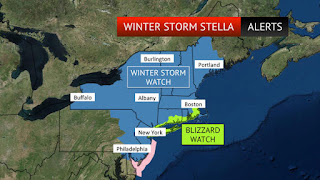
If you live (or were travelling to) the upper east coast of the U.S. this week, odds are you spent some time making preparations for what looked to be (and by the time you read this likely is) a big winter storm. We don’t always get that much time to prepare, of course – and sometimes when we do, those big storms don’t turn out to be very big after all. But you can generally count on lots of frenzied weather forecasters predicting snow-mageddon (even if they do offer some caveats), and at least one shot of the inside of a local grocery showing empty bread and milk aisles. Because, after all, who could go 48 hours without bread and milk? Life is full of surprises – and though most of those are unaccompanied by a friendly meteorologist to help us anticipate them, one might well wonder why we let them “sneak” up on us without making better preparations. Perhaps the most obvious is the topic of retirement preparation. Any day now the queen mother of retirement confide...

6 Assumptions That Can Wreck a Retirement

Image
The future is an uncertain thing, and planning for uncertainty inevitably involves making some assumptions. Here are six that, done improperly, can wreck your retirement. How Long You’ll Live The good news we are living longer – but that means that retirements can last longer, and medical costs can run higher. But while we’re living longer, studies indicate that we tend to underestimate how much longer we will live. The Social Security Administration notes that a man reaching age 65 today can expect to live, on average, until age 84.3, a woman turning age 65 today can expect to live, on average, until age 86.6. But those are just averages. About one out of every four 65-year-olds today will live past age 90, and 1 out of 10 will live past age 95. How Long You’ll Work Perhaps the most important assumption is when you plan to quit working; today most Americans are doing so at 62, though 65 seems to be the most common assumption – and while using 70 (or later) will surely bo...

5 Reasons to Plan and Save for Retirement Now

Image
As April is National Financial Literacy month, and this is National Retirement Planning Week, those who work with retirement plan participants know it’s important to do the right thing(s) when it comes to retirement planning and savings. But for those you are trying to help encourage, here are five reasons to plan and save for retirement now, and as an integral part of that financial plan. Because you don’t want to work forever. Seriously, no matter how much you love your job, if you want to stop working one day – and trust me, you will – you are going to have to think about how much income you will need to live after you are no longer working for a paycheck. Because living in retirement isn’t “free.” Many people assume that expenses will go down in retirement – and, for many, perhaps most, they do. On the other hand, there are changes in how we spend in retirement as well – and they aren’t always less. A recent report by the nonpartisan Employee Benefit Research Institut...

5 Ways to Boost Retirement Confidence

Image
With increasing regularity, the financial services industry pumps out surveys that purport to capture America’s sense of confidence regarding its readiness for retirement, at least on a financial footing. Mostly, however, they seem to focus on the symptom, rather than dealing with the underlying cause(s). However well-intentioned, these all seem designed to highlight a persistent strong undercurrent of concern — one that, certainly when juxtaposed against the generally disappointing preparation levels reported by respondents, seems completely warranted. Confidence about retirement is one thing, of course, and preparation something else, though the two are logically intertwined. That said, for those looking to shore up confidence levels, data from the granddaddy of such surveys — the non-partisan Employee Benefit Research Institute’s (EBRI) Retirement Confidence Survey — provides a roadmap: Work for an employer that offers a retirement plan. Data indicates that workers — even wo...

4 Things That Make Me Go ‘Huh?’

Image
Ours is a business where surveys and trends often shape not only perceptions, but policy — though sometimes the conclusions drawn, and even the premise itself — make me go “huh?” Here’s a sampling: Citing a drop in deferral rates as a failure of automatic enrollment. Every so often a personal finance writer will stumble across an industry survey that shows that the average deferral rate in 401(k) plans has declined, a problem they attribute to automatic enrollment adoption. We all know what is going on here ; individuals who take the time to fill out a form and enroll in the plan manually tend to defer at a higher rate than do those who are automatically enrolled, the latter typically at a modest 3% rate. On the other hand, automatic enrollment has a dramatic impact on raising the participation rate. The rest is just math — more people, saving at lower rates = a lower average deferral rate. Now, those individuals automatically enrolled at a 3% rate may draw down the average de...