Posts

Showing posts with the label fourth of july

The Founding Fathers and Fiduciary Fundamentals

Image
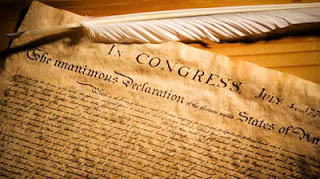
Anyone who has ever found their grand idea shackled to the deliberations of a committee, or who has had to kowtow to the sensibilities of a recalcitrant compliance department, can empathize with the process that produced the Declaration of Independence we commemorate this week. Not that the machinations of a plan committee can be fairly equated to the deliberations—or impact—of the Second Continental Congress, but there are some parallels. Things like… Committee members should understand their obligations—and the risks. Those who gathered in Philadelphia that summer of 1776 came from all walks of life, but it seems fair to say that most had something to lose. True, many were merchants (some wealthy, including President of Congress John Hancock) already chafing under the tax burdens imposed by British rule, and perhaps they could see a day when their actions would (eventually) accrue to their economic benefit. Still, they could hardly have undertaken that declaration of ...
Times That Try Men's Souls

Image
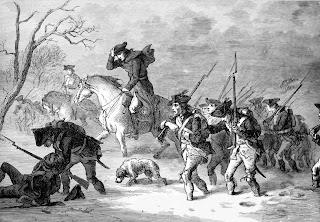
It seems trite, almost unnecessary, to comment that we are living in and through extraordinary times.  I’m a student of history, and I have often found comfort, if not guidance, from what has gone before. As often as not, however unique and extraordinary the times seem (or are portrayed in the headlines), there’s inevitably a comparable, and almost always, an even more extreme example, of such times in decades past. [i] And while there’s been a renewed interest in, and awareness of, the pandemic of 1918 (though I’m told the pandemic of 1957-58 is a more apt comparison to COVID-19), as the anniversary of our nation’s declaration of independence nears, I’ve been drawn to the events of 1776. As it turns out, the newly declared (but not yet formal) nation was confronted not only with the struggle for independence (and no small number of voices that simply wanted to preserve the status quo), but with the scourge of smallpox. Just as the close quartering and movement...

4 Things Plan Fiduciaries Have in Common With the 2nd Continental Congress

Image
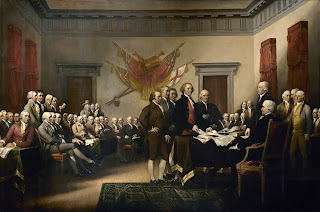
Anyone who has ever found their grand idea shackled to the deliberations of a committee, or who has had to kowtow to the sensibilities of a recalcitrant compliance department, can empathize with the process that produced the Declaration of Independence we’ll commemorate on the Fourth. That said, I think there are things that today’s investment/plan committee share with, and can learn from, the experience of those forefathers who crafted and signed the document declaring our nation’s independence. It’s hard to break with the status quo. By the time the Second Continental Congress convened, the “shot heard round the world” had already been fired at Lexington, but many of the representatives there still held out hope for some kind of peaceful reconciliation, even as they authorized an army and put George Washington at its helm. Little wonder that, even in the midst of hostilities, there was a strong inclination on the part of several key individuals to put things back the way they h...

The Course of Human Events

Image
It is easy, looking back, to gloss over just how remarkable was the sequence of events that made this nation’s independence a reality. The bickering and machinations of the Continental Congress in 1776 were every bit as unpleasant, and unproductive, as the worst of today’s elected officials — even though, and perhaps in some measure because, hostilities with Great Britain had officially been underway since the so-called “shot heard ‘round the world” the preceding spring. The men who gathered in Philadelphia that summer to bring together what was not yet a “new nation” came from all walks of life. Still, it seems fair to say that most had something to lose, both financially and in terms of the personal liberty they advocated as an “unalienable” right. True, many were merchants (some wealthy, including President of Congress John Hancock) already chafing under the tax burdens imposed by British rule, and perhaps they could see a day when their actions would accrue to their economic be...

4 Steps Toward Financial Independence

Image
While retirement and retirement savings may not be high on your Independence Day weekend agenda, it can be a good time to focus on things that have been pushed aside for more pressing priorities. Here are four steps you can take this weekend that can help put you on the road to achieve financial independence. 1. Figure Out How Much You Need Yogi Berra once famously noted that if you don’t know where you’re going, you might not get there. Effective savings strategies start with a goal, something to aim for. For many, retirement savings goals seem impossible to set. After all, there’s no “blue book” on the cost or quality of retirement — no single answer to the question, “How much do I need?” As a result, many people fear that their estimates “aren’t even in the ballpark” of what will be required. The 2015 Retirement Confidence Survey affirmed a long-standing trend — that most haven’t made even a single attempt to figure out what they might need for retirement. There are, howeve...

'Free' Wills

Image
Editor's Note: No matter what else is going on in our lives this weekend, a student of history cannot help but be conscious of the boldness of the Declaration of Independence we celebrate today, and how dearly won its principles. There may be other ways to express it, but this weekend I'm going to draw on the perspectives expressed in a prior posting. Whether you remember it or not, I'm hoping you enjoy it - and take it to heart! Over the weekend I reacquainted myself with that episode of the HBO miniseries “John Adams” titled “Independence.” As a writer and editor, I watched with a special appreciation the part where Benjamin Franklin and John Adams are “tweaking” Thomas Jefferson’s draft – and the pain in the latter’s face as his “precisely chosen” words were modified. All in all, a modest sacrifice, to be sure. But I, for one, could feel his pain. That said, anyone who has ever found their grand idea shackled to the deliberations of a committee, who has had to kow...

“Free” Wills

Image
Over the weekend, I reacquainted myself with that episode of the HBO miniseries “John Adams” titled “Independence.” As a writer and editor, I watched with a special appreciation the part where Benjamin Franklin and John Adams are “tweaking” Thomas Jefferson’s draft—and the pain in the latter’s face as his “precisely chosen” words were modified. All in all, a modest sacrifice, to be sure. But I, for one, could feel his pain. That said, anyone who has ever found their grand idea shackled to the deliberations of a committee, who has had to kowtow to the sensibilities of a recalcitrant compliance department, or who has simply suffered through the inevitable setbacks all too frequently attendant with human existence must have at least a modest appreciation for the trials that confronted not only that document’s authors, but those then living in these not-yet-united states. Without question, 1776 is one of those turning points in history, not just for this nation but, in the course of tim...