Posts

Showing posts with the label participation

3 Pervasive Retirement Industry Myths

Image
Ours is a complex and complicated business — constantly changing and evolving. And yet, there are key fallacies about today’s retirement system — and how it compares with what used to be — that will not go away. Back in the good old days being “covered” by a pension plan meant you would actually get a full pension benefit. We’re routinely told that “once upon a time” individuals used to work for a single employer their entire career, and that most of those workers were “covered by a workplace retirement plan, frequently a defined benefit pension.” While defined benefit plans were certainly more common a generation ago, they were not as ubiquitous as is often assumed (see here ).   Moreover, while some workers did spend their working career at a single employer (and some still do, particularly in the public sector), the data show that for the very most part we have long been a nation of relatively short-tenured workers. How short? Well, the median job tenure in the United St...


Access "Able?"

Image
Though I’ve now spent more than three decades working with employment-based benefit plans, I’ve also worked for some very different employers, ranging from organizations that employed tens of thousands of workers to those that were a fraction of that size. Those organizations were all very different, of course, but they all had at least one thing in common: All offered a workplace retirement savings program. That’s apparently not as common as one might think, certainly among smaller employers. In fact, a new study from the Employee Benefit Research Institute (EBRI) notes that the probability of a worker participating in an employment-based retirement plan increased significantly along with the size of his or her employer. How significantly? Well, the EBRI report notes that for wage and salary workers ages 21‒64 who worked for employers with fewer than 10 employees, just 13.2% participated in a plan, compared with 57.0% of those working for employers with 1,000 or more employees. ...

"Half" Measures

Image
People are often grouped into one of two camps: the optimists, who generally see the glass as half-full, and the pessimists, and who are said to view the glass as half-empty. One of the most commonly cited data points about retirement is that “only about half of working Americans are covered by a workplace retirement plan.” Drawn from the U.S. Census Bureau’s Current Population Survey (CPS), it’s cited by both those who see the current system as inadequate (or worse), as well as its most ardent champions—in other words, both by those who see the glass as half-full, and those who are inclined to see it as half-empty. This is a data point that we’ve written about before , and one that was acknowledged in a recent EBRI Issue Brief [1] that explored various demographic and economic factors that affect retirement plan participation. The data point is relatively simple math: the number of workers who say they participated in a workplace retirement plan divided by the total number of w...

“Staying” Power

Image
When we moved into our last home―an old house, and one in which the prior family had lived for quite some time―we found a set of markings on a doorframe.  Markings that appeared to indicate the height―and growth patterns over time―of the children of the former owners.  We took note of this at the time, but those markings didn’t last long after we moved in.  After all, while our kids were still growing, and they were now going to live in the same house, there was little point in assessing their progress against that of the former residents. We’ve noted before the shortcomings of metrics such as an “average” 401(k) balance (see “Above” Average, online here ), which generally aggregate the balances of participants in widely different circumstances of age and tenure―everything from those just entering the workforce who have relatively negligible 401(k) balances with those who may have been saving for decades.  While these averages can, over time, provide a sense of t...

"Lead" Times

Image
There’s an old saying that you can “lead a horse to water, but you can’t make him drink.” It’s a sentiment expressed by many a benefits manager who has devoted significant time and effort to plan design, only to find the adoption rate by individual workers to be “disappointing.” And yet, in the retirement savings context, there’s ample evidence that individuals who have access to a savings plan at work do, in large part, take advantage of that opportunity. Consider that average participation rates in excess of 70 percent are commonly reported in industry surveys, and that’s for plans that don’t take advantage of automatic enrollment. Moreover, previous EBRI research has pointed out that merely having access to a defined contribution plan at work can have a significant positive impact on one’s retirement readiness rating, simply because it greatly enhances the likelihood that those individuals WILL participate (1) . Those who say that you can only “lead a horse to water” might well ...

The “Big” Picture

Image
A recent EBRI Issue Brief examined trends in employment-based retirement plan participation, noting that in 2011, the percentage of all workers participating in an employment-based retirement plan was essentially unchanged from the year before. More specifically, the percentage of all workers (including part-time and self-employed) participating in an employment-based retirement plan¹ stood at 39.7 percent in 2011, compared with 39.8 percent in 2010.² At the same time, the percentage of full-time, full-year wage and salary workers ages 21–64 (those most likely to be offered a retirement plan at work) saw a slight decline, slipping from 54.5 percent in 2010 to 53.7 percent in 2011. While those movements were very small, the increase in the number of workers participating in 2011 halted a three-year decline. Moreover, it’s not as though this gauge has shown a steady trend, even in recent history. When you take into account all workers, the percentage participating in an employment-bas...

Goals Tending

Image
The bad news is that times are still tough for many Americans—and surveys suggest that even those with jobs are nervous about their prospects for the future. The good news is that the current level of economic uncertainty seems to have brought about—at least for some—a heightened awareness of the need to set money aside for a rainy day, perhaps even those rainy days in retirement. That said, the weak economy has certainly constrained the ability of many to save. In fact, a recent national survey found that an increasing number of Americans are having difficulty saving to meet goals ranging from meeting emergencies to affording retirement. The survey—released as part of America Saves Week(1)—noted that over the past three years, there has been a decline in the number of people who spend less than their income and save the difference, are building home equity, have adequate emergency savings, and think they are saving enough for retirement. However, the survey also revealed that havi...

'Under' Covered?

Image
One of the more pervasive statistics bandied around about the voluntary retirement system is that only about half of working Americans are covered by a workplace retirement plan. It’s a data point that is widely and openly presented as fact—not only by those inclined to dismiss the current system as inadequate, but even by some of its most ardent champions, who see that result as a call to action for expanded access to these programs. There’s only one problem: It doesn’t tell the whole story. A 2011 EBRI report found that in 2010, 77.6 million workers worked for an employer/union that did not sponsor a retirement plan and 91.0 million workers did not participate in a plan. However, focusing in on employees who did not work for an employer that sponsored a plan, 9.0 million were self‐employed. Of the remaining 68.5 million: • 6.2 million were under the age of 21, and • 3.7 million were age 65 or older. • 32.0 million (approximately) were not full‐time, full‐year worke...

Conversation "Starters"

Image
While the headlines out of our nation’s capital are driven by talk of the looming budget crisis, concerns about the sluggish economy, and the impending 2012 elections, discussions about retirement, retirement savings, and ways to improve retirement savings have been the order of the day here in Washington. The Women’s Institute for a Secure Retirement (WISER) recently convened its Annual Women’s Retirement Symposium, with a focus of the future of retirement (broadly defined) and the specific implications for women (who live longer, are frequently paid less than men, and whose working careers often include family interruptions in pay and savings). EBRI data surfaced in a number of presentations throughout the event, including references to gender participation rates (see http://www.ebri.org/pdf/FFE.192.21Mar11.RCS-Gender.Final.pdf , http://www.ebri.org/files/FS4_RCS11_Gender_FINAL.pdf ), as well as differences in retirement confidence, and men’s and women’s response to opportunities s...

Naughty? Or Nice?

Image
Editor’s Note: There’s so much going on in the world of retirement saving and investing that I never feel the need (or feel like I have the opportunity) to recycle old columns – but this one has a certain “evergreen” consistency of message that always seems appropriate – particularly at this time of year. A few years back—when my kids still believed in the reality of Santa Claus—we discovered an ingenious Web site. This was a Web site that purported to offer a real-time assessment of your "naughty or nice" status. Now, as Christmas approached, it was not uncommon for us to caution our occasionally misbehaving brood that they had best be attentive to how those actions might be viewed by the big guy at the North Pole. But nothing ever had the impact of that Web site - if not on their behaviors (they're kids, after all), then certainly on the level of their concern about the consequences. In fact, in one of his final years as a "believer," my son (who, it must ...

The IKEA “Experience”

Image
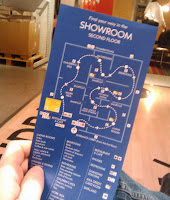
We spent some time this past weekend getting my eldest daughter squared away in her new apartment. It’s her first, and as with nearly all first apartments, there is a lot you need to get that you never needed in your room at home or in your dorm away at college. So we headed out to IKEA. Those who have never had occasion to visit an IKEA store should check it out at least once. They are mammoth stores—big on the outside and seemingly even more massive on the inside. It’s the kind of store you can easily get lost in (not to worry, they have their own food court inside), and yet it’s very hard to simply get from point A to point B, even if you know what you want to buy. About the only way to get through the store is to wander along the winding path the IKEA folks have constructed that takes you—literally—through every display imaginable.1 But the really interesting thing about the IKEA shopping process is that you not only have to find what you want, you must write down the part n...

“Nigh” Five

Image
A few weeks back, I offered some notions about what the next five years will bring in terms of industry trends (see “ IMHO: Fifth ‘Avenues’ ”). However, in preparing for our recent PLANADVISER National Conference, I came up with five more. Everybody isn’t going to do automatic enrollment. Without question, automatic enrollment has done much to shore up the retirement savings rates of American workers. For plan sponsors and participants alike, the efficacy of an approach that doesn’t require participants to complete an enrollment form, deliberate over investment choices, set upon a desired rate of savings, or even darken the door of an education meeting has done much to get tens of thousands of workers off on the right retirement savings foot. And, for the vast majority of workers, the ability to do the right thing without doing anything at all has not only been well-received, but much appreciated as well. Not that automatic enrollment as outlined by the Pension Protection Act (PPA)...

“Starting” Points

Image
You may have missed it, but there was a bit of a “dust up” in our industry last week. It started on July 7 when The Wall Street Journal ran a front-page story titled “401(k) Law Suppresses Saving for Retirement” (a story that is still, as I write on Saturday morning, on WSJ.com’s most popular listing). And, no, that article wasn’t talking about discrimination testing rules, the imposition of annual contribution limits, talk of a mandatory limit on loans, or the imposition of mandatory annuitization of distributions. Rather, it was talking about…automatic enrollment. The report claimed that “40% of new hires at companies with automatic enrollments are socking away less money than they would if left to enroll voluntarily,” citing data from the Employee Benefit Research Institute (EBRI). The problem, according to the report, was that “[m]ore than two-thirds of companies set contribution rates at 3% of salary or less, unless an employee chooses otherwise.” Well, duh. That, as they say,...

Chances Are…

Image
I’ve long adhered to the wisdom of having a “Plan B,” a fallback position if the things you hope will work out—don’t. Now, sometimes those fallbacks aren’t completely well-formed (ask my wife), but to my way of thinking, assuming that everything will work out “according to plan” is just tempting fate. When it comes to saving for retirement—or, more accurately, to having enough saved for retirement—workers have long had a set of “Plan Bs,” though not always completely well-formed, to put it mildly. They have assumed that if they weren’t saving enough at present, they would “catch up” by saving more “later”; they have assumed market returns to grow their accounts that defied reality (if not common sense); and some have gone so far as to assume they had a pension coming in situations where it was clear that no such safety net would be present. 1 And then, this past week, a study published by the Employee Benefit Research Institute (EBRI) threw cold water on what has, IMHO, been a “bes...

Group “Think”

Image
Somewhere over the course of your academic or professional career, I’m sure you’ve been exposed to a group exercise dealing with being stranded in an inhospitable place (the moon, or maybe a deserted island) with a limited amount of supplies, and a limited amount of time to choose from those supplies to ensure your survival. In these exercises, you’re asked to make those picks as an individual exercise, and then put together with a group to make group choices. Not only are the group choices generally different, they are nearly always “better” (more likely to ensure survival) than those made by individuals. The point of the exercise is, of course, that we make better decisions working together as a team than we do trying to make them on our own—and it generally works out that way. Sure, that may work in hypothetical situations where none of the group members has any particular expertise. But if I’ve crash-landed on the moon, and there’s a trained astronaut in the group—well, let’s ju...

The Measure of the Plan

Image
Not so long ago, plan sponsors gauged the success of their defined contribution offerings by a single metric: participation rate. It’s not that they didn’t pay attention to other criteria, but participation rate is objective, easy to calculate, and, certainly for a voluntary savings program, it’s not an inappropriate gauge of the program’s perceived value. Over the past couple of years, a growing number of plan providers have brought to market a new set of plan diagnostic measures, measures that not only show individual and plan balances, but also project those balances out to an estimate of what those balances will provide in retirement income, or presented as a measure of retirement readiness—compared with an established level of income replacement. It’s not a new idea, of course. Heck, there has even been legislation introduced to place—on participant statements—a projection as to what the participant’s monthly retirement income would be. Meanwhile, despite long-standing fears th...

Fiscal Therapy?

Image
This week I will undergo one of those “you’re getting older” physicals. This has been scheduled for about six months now (yes, that’s how long it takes to get in for a physical these days)—and I have dreaded it, more or less consistently (and, more recently, constantly) ever since the appointment was made. I know that I’m eating too much of the wrong things, and not exercising enough (at all?)—and while I sincerely meant to alter some of those behaviors over the past six months, other things have taken priority. What remains to be seen is what my doctor will see/say—and what, if any, lifestyle changes lie ahead. In random conversations over the past several weeks, it was easy to find people who were supportive of the need to do something about the yawing federal deficit, and even easier to find folks who had problems with one—or more—of the recommendations of the so-called Deficit Commission that were made formal last week. Like my trip to the doctor, we all knew that we had some f...

“Sure” Things

Image
In a very real sense, this has been a “rebuilding” year for many plan sponsors and participants: a time spent rebuilding account balances, resurrecting and/or reviving employer matching contributions, a time for shoring up participation rates, and—in some cases—restoring trust. The markets, overall, have been sympathetic to those causes, but in many respects, the still-soft economic trends doubtless weighed on the kinds of dramatic trend shifts that we have seen in recent years. That said, only a quarter (24.9%) of some 6,000 plan sponsor respondents said that “all or nearly all” of their participants were deferring enough to take full advantage of the employer match, a reading that declines sharply with plan size. Additionally, participation rates were roughly flat with a year ago; with responding plans reporting a combined participation rate of 71.5%, compared with 72.3% a year ago. The median participation rate was also lower; 75.0% in 2010, compared with 78% in last year’s surv...

Double Dipping?

Image
Last week, Fidelity published some data from their quarterly analysis of participant activity. For the very most part, the data (see Fidelity Finds Q2 Uptick in 401(k) Withdrawals ) revealed what we have come to expect from such reviews: Participants continue to stay the course, deferral rates are largely unchanged (average was 8%), and more increased their rate of deferral (5.3%) than decreased it (2.9%) in the most recent quarter. Additionally, the balance recovery continues apace, with the average account balance up 15% (though for this good news, you have to reach for a year-over-year comparison, because Q2 figures to be a pretty rough one for participant accounts—down 7.6% in Fidelity’s database). However, this report drew more than the customary amount of coverage for its finding that rates of hardship withdrawals and loans were higher—and by some measures, significantly higher—than they were a year ago.1 My initial reaction was that this latter finding was something of an outl...