Posts

Showing posts with the label participants

(Just Because) Survey Says?

Image
   We’re often told (via surveys) of any number of retirement plan options that plan participants want. Should it matter? Most recently, we’re assured that participants are  clamoring to have access to private market investments . Before that, it was  cryptocurrency  — and for what seems like months now it’s all been about  retirement income . Apparently vast majorities of participants are eager to have access through their 401(k) to an array of complex financial instruments to which they have, thus far, been largely (or totally) barred — or so surveys say. Indeed, I’ve always been amazed that organizations are able to find so many ostensibly knowledgeable participants to weigh in on these complex topics — particularly since there is an abundance of (other) surveys that suggest that when it comes to financial matters, participants are, largely, clueless. Not that that seems to dampen their collective interest in these new options — though when given a chanc...

'Under' Covered?

Image
One of the more pervasive statistics bandied around about the voluntary retirement system is that only about half of working Americans are covered by a workplace retirement plan. It’s a data point that is widely and openly presented as fact—not only by those inclined to dismiss the current system as inadequate, but even by some of its most ardent champions, who see that result as a call to action for expanded access to these programs. There’s only one problem: It doesn’t tell the whole story. A 2011 EBRI report found that in 2010, 77.6 million workers worked for an employer/union that did not sponsor a retirement plan and 91.0 million workers did not participate in a plan. However, focusing in on employees who did not work for an employer that sponsored a plan, 9.0 million were self‐employed. Of the remaining 68.5 million: • 6.2 million were under the age of 21, and • 3.7 million were age 65 or older. • 32.0 million (approximately) were not full‐time, full‐year worke...

Naughty? Or Nice?

Image
Editor’s Note: There’s so much going on in the world of retirement saving and investing that I never feel the need (or feel like I have the opportunity) to recycle old columns – but this one has a certain “evergreen” consistency of message that always seems appropriate – particularly at this time of year. A few years back—when my kids still believed in the reality of Santa Claus—we discovered an ingenious Web site. This was a Web site that purported to offer a real-time assessment of your "naughty or nice" status. Now, as Christmas approached, it was not uncommon for us to caution our occasionally misbehaving brood that they had best be attentive to how those actions might be viewed by the big guy at the North Pole. But nothing ever had the impact of that Web site - if not on their behaviors (they're kids, after all), then certainly on the level of their concern about the consequences. In fact, in one of his final years as a "believer," my son (who, it must ...

The IKEA “Experience”

Image
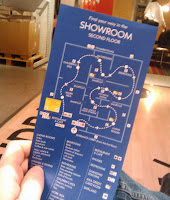
We spent some time this past weekend getting my eldest daughter squared away in her new apartment. It’s her first, and as with nearly all first apartments, there is a lot you need to get that you never needed in your room at home or in your dorm away at college. So we headed out to IKEA. Those who have never had occasion to visit an IKEA store should check it out at least once. They are mammoth stores—big on the outside and seemingly even more massive on the inside. It’s the kind of store you can easily get lost in (not to worry, they have their own food court inside), and yet it’s very hard to simply get from point A to point B, even if you know what you want to buy. About the only way to get through the store is to wander along the winding path the IKEA folks have constructed that takes you—literally—through every display imaginable.1 But the really interesting thing about the IKEA shopping process is that you not only have to find what you want, you must write down the part n...

Comparison “Points”

Image
Every year about this time, we get reports from firms that purport to tell us how much time is spent in preparations for the NCAA basketball tournament—and, no, not by the teams and coaches. The “studies” (ironically, they’re always put out by firms that are in the business of helping people find jobs) generally make some assumptions about the amount of time people spend on the workplace pools as well as how many people will participate, and their compensation levels, and—voila—the productive time ostensibly “lost” to these activities. Now, they make a lot of assumptions to get to that result, including the assumption that, but for these pools, people would be doing nothing but working. But the results give journalists something easy—and “fun”—to write about, and the rest of us to read and talk about (some day someone should do a study on how much time and money is wasted writing and reading about those “studies”). Our lives are filled with such reports: perhaps valid points that are...

Naughty or Nice?

Image
Editor’s Note: There’s so much going on in the world of retirement saving and investing that I never feel the need (or feel like I have the opportunity) to recycle old columns – but this one has a certain “evergreen” consistency of message that always seems appropriate – particularly at this time of year. A few years back—when my kids still believed in the reality of Santa Claus—we discovered an ingenious Web site that purported to offer a real-time assessment of their "naughty or nice" status. Now, as Christmas approached, it was not uncommon for us to caution our occasionally misbehaving brood that they had best be attentive to how those actions might be viewed by the big guy at the North Pole. But nothing ever had the impact of that Web site - if not on their behaviors (they're kids, after all), then certainly on the level of their concern about the consequences. In fact, in one of his final years as a "believer," my son (who, it must be acknowledged, had bee...

The Measure of the Plan

Image
Not so long ago, plan sponsors gauged the success of their defined contribution offerings by a single metric: participation rate. It’s not that they didn’t pay attention to other criteria, but participation rate is objective, easy to calculate, and, certainly for a voluntary savings program, it’s not an inappropriate gauge of the program’s perceived value. Over the past couple of years, a growing number of plan providers have brought to market a new set of plan diagnostic measures, measures that not only show individual and plan balances, but also project those balances out to an estimate of what those balances will provide in retirement income, or presented as a measure of retirement readiness—compared with an established level of income replacement. It’s not a new idea, of course. Heck, there has even been legislation introduced to place—on participant statements—a projection as to what the participant’s monthly retirement income would be. Meanwhile, despite long-standing fears th...

Thinking "Caps"

Image
While the spate of revenue-sharing suits has—for the moment, anyway—faded into the background, fees remain one of the most hotly debated topics in our industry. If anything, the intensity has heightened in recent weeks, as we near the Form 5500 filing deadline for December plan-year ends, even as we anxiously await the new 408(b)(2) fee disclosure regulations from the Labor Department—regulations that might well have been at some odds with legislation proposed by Congressman George Miller (D-California) that rode through the House as part of that extenders bill before being dropped by the Senate. The urgency behind these initiatives is two-fold: to force those who provide services to these plans to more fully and accurately disclose their fees to plan fiduciaries, and to provide participants with some idea of the monies that are being netted from their investment returns (and taken from their accounts). Ultimately, it is about helping people make better, or at least more informed, de...

Cynic’s “Cull”

Image
I have always taken seriously the notion that news and information should be presented “straight”, and without commentary. But there are times when it’s hard not to just scratch your head and say “huh?” or laugh out loud at some of the stuff that comes across our news desk. Here’s a (somewhat cynical) sampling from just the past couple of weeks: CONFIDENCE MIEN? A nationwide survey by Citi and conducted by Hart Research Associates found that 44% of investors report being confident in their ability to retire in financial security as they had planned ( said another way, that’s nearly half who DO feel that confident ) . More than a third (36%) said they might need to adjust their plans ( so, do two-thirds not see any need to do so? ), and ( a mere ) 16% said they are not confident in their ability to retire in financial security. Must be a lot of rich uncles out there… MORE “NOTHING” DOING. Throughout one of the most stressful and volatile markets in memory, the vast majority of ...

Survival "Instincts"

Image
Several years ago, I bought my Dad—one of the world’s most proficient worriers—a copy of the “Worst Case Scenario Survival Handbook.” I did it tongue-in-cheek, of course. After all, how many of us really need to know how to escape from a mountain lion, how to take a punch, or how to land a plane? Not that there aren’t times when that knowledge might come in handy, but let’s face it—the “worst” case rarely happens. On the other hand, if you’re prepared for the worst case, you’re generally better prepared to deal with the inevitable bumps and potholes along life’s road (in my Dad’s case, I worried only that I would provide him with NEW things to worry about…). Lacking a politician’s motivations, I am disinclined to describe the events of the past several months as “worst case,” though there is no disputing that we are all working our way through a rough period. As a nation we have been in—and come through—rough periods before. Despite that, human beings seem inclined to see travail...

'Nothing' Doings

Image
I wouldn’t for a second suggest that the current financial/economic crisis that we are enmeshed in isn’t “real,” or that the efforts to remedy it thus far aren’t well-intentioned, but it’s hard to shake the feeling that the words put forth to explain the situation—and thus the solutions put forward to redress that situation—are being done by folks desperate to be seen to be doing something, but not quite (at all?) sure what that something should be. And, IMHO, that inclination won’t diminish with a new Administration eager to prove itself. Let’s face it—even when doing nothing might be the best medicine (and I, for one, am at that point), we tend to believe that “something should be done.” Meanwhile, we have retirement plan participants, most of whom—again—appear to be riding this one out. Oh, there are signs of change on the fringes—some modest reductions in average deferral rates, slight upticks in hardship distributions, and, on particularly volatile days in the market, a bump in...

Discontent Ed

Image
In another week (or so), PLANSPONSOR will publish its annual Defined Contribution Survey. There are other surveys in this space, of course, but ours stands apart, IMHO, for its breadth and depth, painting a portrait of the industry that transcends size, geography, and provider. And this year the survey, now in its 13th year, is even bigger than ever. Over the years, asked to rank the criteria used in selecting their DC plan provider, plan sponsors have reliably opted to put “others” first—and this year, as in every year we have asked plan sponsors to do so, they ranked service to participants as the most important criteria, garnering a ranking of 6.5 on a 7.0 scale. Once again service to plan sponsors was the second most important (6.50). Not surprisingly (particularly these days), investment performance was deemed the third most significant, while the financial strength of the provider was ranked fourth. Interestingly enough, the numerical importance of all of these declined slig...