Posts

Showing posts with the label employee retirement income security act

What If There Was No ERISA?

Image
New research puts a new twist on “A Wonderful Life” – answering the question, what if there hadn’t been an ERISA? ERISA is, of course, the Employee Retirement Income Security Act of 1974 which  just turned 50 . The  analysis [i]  – put together by Morningstar Retirement’s Director of Retirement Studies Jack VanDerhei and Associate Director of Retirement Studies Spencer Look – first looks at the current “status quo” retirement readiness impact (more specifically, retirement readiness shortfalls). It then looks at the potential result if there had been no ERISA – or, perhaps more precisely if there had been no individual account retirement plans (defined contribution and IRAs), though allowance was made for the probability of saving to an IRA.  Now, anyone with a realistic assessment/awareness of the  limited availability of traditional pension plans  in the private sector (before AND after ERISA’s passage) can hardly be surprised to find that the absence of ...

ERISA—Still ‘Nifty’ at 50

Image
I’ve long relished telling “newbies” to the retirement space that ERISA was the   second   big executive act of then-newly enshrined President Gerald R. Ford—less than one month after he took office.  In fairness—and I’m not exactly a kid—I was barely out of high school when that event occurred.  I’ve never had a benefits program (retirement OR healthcare, and us retirement geeks tend to forget that ERISA also has sway over workplace health plans) that wasn’t operating under its auspices—and so, talking about what ERISA has done/changed requires going back before my personal experience. And yet, despite the disparaging acronym “Every Ridiculous Idea Since Adam,” what ERISA has accomplished—and what has emerged in its aftermath—seems truly remarkable to me.  ERISA is, of course, the Employee Retirement Income Security Act of 1974—and on Labor Day 2024, that legislation will be 50 years young. Not that ERISA created either the concept or the reality of pensions an...

Happy Birthday, ERISA!

Image
Pensions were not on my mind in 1974, certainly not on Labor Day of that year.  While I was pondering my new college textbooks (and trying to figure out how I was going to pay for $.55/gallon gasoline), President Gerald R. Ford, less than a month in that role—and, appropriately enough on Labor Day, signed into law the Employee Retirement Income Security Act of 1974—better known to most of us as ERISA. Little did I know at the time that that law—and the structure it provided to the nation’s private pension system—would, in the years to follow, play such an integral role in my life. And yet, in a wide variety of positions, and a handful of different organizations and locations, from that first college internship in 1977 to—well, today—retirement has been my career. ERISA did not create pensions, of course; they existed in significant numbers prior to 1974. A major motivation for ERISA was the termination of the Studebaker [i] pension plan for its hourly workers in 19...

(What Is) The Most Important Retirement Number

Image
What’s the most important number when it comes to retirement? Once upon a time it might have been considered to be “65”—that traditional age for retirement—but even though it’s the default in many retirement calculators, until recently it hadn’t even been the most common age for actual retirement. Heck, it’s not even “good enough” for full Social Security benefits these days. [i]   Perhaps a more precise focus number in retirement planning is the one that purports to provide some level of financial security in retirement [ii] —indeed, some years back there was a commercial that prompted folks to determine their “number”—a reference to a financial result that was deemed necessary to “retire the way you want” (and perhaps when you want, though that wasn’t part of the “pitch”). But while that was (and is) “A” number, in order to get to it, for it to have any semblance of actually fulfilling that promise (premise?), you had to first get to several other numbers; how l...

5 Dangerous Fiduciary Assumptions

Image
There’s an old saying that when you assume… well, here are some assumptions that can create real headaches for retirement plan fiduciaries. Assuming that the worst-case deadline for depositing participant contributions IS the deadline for depositing participant contributions. The legal requirements for depositing contributions to the plan are perhaps the most widely misunderstood elements of plan administration. A delay in contribution deposits is also one of the most common signs that an employer is in financial trouble—and that the Labor Department is likely to investigate. Note that the law requires that participant contributions be deposited in the plan as soon as it is reasonably possible to segregate them from the company’s assets, but no later than the 15th business day of the month following the payday. If employers can reasonably make the deposits sooner, they need to do so. Many have read the worst-case situation (the 15th business day of the month following...

A "Real Life" Example

Image
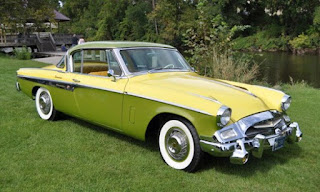
In addition to the books, reference guides, and a few personal “knick knacks,” I have for years had in my office a couple of model cars – but not for the reason people generally think. These models happen to be Studebakers (a 1950 Champion, a 1953 Starliner and a 1963 Avanti). I’d wager that a majority of Americans have never even heard of a Studebaker, and the notion that a major U.S. automobile maker once operated out of South Bend, Indiana would likely come as a surprise to most. I keep them in my office not because I have an appreciation for classic cars (though I do), but because of the role the automaker played in ERISA’s formation. Born into a wagon-making family, the Studebaker brothers (there were five of them) went from being blacksmiths in the 1850s to making parts for wagons, to making wheelbarrows (that were in great demand during the 1849 Gold Rush) to building wagons used by the Union Army during the Civil War, before turning to making cars (first electric, then gaso...

"Class" of '74

Image
Pensions were not on my mind in 1974, certainly not on Labor Day of that year.   While I was pondering my new college textbooks, President Gerald Ford, less than a month in that role, signed into law the Employee Retirement Income Security Act of 1974 – better known to most of us as ERISA. Little did I know at the time that that law – and the structure it provided to the nation’s private pension system – would, in the years to follow, play such an integral role in my life. ERISA did not create pensions, of course; they existed in significant numbers prior to 1974.   Rather, it was designed to regulate what was there and would yet come to be – to protect the funds invested in those plans for the benefit of participants and beneficiaries with a consistent set of federal standards.   And, as part of that protection, to establish the Pension Benefit Guaranty Corporation (PBGC).   As President Ford said at the time, “It is essential to bring some order and humanity ...

“Churn” Factors

Image
British Statesman and Philosopher Edmund Burke famously commented that “”Those who don’t know history are destined to repeat it.”(1) Indeed, those with experience working with employee benefit plans, can attest to a certain déjà vu-esque quality amidst the recent discussions about tax reform, limiting deductions, and “capping” contributions. These, are, in many ways, old “solutions,”(2) albeit these days arguably applied to a new (or at least different) set of circumstances. As the 113th Congress begins its work, and the Obama administration readies for a second term, it is perhaps not surprising that the nuances of employee benefit plans and their tax treatment might not be an area of expertise for many on Capitol Hill. However, for all the longevity in tenure frequently assumed regarding those in Congress, a review of the data shows just how much turnover has taken place. For example, you might not be surprised to learn that no member of the current Senate was in office when Me...