Posts

Showing posts with the label retirement crisis

The Real Retirement Crisis

Image
  I recently picked up a book that states “why (almost) everything you know about the US retirement system is wrong” — and it’s definitely worth a read. The book — titled  The Real Retirement Crisis: Why (Almost) Everything You Know About the US Retirement System Is Wrong   — is the work of American Enterprise Institute senior fellow Andrew Biggs — and it’s a comprehensive assessment of any number of the misstatements, mischaracterizations, flawed assumptions and downright obfuscations that plague any realistic assessment of the nation’s retirement system. Indeed, he argues that “factoids, however compelling, are no substitute for facts.”   The Goal Biggs outlines the goal of a retirement system as one that “allows individuals to maintain their preretirement standard of living in retirement.” In that regard, he (and academics generally) would say that lower-income individuals' preretirement are well-served by Social Security’s benefit structure. Indeed, the argu...


A Retirement Crisis of Complicity

Image
   A recent headline asks: “ Why Aren’t We Talking About America’s Retirement Crisis?”   Really? It seems to me that that’s ALL we’re talking about! Even more ironically, that headline appeared in an op-ed crafted by none other than Teresa Ghilarducci (and her new co-author, Christopher Cook) who, so far as I can discern, talks (and writes books) about little other than the so-called “crisis.” And this specific op-ed, as hers often do, got picked up in syndication (see  this link for details ).   But then, this week I stumbled across a LinkedIn post from Andrew Biggs, which matter-of-factly stated, “After a period of trying-in-good-faith, I've concluded I have to be more, um, forthright in calling out, shall we say, misinformation regarding Americans' retirement income security.” Said another way, it appears that Mr. Biggs has come to the conclusion –  as I have  – that polite commentary and even-handed discussions are insufficient to put to bed w...

Critiquing the Retirement ‘Crisis’

Image
  It’s been said that a crisis is a terrible thing to waste. But what if it’s a figment of your imagination? “Crisis” is a word much bandied about these days, most particularly as a label applied to retirement—by foes and fans alike. Indeed, while not so long ago headlines posed that premise as a question (“Is there a retirement crisis?”), it is now generally posited as a current reality (often accompanied by an exclamation point)—even though an examination of objective data (and a clinical application of the term “crisis” [i] ) suggests otherwise. To a certain extent, such hyperbole is understandable; “crisis” is, after all, one of those descriptors that cry out for swift and decisive action—and the industry of employee benefits has had its fair share. Let's be honest - claiming that we are in the middle of a crisis is most assuredly a better bet in terms of getting a book deal, a televised interview, or hundreds of thousands of “clicks.” And certainly over the course of my career...

A Tough Question

Image
  I’m rarely at a loss for words, but I was recently asked a question that gave me …pause. It was a simple question really—John Sullivan and I were being interviewed on the  401(k) Specialist podcast —and Brian Anderson asked “which session are you most looking forward to at the NAPA 401(k) Summit?” I was only too happy to defer to John while I gave the question some thought. But in truth, it was a little bit like asking a parent to name their favorite child.  Now, there are some sessions I am more interested in than others—but to pick one?  Well, I just couldn’t do it—and fortunately Brian didn’t try to box me in (I did allude to a specific affinity for the  LIVE Nevin & Fred podcast session , however).   In fact, we do approach our content a bit differently than most, I think. While it’s gotten to be pretty common for events to boast of the pedigree of their steering bodies, many, perhaps most—are essentially no more than figureheads to the actua...

That Sinking Feeling?

Image
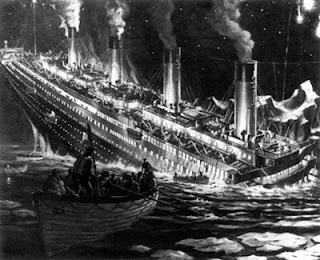
You may have missed it – but we just passed the anniversary of the 1912 sinking of the now iconic RMS  Titanic , at the time the world’s largest ocean liner. Its passengers included some of the wealthiest people in the world, as well as a large number of emigrants seeking a new life in North America. On the ocean liner’s maiden – and only – voyage, it carried 2,244 people, 1,514 of whom would perish in the North Atlantic. In hindsight, the  Titanic  seems a textbook example of a disaster that could have been avoided: There were plenty of warnings about sea ice (as many as six), but the ship was traveling near her maximum speed (though it’s a movie myth that they were trying to set a speed record) when lookouts sighted the iceberg that did her in with a “glancing” blow – that nonetheless opened 6 of her 16 compartments to the sea (the ship was designed to stay afloat with four of her forward compartments flooded). And let’s not forget that she went to ...

Crisis ‘Management’

Image
Rarely a week goes by that a headline, survey or academic paper doesn’t proclaim the reality of a retirement crisis with the certainty generally reserved for topics like the existence of gravity, or the notion that the sun will rise in the east. And certainly based on the data cited, there would seem to be a compelling case that trouble lies ahead for many. That said – as was pointed out by Andrew Biggs at the recent Plan Sponsor Council of America conference – the reality is that good, reliable data is hard to come by. Indeed, many of the reports cited in those headlines rely on what you would expect to be a reliable source; the Census Bureau’s Current Population Survey, or CPS. 1 Unfortunately, that reliable source turns out to be not-quite-so-reliable. It suffers from relying on what people tell the survey takers, but perhaps more significantly, Biggs, resident scholar at the American Enterprise Institute, pointed out that the survey only counts as income in r...

Storm "Warnings"

Image
Watching the incredible, heart-rending coverage this past weekend of Hurricane Harvey’s devastation, I was reminded of a personal experience with nature’s fury. It was 2011, and we had just deposited our youngest off for his first semester of college, stopped off long enough in Washington, DC to visit our daughters (both in college there at the time), and then sped home up the East Coast with reports of Hurricane Irene’s potential destruction and probable landfall(s) close behind. We arrived home, unloaded in record time, and rushed straight to the local hardware store to stock up for the coming storm. We weren’t the only ones to do so, of course. And what we had most hoped to acquire (a generator) was not to be found – there, or at that moment, apparently anywhere in the state. What made that situation all the more infuriating was that, while the prospect of a hurricane landfall near our Connecticut home was relatively rare, we’d already had one narrow miss with an earlier hurric...