Posts

Showing posts with the label declaration of independence

The Pursuit(s) of Happiness

Image
This is the time of year when you hear a lot of talk about the “unalienable” rights of “life, liberty, and the pursuit of happiness.” And while they weren’t written with retirement plans in mind — to my ears they may describe the aspirations behind retirement better than almost anything else in American public policy.  “Life” is, of course, central to retirement planning. It defines not only the time we have to prepare financially, physically, and emotionally for retirement — but also the length of time those preparations must sustain us. ad space Granted, retirement is a relatively new and for many an as yet unexplored reality. But it’s easy to take for granted that millions of older Americans today live with a degree of financial security that previous generations often lacked. Before pensions, Social Security, and defined contribution plans, growing old frequently meant dependency — on family, charity, or continued labor.  “Liberty” may be even more directly connected to re...

The Founding Fathers and Fiduciary Fundamentals

Image
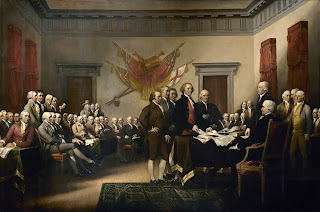
Anyone who has ever found their grand idea shackled to the deliberations of a committee, or who has had to kowtow to the sensibilities of a recalcitrant compliance department, can empathize with the process that produced the Declaration of Independence we commemorate this week. Not that the machinations of a plan committee can be fairly equated to the deliberations—or impact—of the Second Continental Congress, but there are some parallels. Things like… Committee members should understand their obligations—and the risks. Those who gathered in Philadelphia that summer of 1776 came from all walks of life, but it seems fair to say that most had something to lose. True, many were merchants (some wealthy, including President of Congress John Hancock) already chafing under the tax burdens imposed by British rule, and perhaps they could see a day when their actions would (eventually) accrue to their economic benefit. Still, they could hardly have undertaken that declaration of ...

Independence 'Gaze'

Image
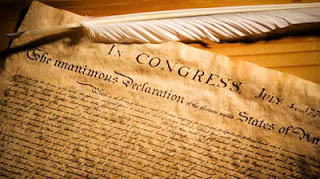
A week from today the nation will celebrate Independence Day—though of course independence didn’t actually occur on July 4. Let’s face it, the Declaration of Independence [i] was little more than that—a declaration. One that had yet to be backed by anything beyond the artfully crafted and narrow consensus of a handful of delegates appointed by a wide variety of means and mechanisms, with correspondingly disparate levels of responsibility and accountability for their alignment with the principles outlined in that document.  As practically meaningless as that declaration might have been, we commemorate and celebrate those actions because, eventually, events transpired that made those aspirations a reality. But it came only after years of hard-fought fighting, and while we don’t often talk about this, it ultimately divided the nation between those who wanted to be free from what they viewed as tyranny—and those who viewed those actions and aspirations as nothing less t...

Dividing Lines

Image
 It’s been said that there remains more that unites us than divides us—but that’s not how it feels most days.  However, such times are not all that unusual for this diverse nation. Indeed, if today’s battle lines do seem harsher and more extreme, my sense is that it’s only because they are magnified by media and social media, transported to us every minute of the day and night by devices we dare not relinquish any longer than to recharge the battery. Consider the nation’s declaration of independence which we will commemorate on Monday. Students of history—not to mention aficionados of the musical 1776 or   readers of David McCullough’s John Adams  or viewers of its HBO miniseries adaptation—know that the decision to declare independence was no easy matter. Indeed, the political bartering and frustrations involved in getting to a “unanimous Declaration of the thirteen United States of America” would have been all-too familiar to the legislators of today....

History’s Lessons for Plan Fiduciaries

Image
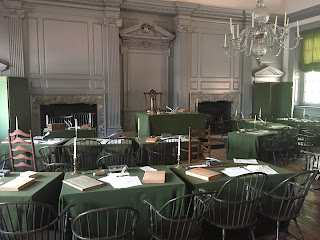
The study of history is a passion of mine, and while it seems a bit trite, the old adage that those who don’t remember the past are doomed to repeat it seems more apropos by the day. Regardless, I never cease to be touched by the experience of walking the grounds where famous individuals or great historic events took place.  A few years back I had the opportunity to be in Philadelphia for a few days beyond the customary speaking event “fly-by,” and was thrilled to be able to tour Independence Hall where, in 1776, the Continental Congress crafted what we will shortly celebrate as the Declaration of Independence. Those who think that partisan divides, cynical self-interest, and political acrimony are recent “innovations” in government would perhaps be shocked to learn that regional tensions have always been part-and-parcel of our republic… even before it was a republic.  The room was smaller than I had imagined—and I couldn’t imagine what it must have felt like o...

Times That Try Men's Souls

Image
It seems trite, almost unnecessary, to comment that we are living in and through extraordinary times.  I’m a student of history, and I have often found comfort, if not guidance, from what has gone before. As often as not, however unique and extraordinary the times seem (or are portrayed in the headlines), there’s inevitably a comparable, and almost always, an even more extreme example, of such times in decades past. [i] And while there’s been a renewed interest in, and awareness of, the pandemic of 1918 (though I’m told the pandemic of 1957-58 is a more apt comparison to COVID-19), as the anniversary of our nation’s declaration of independence nears, I’ve been drawn to the events of 1776. As it turns out, the newly declared (but not yet formal) nation was confronted not only with the struggle for independence (and no small number of voices that simply wanted to preserve the status quo), but with the scourge of smallpox. Just as the close quartering and movement...

5 Fiduciary Fundamentals: A Founding Fathers Perspective

Image
This week we’ll commemorate Independence Day – but with all of freedom’s lessons, there are certain things that plan committees (still) have in common with the Second Continental Congress. Certainly anyone who has ever found their grand idea shackled to the deliberations of a committee, or who has had to kowtow to the sensibilities of a recalcitrant compliance department, can empathize with the process that produced the Declaration of Independence we commemorate this week. Consider these similarities: Committee members should understand their obligations – and the risks. Those that gathered in Philadelphia that summer of 1776 came from all walks of life, but it seems fair to say that most had something to lose. True, many were merchants (some wealthy, including President of Congress John Hancock) already chafing under the tax burdens imposed by British rule, and perhaps they could see a day when their actions would (eventually) accrue to their economic be...

5 Plan Committee Lessons from the Second Continental Congress

Image
As we prepare to celebrate the Declaration that marks the birth of this nation, it seems a good time to reflect on some lessons from that experience that hold true even today. Inertia is a powerful force. By the time the Second Continental Congress convened, the “shot heard round the world” had already been fired at Lexington, but many of the representatives in Philadelphia still held out hope for some kind of peaceful reconciliation. Little wonder that, even in the midst of hostilities, there was a strong inclination on the part of several key individuals to put things back the way they had been, to patch them over, rather than to take on the world’s most accomplished military force. As human beings we are largely predisposed to leave things the way they are, rather than making abrupt and dramatic change. Whether this “inertia” comes from a fear of the unknown, a certain laziness about the extra work that might be required, or a sense that advocating change sugge...

Fiduciary Lessons from the Founding Fathers

Image
Anyone who has ever found their grand idea shackled to the deliberations of a committee, or who has had to kowtow to the sensibilities of a recalcitrant compliance department, can empathize with the process that produced the Declaration of Independence we’ll commemorate next week. Indeed, there are any number of things that the experience of today’s investment/plan committees have in common with that of the forefathers who crafted and signed the document declaring our nation’s independence. Here are four: It’s hard to break with the status quo. By the time the Second Continental Congress convened in May of 1775, the “shot heard round the world” had already been fired at Lexington, but many of the 56 representatives there still held out hope for some kind of peaceful reconciliation, even as they authorized an army and placed George Washington at its helm. Little wonder that, even in the midst of hostilities, there was a strong inclination on the part of several key individuals to ...

4 Things Plan Fiduciaries Have in Common With the 2nd Continental Congress

Image
Anyone who has ever found their grand idea shackled to the deliberations of a committee, or who has had to kowtow to the sensibilities of a recalcitrant compliance department, can empathize with the process that produced the Declaration of Independence we’ll commemorate on the Fourth. That said, I think there are things that today’s investment/plan committee share with, and can learn from, the experience of those forefathers who crafted and signed the document declaring our nation’s independence. It’s hard to break with the status quo. By the time the Second Continental Congress convened, the “shot heard round the world” had already been fired at Lexington, but many of the representatives there still held out hope for some kind of peaceful reconciliation, even as they authorized an army and put George Washington at its helm. Little wonder that, even in the midst of hostilities, there was a strong inclination on the part of several key individuals to put things back the way they h...

The Course of Human Events

Image
It is easy, looking back, to gloss over just how remarkable was the sequence of events that made this nation’s independence a reality. The bickering and machinations of the Continental Congress in 1776 were every bit as unpleasant, and unproductive, as the worst of today’s elected officials — even though, and perhaps in some measure because, hostilities with Great Britain had officially been underway since the so-called “shot heard ‘round the world” the preceding spring. The men who gathered in Philadelphia that summer to bring together what was not yet a “new nation” came from all walks of life. Still, it seems fair to say that most had something to lose, both financially and in terms of the personal liberty they advocated as an “unalienable” right. True, many were merchants (some wealthy, including President of Congress John Hancock) already chafing under the tax burdens imposed by British rule, and perhaps they could see a day when their actions would accrue to their economic be...

'Free' Wills

Image
Editor's Note: No matter what else is going on in our lives this weekend, a student of history cannot help but be conscious of the boldness of the Declaration of Independence we celebrate today, and how dearly won its principles. There may be other ways to express it, but this weekend I'm going to draw on the perspectives expressed in a prior posting. Whether you remember it or not, I'm hoping you enjoy it - and take it to heart! Over the weekend I reacquainted myself with that episode of the HBO miniseries “John Adams” titled “Independence.” As a writer and editor, I watched with a special appreciation the part where Benjamin Franklin and John Adams are “tweaking” Thomas Jefferson’s draft – and the pain in the latter’s face as his “precisely chosen” words were modified. All in all, a modest sacrifice, to be sure. But I, for one, could feel his pain. That said, anyone who has ever found their grand idea shackled to the deliberations of a committee, who has had to kow...

“Free” Wills

Image
Over the weekend, I reacquainted myself with that episode of the HBO miniseries “John Adams” titled “Independence.” As a writer and editor, I watched with a special appreciation the part where Benjamin Franklin and John Adams are “tweaking” Thomas Jefferson’s draft—and the pain in the latter’s face as his “precisely chosen” words were modified. All in all, a modest sacrifice, to be sure. But I, for one, could feel his pain. That said, anyone who has ever found their grand idea shackled to the deliberations of a committee, who has had to kowtow to the sensibilities of a recalcitrant compliance department, or who has simply suffered through the inevitable setbacks all too frequently attendant with human existence must have at least a modest appreciation for the trials that confronted not only that document’s authors, but those then living in these not-yet-united states. Without question, 1776 is one of those turning points in history, not just for this nation but, in the course of tim...

“Common” Sensitivities

Image
Last week the Congress was voting on an issue on which I have a strong opinion, and, while I did not vote for my congressman—and will likely never vote for him (unless, of course, he undergoes some kind of philosophical transformation)—I e-mailed him to express my opinion. And then I called his office to express the same opinion (not only because I feel so strongly about the issue, but because in a day of templated e-mail solicitations, I understand that a phone call probably has a greater impact). As I hung up the phone, my daughter, who was sitting in the room with me at the time, looked at me quizzically—so I explained to her what I had done, and the issue about which I had called. “Really?” she said—with an air of awe and wonder. And then, after a pause she said, “So, does that work?” I’ve given a lot of thought to that question since then. Of course, we live in a Republic, not a Democracy, and for the very most part, we don’t get to vote on all the individual issues brought be...