Posts

The Deification of DB-ification

Image
I recently stumbled across another of those “DC plans are becoming like DB plans” articles — you know, the so-called “DB-ification” of 401(k)s? This is all supposed to be a good thing, of course, but is it? We are, of course, routinely told that defined benefit plans do (or did) a better job of providing adequate income in retirement than defined contribution plans — though we aren’t generally reminded that that assumes that workers have actually managed to accumulate service credits sufficient to vest in those benefits, and that those programs are properly funded. However, this interest in emulation of DB plans by DC plans is a relatively recent focus, fueled in no small part by the success of Pension Protection Act-engendered trends, primarily auto-enrollment (after all, nobody asks people to fill out a form to be covered by their DB plan) and asset allocation fund defaults (ditto on asking participants to choose the investments in the DB plan). But while it’s said that imitation...

Did We ‘Need’ a New Fiduciary Regulation?

Image
I was recently asked by a reporter if the new fiduciary regulation was “needed.” The question caught me a bit off guard, because having been in “figure out how to deal with this” mode for most of the past year, I had long since moved past “why” and “if” to “when” and “how.” I was reminded of our last home purchase – which we bought in a bit of a rush. Oh, it wasn’t like we didn’t know we were moving – but our ability to actually hone in on a new home was hindered by the fact that our current home had to sell first. And, as is often the case in such things (or has been for us), we had gone a long time with nary an offer, much less a viable one. Once that offer came, of course, we had to move quickly (literally). And so, the planning that we had done mentally in anticipation of that day was thrust into overdrive. Ultimately we settled on a house that wasn’t the best we had seen, but it was the best available at the time (within the price and commuting distance restraints we placed up...

5 Reasons to Plan and Save for Retirement Now

Image
As April is National Financial Literacy month, and this is National Retirement Planning Week, those who work with retirement plan participants know it’s important to do the right thing(s) when it comes to retirement planning and savings. But for those you are trying to help encourage, here are five reasons to plan and save for retirement now, and as an integral part of that financial plan. Because you don’t want to work forever. Seriously, no matter how much you love your job, if you want to stop working one day – and trust me, you will – you are going to have to think about how much income you will need to live after you are no longer working for a paycheck. Because living in retirement isn’t “free.” Many people assume that expenses will go down in retirement – and, for many, perhaps most, they do. On the other hand, there are changes in how we spend in retirement as well – and they aren’t always less. A recent report by the nonpartisan Employee Benefit Research Institut...

The Choices of a Lifetime

Image
It was 10 years ago today – a Saturday morning as I recall.   I had just wrapped up my weekly column when I got a call from my sister. My father, who had been battling cancer for several years now, had suffered a series of heart attacks. By the end of the day, he had passed. As the family converged, my siblings and I tried as best as we could, together with Mom, to deal with the tasks that required our attention, and divvied up the ones that seemed to call out for individual attention. Having spent my entire professional career in financial services, and having picked up a law degree along the way, my “job” was to organize the will and assets. The estate wasn’t complicated.   My parents each chose careers of service to others; Dad as a minister, and then a director of missions where he helped other ministers until his “official” retirement several years ago (far as I could tell, Dad’s only retirement was from the receipt of a regular paycheck), while Mom was a school tea...

The ‘Plot’ Thickens

Image
In recent weeks, I have been distressed to see a pair of reports by what are sometimes affectionately referred to as 401(k) “haters” — but that’s not what I find most troubling. One, by the Economic Policy Institute, is innocuously titled, “ The State of American Retirement ,” but it might be more honestly subtitled, “How 401(k)s have failed most American workers.” The other is a formalized (and slightly updated) version of Teresa Ghilarducci’s Guaranteed Retirement Account (GRA) proposal titled, “ A Comprehensive Plan to Confront the Retirement Crisis .” Both reports tread familiar, and misguided, ground. Misguided and misleading as these kinds of reports are, they’re not new or even original. I’d almost be inclined to simply ignore them. That is, until I see headlines like, “ The Plan That Could Render Your 401(k) Obsolete ,” or “ These Depressing Charts Show the Different Ways 401(k)s Fall Short ,” reported with a straight face by the personal finance press. The latter, which ju...

5 Ways to Boost Retirement Confidence

Image
With increasing regularity, the financial services industry pumps out surveys that purport to capture America’s sense of confidence regarding its readiness for retirement, at least on a financial footing. Mostly, however, they seem to focus on the symptom, rather than dealing with the underlying cause(s). However well-intentioned, these all seem designed to highlight a persistent strong undercurrent of concern — one that, certainly when juxtaposed against the generally disappointing preparation levels reported by respondents, seems completely warranted. Confidence about retirement is one thing, of course, and preparation something else, though the two are logically intertwined. That said, for those looking to shore up confidence levels, data from the granddaddy of such surveys — the non-partisan Employee Benefit Research Institute’s (EBRI) Retirement Confidence Survey — provides a roadmap: Work for an employer that offers a retirement plan. Data indicates that workers — even wo...

Why Doesn’t Every Plan Have Automatic Enrollment?

Image
For all the good press and positive results that automatic enrollment gets, one might well expect that every plan would embrace it. And yet today, nearly a decade after the passage of the Pension Protection Act, many still don’t. So, why don’t all plans use automatic enrollment — and what can you do about it? Here are the primary objections that I have heard from plan sponsors — and some possible responses. Cost. The simple reality is that automatic enrollment “works,” which is to say that overnight, it has the very real potential of transforming a long-standing plan participation rate of 67% or 75% to 95% or greater. The other simple reality is that when you take that likely increase in participation rate (generally from 70% to 95% or so), and then figure out the increase in matching dollars that would result — well, it can be a sudden budget jolt, particularly when you think about it applying to an employee population that is likely more tenured and highly compensated. Per...

15 (More) Retirement Plan Points to Ponder

Image
Working with retirement plans is a complicated, challenging and constantly changing process. That said, there are certain constants — and things that bear repeating and/or reconsidering from time to time. Since I published my first list of 15 last fall (one of my most popular, as it turns out), I’ve gotten several very good suggestions — and had an epiphany or two. Here are a few (more) points to ponder: Cheaper isn’t always better, unless it’s the only difference. Sometimes you do get what you pay for — but not always. If you’re not doing anything “wrong,” you probably aren’t doing anything much. You can spend a lot of money in court being right. A fund whose allocation is based solely on date of retirement is sure to miss something, but not as much as a fund whose allocation doesn’t take that into account. If you don’t know how much you’re paying, you’re likely paying too much. Don’t assume that those who aren’t saving via your workplace retirement plan know what they ...

4 Things That Make Me Go ‘Huh?’

Image
Ours is a business where surveys and trends often shape not only perceptions, but policy — though sometimes the conclusions drawn, and even the premise itself — make me go “huh?” Here’s a sampling: Citing a drop in deferral rates as a failure of automatic enrollment. Every so often a personal finance writer will stumble across an industry survey that shows that the average deferral rate in 401(k) plans has declined, a problem they attribute to automatic enrollment adoption. We all know what is going on here ; individuals who take the time to fill out a form and enroll in the plan manually tend to defer at a higher rate than do those who are automatically enrolled, the latter typically at a modest 3% rate. On the other hand, automatic enrollment has a dramatic impact on raising the participation rate. The rest is just math — more people, saving at lower rates = a lower average deferral rate. Now, those individuals automatically enrolled at a 3% rate may draw down the average de...

Are the Panthers a Portfolio Pick?

Image
Will your portfolio pick up with the Panthers, or will it get bucked by the Broncos? That’s what adherents of the so-called Super Bowl Theory would likely predict. The Super Bowl Theory holds that when a team from the old National Football League wins the Super Bowl, the S&P 500 will rise, and when a team from the old American Football League prevails, stock prices will fall. It’s a “theory” that has been found to be correct nearly 80% of the time — for 39 of the 49 Super Bowls, in fact. It certainly proved to be the case this past year, following Super Bowl XLIX, when the New England Patriots bested the Seattle Seahawks 28-24 to earn their fourth Super Bowl title. It also “worked” in 2014, when the Seahawks bumped off the Denver Broncos, a legacy AFL team, and in 2013, when a dramatic fourth-quarter comeback rescued a victory by the Baltimore Ravens — who, though representing the AFC, are technically a legacy NFL team via their Cleveland Browns roots. Admittedly, the fact ...

7 New Year’s Resolutions for Plan Sponsors

Image
This is the time of year when resolutions for the cessation of bad behaviors and the beginning of better ones are in vogue. Here are mine for plan sponsors. Put your fund menu on a diet. Though it is a point often made with jellies and ice cream, a long-standing behavioral finance tenet is that more choice doesn’t lead to better decisions. So what’s with those burgeoning 401(k) investment menus? Plan sponsors tend to offer more than 11 investment options in their DC plans, with 38% offering 11 to 15 options and 45% offering more than 16 options, according to the Rocaton/Pensions & Investments 2015 Survey of Defined Contribution Viewpoints study, which polled more than 400 plan sponsors and other industry professionals. Odds are that you have funds on your menu that either aren’t being used or being used widely — options that contribute little other than clutter to your investment review and to the decisions of your participants. Take a look — your retirement plan menu should...

Naughty or Nice?

Image
A few years back — when my kids still believed in the reality of Santa Claus — we discovered an ingenious website. This was a website that purported to offer a real-time assessment of your “naughty or nice” status. Now, as Christmas approached, it was not uncommon for us to caution our occasionally misbehaving brood that they had best be attentive to how those actions might be viewed by the big guy at the North Pole. But nothing ever had the impact of that website — if not on their behaviors (they were kids, after all), then certainly on the level of their concern about the consequences. In fact, in one of his final years as a “believer,” my son (who, it must be acknowledged, had been particularly naughty that year, and he knew it) was on the verge of tears, worried that he’d find nothing under the Christmas tree but the nuggets of coal in his stocking he so surely deserved. Bad Behaviors? With so many reports purporting to chronicle the sorry state of retirement confidence...

6 Tips on Shopping for a Provider

Image
My single memory of venturing out on Black Friday to shop came at the instigation of my “little” sister, who has long undertaken such forays. Nor was this to be a random shopping expedition — armed with circulars and coupons, she directed me and my two brothers with the fervor and furor of General Patton as to which stores we were to invade, the objective(s) of these intrusions, and in some cases, the line(s) in which we would take up residence while she pursued items she (apparently) did not trust to the pursuit of mere amateurs. Shopping for a new provider is not something one would normally compare with a Black Friday foray, but if you have a plan sponsor — or plan sponsor prospect — who’s thinking about shopping for a new provider, here’s a list they may find useful. Make a list — and yes, check it twice. In an area fraught with as much potential complexity as searching for a retirement plan provider, it’s easy to think you’ll learn what you need to look for by simply going...

The 5 W’s: A New Plan Fiduciary Perspective

Image
The Five Ws (or as they are sometimes called, Five W’s and one H) are questions whose answers are considered basic in information gathering in a variety of settings. There are a lot of questions that plan fiduciaries should ask, but here are five W’s and an H that every new plan fiduciary — or every “old” fiduciary who is new to a plan — should ask. Who are the (other) plan fiduciaries? Fiduciary status is based on your responsibilities with the plan, not your title. If you have discretion in administering and managing the plan, or if you control the plan’s assets (such as choosing the investment options or choosing the firm that chooses those options), then you are a fiduciary to the extent of that discretion or control. And, if you are able to hire a fiduciary, then you’re (probably) an ERISA fiduciary because the power to put others in a position of power regarding plan assets is as critical — and as responsible — as the ability to make decisions regarding those investments ...

A Retirement Industry Thanksgiving List

Image
Thanksgiving is a special time of year — and one on which it seems fitting to reflect on all for which we should be thankful. Here’s my 2015 list: I’m thankful that so many employers voluntarily choose to offer a workplace retirement plan — and that so many workers, given an opportunity to participate, do. I’m thankful that so many employers choose to match contributions or to make profit-sharing contributions (or both). Without those matching dollars, many workers would likely not participate or contribute at their current levels — and they would surely have far less set aside for retirement. I’m thankful that the vast majority of workers defaulted into retirement savings programs tend to remain there — and that there are mechanisms (automatic enrollment, contribution acceleration and qualified default investment alternatives) in place to help them save and invest better than they might otherwise. I’m thankful that trends that suggest that more plan sponsors are extending tho...

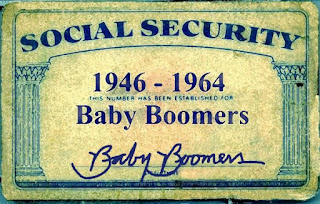
6 Things Boomers Need to Know About Saving for Retirement

Image
Several weeks back, I wrote a column entitled, “ 5 Things Millennials Need to Know About Saving for Retirement .” But what about those at the brink of retirement? Retirement seems close — perhaps too close for the comfort of Boomers, some of whom have already begun cycling into retirement. In fact, the youngest element of this cohort (born in 1964) is now already 51, and it’s said that 10,000 Boomers roll into retirement every day. That said, whether you’ve been saving or not, or not saving enough — here are six things Boomers need to know about saving for retirement. 1. Social Security won’t be as much as you think it will be. When you were your kids’ age(s), you too were likely disdainful about the long-term prospects for Social Security (and hey, your kids weren’t around for the  real  funding crisis back in the early 1980s!). That said, you’re not only close enough to collecting; many of you are probably in the age group where when politicians talk about making c...