Posts

What Plan Sponsors Want to Know About Financial Wellness

Image
Several years back the concept of “wellness” crept into benefits planning. More recently, HR’s affinity for that wellness concept has been expanded upon by the concept of financial wellness. But as appealing as the notion is, a number of key questions linger. With regard to wellness generally, the notion was simple: Rather than just treating the symptoms of poor health with insurance-funded trips to the doctor (or the hospital) after the damage was done, we’d get ahead of things by emphasizing healthy habit steps (smoking cessation, weight loss, etc.) programs that would reduce doctor bills (and insurance premiums). As regards financial wellness, the notion is that bad financial health contributes to (and/or causes) a bevy of woes: stress, which can lead to things like lower productivity, bad health and higher absenteeism, and even a greater inclination toward workplace theft, not to mention deferred retirements by workers who tend to be higher salaried and who have higher health...

5 Things People Get Wrong About Fidelity Bonds

Image
One of the most important – and, in my experience, least understood – aspects of plan administration is the requirement that those who handle plan funds and other property be covered by a fidelity bond. While ERISA requires the bond to protect the plan from losses resulting from acts of fraud or dishonesty, fiduciaries often confuse that coverage with insurance that is designed to protect them from liability. Here are five things you (or your client) may not know about ERISA fidelity bonding – and that, as a result, they may be getting wrong. An ERISA fidelity bond is not the same thing as fiduciary liability insurance. The fidelity bond required under ERISA specifically insures a plan against losses due to fraud or dishonesty (e.g., theft) by persons who handle plan funds or property. Fiduciary liability insurance, on the other hand, insures fiduciaries, and in some cases the plan, against losses caused by breaches of fiduciary responsibilities. Although many plan fiduciarie...

5 Things You May Not Know About Roth 401(k)s

Image
I made the switch to Roth for my retirement savings years ago – and I have long counseled younger workers, who were likely paying the lowest tax rates of their working lives, to do so as well. Pre-tax treatment has, of course, been the norm in 401(k) plans since their introduction in the early 1980s. On the other hand, the Roth 401(k) wasn’t introduced until the Economic Growth and Tax Relief Reconciliation Act of 2001, and even in that legislation wasn’t slated to become effective until 2006 (and at that time was still slated to sunset in 2010). Despite that late start, according to a variety of industry surveys (Plan Sponsor Council of America, Vanguard, PLANSPONSOR), roughly 60% of 401(k) plans now offer a Roth 401(k) option, and PSCA data shows that 28.6% of 403(b) plans already allow for Roth contributions. Participant take-up, which just a few years ago hovered in the single digits, is now in the 15-20% range. Here are five other things you may not know about the Roth 401(k...

Here We Go Again...

Image
What were you doing in 1986? It was a big year in my life. I got married, hit one of those birthdays with a zero in it, watched my-then hometown Chicago Bears dominate Super Bowl XX, and picked up and moved my new bride (and our menagerie) several hundred miles south to take on a new job heading up a recordkeeping operation. Before the end of that year, that recordkeeping operation (and, thanks to a recent bank acquisition, the seven different platforms it was running on) would be struggling to understand, implement and communicate a wide array of sweeping changes associated with the Tax Reform Act of 1986. Even though it came during a period when tax code changes (ERTA, TEFRA, DEFRA, REA), were being thrown at us about every 18 months, on average, it’s still difficult to absorb the scope and breadth of the work it took to implement the changes that came with TRA 86. For all the work that had to go into complying with the new regulatory regimen that came with TRA 86, its real imp...

View "Points"

Image
By any measure, the just-concluded NAPA 401(k) Summit  was an incredible, record-breaking success – with so much good content and networking that it was hard to choose between sessions. For those who weren’t able to be there – or who were unable to be everywhere at once – here are some random thoughts, insights and perspectives from that event. Health savings accounts could wind up being a big deal. One man’s loophole is another man’s incredibly important tax preference. The most important thing is not what happened, it’s what’s going to happen. Online gambling didn’t kill Vegas – and robo-advisors won’t kill 401(k) advice. In tax reform, everything is about trade-offs. 84% of Millennials surveyed want their investments to make the world better. Retirement plans are about 1/50th of what a plan sponsor does. Fees are still a major factor in landing a new client. Most people want to do the right thing, but they don’t know how to do it. When the market go...

Preparing for the Storm

Image
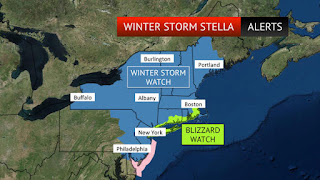
If you live (or were travelling to) the upper east coast of the U.S. this week, odds are you spent some time making preparations for what looked to be (and by the time you read this likely is) a big winter storm. We don’t always get that much time to prepare, of course – and sometimes when we do, those big storms don’t turn out to be very big after all. But you can generally count on lots of frenzied weather forecasters predicting snow-mageddon (even if they do offer some caveats), and at least one shot of the inside of a local grocery showing empty bread and milk aisles. Because, after all, who could go 48 hours without bread and milk? Life is full of surprises – and though most of those are unaccompanied by a friendly meteorologist to help us anticipate them, one might well wonder why we let them “sneak” up on us without making better preparations. Perhaps the most obvious is the topic of retirement preparation. Any day now the queen mother of retirement confide...

Is the Prudent Man Standard Good Enough?

Image
It’s often said that ERISA’s prudent man rule is the highest duty known to law. But is that enough? Don’t get me wrong – any law that holds human beings to the standards of an expert in any field is a pretty high standard, and one that can be difficult to meet even with the ablest of expert assistance. I started thinking about this recently when a friend was asking my advice on what he should do regarding the options in his new 401(k) plan. I did what I often do, outlining the pros and cons of various alternatives, helping him to make what I considered to be a well informed – or at least better informed – decision. I had stepped through all the options and considerations with his plan, a pretty standard combination of automatic enrollment provisions. But then, after asking questions throughout, when I was finished, he didn’t ask what I thought he should do. Instead, he asked what I had done with my own retirement savings. The process of stepping through my decisions with my...

6 Assumptions That Can Wreck a Retirement

Image
The future is an uncertain thing, and planning for uncertainty inevitably involves making some assumptions. Here are six that, done improperly, can wreck your retirement. How Long You’ll Live The good news we are living longer – but that means that retirements can last longer, and medical costs can run higher. But while we’re living longer, studies indicate that we tend to underestimate how much longer we will live. The Social Security Administration notes that a man reaching age 65 today can expect to live, on average, until age 84.3, a woman turning age 65 today can expect to live, on average, until age 86.6. But those are just averages. About one out of every four 65-year-olds today will live past age 90, and 1 out of 10 will live past age 95. How Long You’ll Work Perhaps the most important assumption is when you plan to quit working; today most Americans are doing so at 62, though 65 seems to be the most common assumption – and while using 70 (or later) will surely bo...

3 Ways to Get Your Automatic Enrollment Plan Out of its Rut

Image
Inertia is a powerful force in nature, and in human behavior. Even the most proactive and engaged plan designs (and plan designers) can, over time, slide from being in a groove to being in a rut. Here are three ways to reinvigorate automatic plan designs. 1. Auto-enroll all Eligible Participants Over the past decade a growing number of plans have embraced automatic enrollment, in the process not only simplifying and streamlining the process, but also expanding the number of individuals who are saving for retirement. These days, new hires, regardless of their age, are routinely defaulted not only into the plan itself, but also into some type of qualified default investment alternative, whether it be a managed account, target-date fund, or balanced fund. However, those who have been employed for some time are often not accorded that convenience. Instead, perhaps because they are presumed to have previously made a decision not to participate, it is assumed that if they were to hav...

What Does the Super Bowl Portend for Your Portfolio?

Image
Will your portfolio fly with the Falcons, or might it be pummeled by the Patriots? That’s what adherents of the so-called Super Bowl Theory would likely conclude. The Super Bowl Theory holds that when a team from the old National Football League wins the Super Bowl, the S&P 500 will rise, and when a team from the old American Football League prevails, stock prices will fall. It’s a “theory” that has been found to be correct nearly 80% of the time — for 40 of the 50 Super Bowls, in fact. Granted, for most of 2016 it might have looked as though it would be right again, following the AFC’s (and original AFL) Broncos 24-10 victory over the Carolina Panthers, who represented the NFC. It was an usual break in the streak that was sustained in 2015 following Super Bowl XLIX, when the New England Patriots (yes, those same Patriots) bested the Seattle Seahawks 28-24 to earn their fourth Super Bowl title. It also “worked” in 2014, when the Seahawks bumped off the Denver Broncos, a le...

Why You Shouldn’t Hire Your Brother-in-Law as Your Plan’s Advisor

Image
Last week an advisor reached out to me looking for an article on a topic that comes up with remarkable frequency. Specifically, this advisor was dealing with a situation where a client was considering hiring their brother-in-law as the plan advisor, and wondered if we had ever written an article dealing with that situation. It’s not the first time I have been asked that, though sometimes it’s a cousin, a friend, a friend’s cousin, or a cousin’s friend. When that situation comes up – and come up it will – this is what I would tell them: If you’re a plan sponsor, you’re an ERISA fiduciary. If you have discretion in administering and managing the plan, or if you control the plan’s assets (such as choosing the investment options or choosing the firm that chooses those options), you are a fiduciary to the extent of that discretion or control. Ditto if you are able to hire individuals to control those assets – including your brother-in-law. Plan decisions you make as an ERISA fid...

Your Money’s Worth

Image
It’s time to put your money where your mouth is. In just a few weeks, many of you will be at the NAPA 401(k) Summit in Las Vegas. This will be my third Summit since joining the organization, though I have been to, and spoken at, a good number of them over the years. This year, as in years past, the steering committee, agenda team and NAPA leadership have been hard at work for months, developing the program, fleshing out the agenda, lining up speakers, and this year assigning session “owners” to make sure that you get maximum bang for your buck in terms of information and session quality. We’ve taken your feedback on topics and format, expanded the peer-to-peer networking, and added a brand new component called “super” sessions. We’ve got some amazing keynote speakers, enhanced our plan sponsor panel, and, for the first time ever, incorporated a new networking opportunity called “Summit After Dark” which will include some incredible entertainment in world-class environs. Sure, you...

The ‘Free’ Retirement Money Many Overlook

Image
People often talk about the significance of the “free” money associated with the company match in retirement savings – but there’s another source of “free” money that is often overlooked. I’m talking about the so-called Saver’s Credit, more precisely the Retirement Savings Contributions Credit. It’s a credit, not a deduction – a dollar-for-dollar reduction of tax liability. Income Limits For those who qualify, in addition to the customary benefits of workplace retirement savings, it could mean a $1,000 break on their taxes — twice that if married and file a joint return. In fact, for a moderate income saver, it can offset 50%, 20% or 10% of retirement plan or IRA contributions up to $2,000 ($4,000 if married filing jointly), depending on adjusted gross income. Speaking of which, the Saver’s Credit can be claimed by: married couples filing jointly with incomes up to $61,500 in 2016; heads of households with incomes up to $46,125 in 2016; married individuals filing separatel...

"Things", Remembered

Image
It is something of a tradition this time of year to look back, to reminisce about past events and lessons learned, and sometimes to look ahead. Here are some insights – nearly 80 – from columns past that should help lay the groundwork for a productive and prosperous 2017. 3 Things Retirement Savers Can Learn from Pokémon Go Here are some things that will help you in Pokémon Go and saving for retirement. 4 Things You Should Know About Social Media Whether you are fully engaged in social media, just thinking about how to get started, or somewhere in between, here are four things to keep in mind. 4 ‘Sure’ Things About Saving for Retirement That Aren’t Sometimes life takes unexpected turns, upending even the most “certain” outcomes. These so-called “sure” things sometimes turn out to be anything but that – and those that have relied on those assumptions, these “conventional wisdoms” as “givens” can wind up being disappointed – and ill-prepared for financing retirement. 4...

Lamenters of the 401(k) Revolution

Image
The 2017 media-bashing of the 401(k) is off to an early start. The most recent is a Wall Street Journal article (subscription required) whose headline notes that “The Champions 1 of the 401(k) Lament the Revolution They Started” (the third-most read article on the WSJ site as I write this). It’s fair to say, I think, that their regrets aren’t so much about the 401(k) itself, but their sense that the existence of the 401(k) – which transformed the notion of retirement savings in so-called savings and thrift plans by allowing regular workers to defer paying taxes on money they set aside for retirement – led to the demise of the traditional defined benefit plan. Well, maybe. Trust me, I “get” the affection for the promise of a DB plan. Who wouldn’t like a plan that is funded (and paid for) by your employer, invested by your employer, and at retirement, produces regular, predictable distributions without you having to do anything except making sure they know where to send the ch...

A Retirement Savings Santa Claus?

Image
One could certainly argue that many Americans act as though at retirement some kind of benevolent elf will drop down their chimney with a bag full of cold cash from the North Pole. They behave as though, somehow, their bad savings behaviors throughout the year(s) notwithstanding, they’ll be able to pull the wool over the eyes of a myopic, portly gentleman in a red snowsuit. A few years back — well, now it’s quite a few years back — when my kids still believed in the reality of Santa Claus, we discovered an ingenious website that purported to offer a real-time assessment of their “naughty or nice” status. Now, as Christmas approached, it was not uncommon for us to caution our occasionally misbehaving brood that they had best be attentive to how those actions might be viewed by the big guy at the North Pole. But nothing we said ever had the impact of that website — if not on their behaviors (they were kids, after all), then certainly on the level of their concern about the conseq...

6 Stocking Stuffers for Retirement Participants

Image
I can remember as a kid paging through the pages of various Christmas catalogues, earmarking the pages that contained the various things that I hoped Santa Claus (or his emissaries, my parents) would take as hints. These days such things have been replaced by online “wish lists” – and if they’re not quite as much fun to page through, they’re doubtless more effective. So, in the spirit of the holiday season, here are some “presents” that I hope participants find in their retirement plan “stockings” during the coming year: Automatic reenrollment for longer-term workers. New hires, regardless of age, are these days routinely defaulted into some type of qualified default investment alternative, whether it be a managed account, target-date fund, or balanced fund. However, workers who have been in the plan for awhile are generally not accorded that courtesy. Rather, ostensibly on the premise that they have, at some previous point in their careers, made an affirmative election to be ...

Things That the ‘Common Wisdom’ About Millennials Gets Wrong

Image
To judge by the headlines, if there’s anybody in more trouble when it comes to retirement planning than Boomers, it’s Millennials. But are they really? Consider this: Millennials are saving for retirement – likely earlier, and at higher rates than you did when you were their age. I’ve seen a number of surveys that suggest that Millennials are, in fact, saving earlier – and saving at higher rates than their Boomer parents. A recent Natixis survey says that on average, Millennials first enrolled in a retirement savings plan at age 23, while Boomers didn’t until 31. Another – this one by Ramsey Solutions – finds 58% of Millennials are actively saving for retirement, and they began saving at an average age of 23. Consider also that, of the Millennials who are actively saving, 39% set aside up to 9% of their income for retirement — $5,000 of the average annual Millennial household income of $55,200. This higher and earlier rate of saving exists despite high levels of college debt...