Posts

Storm "Warnings"

Image
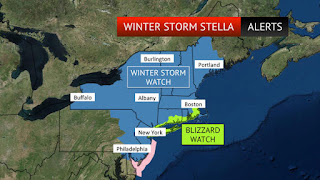
Watching the incredible, heart-rending coverage this past weekend of Hurricane Harvey’s devastation, I was reminded of a personal experience with nature’s fury. It was 2011, and we had just deposited our youngest off for his first semester of college, stopped off long enough in Washington, DC to visit our daughters (both in college there at the time), and then sped home up the East Coast with reports of Hurricane Irene’s potential destruction and probable landfall(s) close behind. We arrived home, unloaded in record time, and rushed straight to the local hardware store to stock up for the coming storm. We weren’t the only ones to do so, of course. And what we had most hoped to acquire (a generator) was not to be found – there, or at that moment, apparently anywhere in the state. What made that situation all the more infuriating was that, while the prospect of a hurricane landfall near our Connecticut home was relatively rare, we’d already had one narrow miss with an earlier hurric...

Hypothetically Speaking

Image
A new academic study offers some insights on taxpayer preferences for pre-tax versus Roth savings – at least in certain conditions. The study – which carries the somewhat unwieldy title “The Relative Effects of Economic and Non-Economic Factors on Taxpayers’ Preferences Between Front-Loaded and Back-Loaded Retirement Savings Plans” – takes a look at the various factors influencing preferences for paying taxes “up front” on retirement savings (this is termed “back-loaded by the researchers, in that the tax advantages come in retirement) versus pre-tax treatment as with a 401(k). Writ large, and pretty much across the board, the researchers – Andrew D. Cuccia, associate professor and a Grant Thornton faculty fellow at the University of Oklahoma, and Marcus M. Doxey and Shane R. Stinson, both assistant professors at the University of Alabama – found that individuals preferred Roth (back-loaded) – even in circumstances in which they thought a rational determination would favor a pre-t...

Pay Me Now, or Pay Me Later

Image
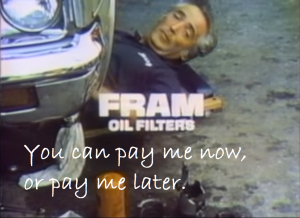
Many years ago, there was a commercial (for car oil filters, as I recall) that cautioned, “You can pay me now, or pay me later” – in other words, spend a little now on an oil filter, or pay lots later on to fix the damage done by not doing so. It’s a mantra that I’ve heard employed to encourage retirement savings – but these days it might have a new twist. We now have a second survey of plan sponsors expressing concern about the impact that switch from the current pre-tax preferences accorded 401(k)s would have on participation. That member survey by the Committee on Investment of Employee Benefit Assets (CIEBA) found that 78% of the 61 member respondents believed that a switch to an all-Roth system would negatively affect participation rates in their 401(k) plans. In that sense, it roughly mirrored the findings of a survey by the Plan Sponsor Council of America (PSCA) which found that more than three-quarters of the 443 employer respondents to the survey said they stron...

Why Your Recordkeeper Might Not Be an Automatic Enrollment Fan

Image
I recently wrote about what’s wrong with automatic enrollment . Turns out there’s more – and it has to do with when things actually go “wrong” with automatic enrollment. See, it’s one thing to say that eligible employees should be automatically enrolled – and yet another to actually get them enrolled automatically. Even the Internal Revenue Service (IRS) goes so far as to acknowledge that two common errors found in 401(k) plans are: (1) not giving an eligible employee the opportunity to make elective contributions; and (2) failing to execute an employee’s salary deferral election. Now, as it turns out, both are “fixable” – through the Employee Plans Compliance Resolution System (EPCRS). But that’s only the start of things. See, in both of those situations you’re looking at a corrective contribution of 50% of the missed deferral (adjusted for earnings) for the affected employee. And then fully vesting the employee in those contributions – contributions that are subject to ...

Are SDBAs the Next Litigation Target?

Image
Back in the 1990s, the ability to support a self-directed brokerage account (SDBA) capability was a widely utilized means of winnowing the field in a 401(k) search, and more recently, the option seemed to hold promise as a foil for excess fee litigation charges. But that could be changing. The SDBA option allowed participants to make investment choices outside the standard retirement plan menu – a big deal at a time when you could count the number of choices on two hands. Vanguard’s 2017 “ How America Saves ” report notes that one in six (17%) plans offer the SDBA option, though nearly a third (30%) of plans with more than 5,000 participants do. And while this amounts to nearly 3 in 10 Vanguard participants having access to the option, only 1% of these participants used the feature in 2016, and in those plans, only about 2% of plan assets were invested in the SDBA feature that year. PLANSPONSOR’s 2017 DC Survey pretty well mirrors those findings: 18.7% of plan sponsor respondents...

What’s Wrong with Automatic Enrollment?

Image
Automatic enrollment has long been touted – and proven – to be an effective way to overcome retirement savings inertia in 401(k) plans. But these days automatic enrollment plan design seems to be suffering from its own inertia. For all the good press and positive results that automatic enrollment gets, one might well expect that every plan would embrace it. And yet today, nearly a decade after the passage of the Pension Protection Act, many still don’t. What’s wrong with automatic enrollment? Everybody doesn’t do it. Only the most naïve industry professional ever assumed that the Pension Protection Act of 2006, even with all its incentives and encouragement (and not a few barrier removals) would transform a voluntary savings system into something that all employers everywhere would feel comfortable – or would be able to afford – automatically enrolling every eligible worker. And yet, more than a decade later, only about two-thirds of the largest employers have embraced automati...

Fiduciary Lessons from the Founding Fathers

Image
Anyone who has ever found their grand idea shackled to the deliberations of a committee, or who has had to kowtow to the sensibilities of a recalcitrant compliance department, can empathize with the process that produced the Declaration of Independence we’ll commemorate next week. Indeed, there are any number of things that the experience of today’s investment/plan committees have in common with that of the forefathers who crafted and signed the document declaring our nation’s independence. Here are four: It’s hard to break with the status quo. By the time the Second Continental Congress convened in May of 1775, the “shot heard round the world” had already been fired at Lexington, but many of the 56 representatives there still held out hope for some kind of peaceful reconciliation, even as they authorized an army and placed George Washington at its helm. Little wonder that, even in the midst of hostilities, there was a strong inclination on the part of several key individuals to ...

What Plan Sponsors Want to Know About Financial Wellness

Image
Several years back the concept of “wellness” crept into benefits planning. More recently, HR’s affinity for that wellness concept has been expanded upon by the concept of financial wellness. But as appealing as the notion is, a number of key questions linger. With regard to wellness generally, the notion was simple: Rather than just treating the symptoms of poor health with insurance-funded trips to the doctor (or the hospital) after the damage was done, we’d get ahead of things by emphasizing healthy habit steps (smoking cessation, weight loss, etc.) programs that would reduce doctor bills (and insurance premiums). As regards financial wellness, the notion is that bad financial health contributes to (and/or causes) a bevy of woes: stress, which can lead to things like lower productivity, bad health and higher absenteeism, and even a greater inclination toward workplace theft, not to mention deferred retirements by workers who tend to be higher salaried and who have higher health...

5 Things People Get Wrong About Fidelity Bonds

Image
One of the most important – and, in my experience, least understood – aspects of plan administration is the requirement that those who handle plan funds and other property be covered by a fidelity bond. While ERISA requires the bond to protect the plan from losses resulting from acts of fraud or dishonesty, fiduciaries often confuse that coverage with insurance that is designed to protect them from liability. Here are five things you (or your client) may not know about ERISA fidelity bonding – and that, as a result, they may be getting wrong. An ERISA fidelity bond is not the same thing as fiduciary liability insurance. The fidelity bond required under ERISA specifically insures a plan against losses due to fraud or dishonesty (e.g., theft) by persons who handle plan funds or property. Fiduciary liability insurance, on the other hand, insures fiduciaries, and in some cases the plan, against losses caused by breaches of fiduciary responsibilities. Although many plan fiduciarie...

5 Things You May Not Know About Roth 401(k)s

Image
I made the switch to Roth for my retirement savings years ago – and I have long counseled younger workers, who were likely paying the lowest tax rates of their working lives, to do so as well. Pre-tax treatment has, of course, been the norm in 401(k) plans since their introduction in the early 1980s. On the other hand, the Roth 401(k) wasn’t introduced until the Economic Growth and Tax Relief Reconciliation Act of 2001, and even in that legislation wasn’t slated to become effective until 2006 (and at that time was still slated to sunset in 2010). Despite that late start, according to a variety of industry surveys (Plan Sponsor Council of America, Vanguard, PLANSPONSOR), roughly 60% of 401(k) plans now offer a Roth 401(k) option, and PSCA data shows that 28.6% of 403(b) plans already allow for Roth contributions. Participant take-up, which just a few years ago hovered in the single digits, is now in the 15-20% range. Here are five other things you may not know about the Roth 401(k...

Here We Go Again...

Image
What were you doing in 1986? It was a big year in my life. I got married, hit one of those birthdays with a zero in it, watched my-then hometown Chicago Bears dominate Super Bowl XX, and picked up and moved my new bride (and our menagerie) several hundred miles south to take on a new job heading up a recordkeeping operation. Before the end of that year, that recordkeeping operation (and, thanks to a recent bank acquisition, the seven different platforms it was running on) would be struggling to understand, implement and communicate a wide array of sweeping changes associated with the Tax Reform Act of 1986. Even though it came during a period when tax code changes (ERTA, TEFRA, DEFRA, REA), were being thrown at us about every 18 months, on average, it’s still difficult to absorb the scope and breadth of the work it took to implement the changes that came with TRA 86. For all the work that had to go into complying with the new regulatory regimen that came with TRA 86, its real imp...

View "Points"

Image
By any measure, the just-concluded NAPA 401(k) Summit  was an incredible, record-breaking success – with so much good content and networking that it was hard to choose between sessions. For those who weren’t able to be there – or who were unable to be everywhere at once – here are some random thoughts, insights and perspectives from that event. Health savings accounts could wind up being a big deal. One man’s loophole is another man’s incredibly important tax preference. The most important thing is not what happened, it’s what’s going to happen. Online gambling didn’t kill Vegas – and robo-advisors won’t kill 401(k) advice. In tax reform, everything is about trade-offs. 84% of Millennials surveyed want their investments to make the world better. Retirement plans are about 1/50th of what a plan sponsor does. Fees are still a major factor in landing a new client. Most people want to do the right thing, but they don’t know how to do it. When the market go...

Preparing for the Storm

Image
If you live (or were travelling to) the upper east coast of the U.S. this week, odds are you spent some time making preparations for what looked to be (and by the time you read this likely is) a big winter storm. We don’t always get that much time to prepare, of course – and sometimes when we do, those big storms don’t turn out to be very big after all. But you can generally count on lots of frenzied weather forecasters predicting snow-mageddon (even if they do offer some caveats), and at least one shot of the inside of a local grocery showing empty bread and milk aisles. Because, after all, who could go 48 hours without bread and milk? Life is full of surprises – and though most of those are unaccompanied by a friendly meteorologist to help us anticipate them, one might well wonder why we let them “sneak” up on us without making better preparations. Perhaps the most obvious is the topic of retirement preparation. Any day now the queen mother of retirement confide...

Is the Prudent Man Standard Good Enough?

Image
It’s often said that ERISA’s prudent man rule is the highest duty known to law. But is that enough? Don’t get me wrong – any law that holds human beings to the standards of an expert in any field is a pretty high standard, and one that can be difficult to meet even with the ablest of expert assistance. I started thinking about this recently when a friend was asking my advice on what he should do regarding the options in his new 401(k) plan. I did what I often do, outlining the pros and cons of various alternatives, helping him to make what I considered to be a well informed – or at least better informed – decision. I had stepped through all the options and considerations with his plan, a pretty standard combination of automatic enrollment provisions. But then, after asking questions throughout, when I was finished, he didn’t ask what I thought he should do. Instead, he asked what I had done with my own retirement savings. The process of stepping through my decisions with my...

6 Assumptions That Can Wreck a Retirement

Image
The future is an uncertain thing, and planning for uncertainty inevitably involves making some assumptions. Here are six that, done improperly, can wreck your retirement. How Long You’ll Live The good news we are living longer – but that means that retirements can last longer, and medical costs can run higher. But while we’re living longer, studies indicate that we tend to underestimate how much longer we will live. The Social Security Administration notes that a man reaching age 65 today can expect to live, on average, until age 84.3, a woman turning age 65 today can expect to live, on average, until age 86.6. But those are just averages. About one out of every four 65-year-olds today will live past age 90, and 1 out of 10 will live past age 95. How Long You’ll Work Perhaps the most important assumption is when you plan to quit working; today most Americans are doing so at 62, though 65 seems to be the most common assumption – and while using 70 (or later) will surely bo...

3 Ways to Get Your Automatic Enrollment Plan Out of its Rut

Image
Inertia is a powerful force in nature, and in human behavior. Even the most proactive and engaged plan designs (and plan designers) can, over time, slide from being in a groove to being in a rut. Here are three ways to reinvigorate automatic plan designs. 1. Auto-enroll all Eligible Participants Over the past decade a growing number of plans have embraced automatic enrollment, in the process not only simplifying and streamlining the process, but also expanding the number of individuals who are saving for retirement. These days, new hires, regardless of their age, are routinely defaulted not only into the plan itself, but also into some type of qualified default investment alternative, whether it be a managed account, target-date fund, or balanced fund. However, those who have been employed for some time are often not accorded that convenience. Instead, perhaps because they are presumed to have previously made a decision not to participate, it is assumed that if they were to hav...

What Does the Super Bowl Portend for Your Portfolio?

Image
Will your portfolio fly with the Falcons, or might it be pummeled by the Patriots? That’s what adherents of the so-called Super Bowl Theory would likely conclude. The Super Bowl Theory holds that when a team from the old National Football League wins the Super Bowl, the S&P 500 will rise, and when a team from the old American Football League prevails, stock prices will fall. It’s a “theory” that has been found to be correct nearly 80% of the time — for 40 of the 50 Super Bowls, in fact. Granted, for most of 2016 it might have looked as though it would be right again, following the AFC’s (and original AFL) Broncos 24-10 victory over the Carolina Panthers, who represented the NFC. It was an usual break in the streak that was sustained in 2015 following Super Bowl XLIX, when the New England Patriots (yes, those same Patriots) bested the Seattle Seahawks 28-24 to earn their fourth Super Bowl title. It also “worked” in 2014, when the Seahawks bumped off the Denver Broncos, a le...