Posts

The Problem(s) with Financial ‘Literacy’

Image
April is, of course, National Financial Literacy Month—and for as long as I can remember, the retirement industry has been talking about the need for some kind of personal finance education in public schools—there’s just one problem. First off, there actually  are  such programs already in existence at the moment. Half the country (25 states) now requires  high school students to take a course in economics, and 21 states now require high school students to take a course in personal finance. Granted, they may still be too well dispersed to show up on your normal “radar”—but they’re growing in number and dispersion.  Those efforts [i]  notwithstanding—and while there’s some anecdotal evidence that this has helped (some) with regard to better decisions with regard to college financing—I’ve little sense that it’s moved the needle much with regard to participant knowledge or financial decision making (feel free to disagree in the comments below, if you...


Does Health Care Need a Behavioral Finance ‘Fix’?

Image
An important decision, made in minutes. No, that’s not retirement plan savings—though various consumer surveys have suggested that many spend more time mapping out their annual vacations than how they’ll fund their retirement needs.  Rather, that’s how a new whitepaper  by Voya’s Thought Leadership Council and SAVVI Financial LLC characterizes the 17 minutes that the average employee spends enrolling in benefits—including health plan selection, voluntary benefits and more.  Now, in fairness, health care plan choices are, in my experience, less complicated that those associated with retirement. Not that they aren’t complicated, mind you—and there’s certainly concern associated with that choice (and “do overs” are hard to come by). But I suspect for most they are really “only” choosing between two, or at most three, different options—essentially packages carefully constructed by their HR groups (likely with the assistance of a benefits broker).  When ...

Could the Super Bowl Batter or Burnish Your 401(k)?

Image
Will your 401(k) be bumped up by a Buccaneers victory—or chipped by the Chiefs? That’s what adherents of the so-called Super Bowl Theory would likely conclude, after all. The theory is that when a team from the old National Football League wins the Super Bowl, the S&P 500 will rise, and when a team from the old American Football League prevails, stock prices will fall. It’s a “theory” that has been found to be correct nearly 80% of the time—for 40 of the 54 Super Bowls, in fact.  Not that it hasn’t had its shortcomings. One need look back no further than last year’s win by the AFC’s Kansas City Chiefs (yes,  these  Kansas City Chiefs) over the NFC Champion San Francisco 49ers to refute the applicability (or did your 401(k) miss that 18.4% rise in the S&P 500?). Or how about the year before that when the AFC’s New England Patriots (who once were the AFL’s Boston Patriots) bested the NFC champion Los Angeles Rams (the S&P 500 was up more...

Groundhog "Ways"

Image
February 2 is the day upon which America turns its attention to Punxsutawney, PA (and what seems to be a rapidly expanding array of Punxsutawney Phil wannabes) to get a read on the duration of winter. The theory, of course, is that if your local groundhog sees his (or her?) shadow when he/she emerges from his/her burrow, it will send him/her scurrying back inside, and with that action foretell six more weeks of winter, whereas no shadow portends a timely/early spring. However, like weather forecasters everywhere, Phil is often wrong in his predictions. Indeed, by some estimates  (and going back to 1887) he’s only been right… 39% of the time (and since 1969, only about 36% [i] ). As complicated as it surely must be to accurately predict the end of winter, that at least is an event in the relatively near term. And one that (for Punxsutawney Prognostication, anyway) requires only the emergence from one’s burrow. Predicting retirement outcomes… well, that’s a whole o...

Mile "Markers"

Image
It may just be because I’ve got a birthday this week, but it would be hard to miss all the “fuss” about age and retirement during the NFL playoffs, a topic that now seems sure to carry on into the Super Bowl. This past weekend we got to see two “old” quarterbacks fight it out for the NFC title—Tom Brady (43) and Aaron Rodgers (37)—and two young quarterbacks—Josh Allen (24) and Patrick Mahomes (25) lead their teams in the AFC championship. The inevitable comparisons will surely now carry into Super Bowl 55, as Brady becomes the oldest quarterback to reach that pinnacle (he was already tied with Peyton Manning for that status) and Mahomes (already) one of the youngest. (Ben Roethlisberger, at 23, holds the distinction of being the youngest, having wrested it in 2006 from… Tom Brady.)  Their ages notwithstanding, this past weekend it seems fair to say that Brady played with the skill and energy of a younger man (even a younger version of himself), while Mahomes demonstrated the m...

"Missing" Inaction?

Image
Recent DOL guidance on missing participants seems to fall short of what plan fiduciaries want/need—but may offer fiduciaries some key insights to avoid future problems. On Jan. 12, 2021, the Department of Labor (DOL) released a triple dose of guidance  related to helping retirement plan fiduciaries meet their obligations under the Employee Retirement Income Security Act (ERISA) to distribute retirement benefits to missing participants. Arguably the guidance, while welcome, is less than plan sponsors might have wished (and previously asked ) for—and it concerns an issue that most plan sponsors of my acquaintance continue to insist isn’t one, though the Labor Department is clearly of a different mind. In fact, in the first of the three pieces of guidance, the Employee Benefit Security Administration (EBSA) cautions: “The first step in addressing any problem often is knowing that there is one.” [i] The “issue,” of course, is fulfilling the fiduciary obligation to ...

2020 "Hindsight"

Image
At the end of every year, and as we approach a new one, it’s natural to look back at experiences and lessons learned—and to ponder ways to apply them productively going forward. Here’s some thoughts from 2020 that I hope will help you do just that. 3 Things That (Seem to) Scare Plan Sponsors Halloween is the time of year when one’s thoughts turn to trick-or-treat, ghosts and goblins, and things that go bump in the night. And sometimes it’s just a good time to think about the things that give us pause—that cause a chill to run down our spine. In that category, here are three things to ponder… 3 Retirement Income Impacts That Can Impact Retirement Income   Most of the focus on retirement savings is on those who haven’t saved enough, or who lack access to the platforms to make saving enough easy. But even those that have done the “right” things can nonetheless have their retirement planning realities tripped up. Here are three retirement income impacts of which (even...

A Retirement Savings Santa?

Image
Once upon a time, as Christmas neared, it was not uncommon for my wife and I to caution our occasionally misbehaving brood that they had best be attentive to how their (not uncommon) misbehavior might be viewed by the big guy at the North Pole. In support of that notion, a few years back—well, now it’s quite a few years back—when my kids still believed in the (SPOILER ALERT) reality of Santa Claus, we discovered an ingenious website  that purported to offer a real-time assessment of their “naughty or nice” status. No amount of threats or admonishments—in fact, nothing we ever said or did—ever managed to have the impact of that website—if not on their behaviors (they were kids, after all), then certainly on the level of their concern about the consequences. In fact, in one of his final years as a “believer,” my son (who, it must be acknowledged, had been particularly “naughty” that year) was on the verge of tears, panic-stricken– following a particularly worrisome “rea...

The 'Terror' of 401(k) Litigation

Image
So much of our lives have been disrupted by the COVID-19 pandemic—but the pace of 401(k) litigation, it seems, has, if anything, accelerated. Now, some may find the label “terror” in the title extreme. In fact, it hadn’t really occurred to me until I read the response of defendants to a suit slapped on Genentech Inc. and the plan fiduciaries of its $7.6 billion 401(k) plan in early October. In a response to that excessive fee suit, the defendants’ attorneys referred to this suit—and others like it—as “an  in terrorem  attack on fiduciaries and employers seeking sweeping monetary and injunctive relief geared toward disrupting employee benefit relationships and causing protracted, expensive litigation.”  “In terrorem,” Latin for “into/about fear,” has a legal context—a legal threat, really—one generally voiced in hope of compelling an action (or lack of action) without resorting to a lawsuit or criminal prosecution. It normally arises in regard to a provision...

Thanks, Giving

Image
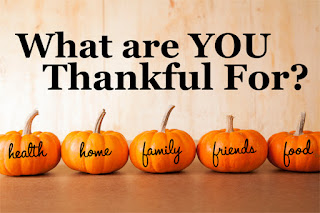
 Thanksgiving has been called a “uniquely American” holiday —and so, even in a year in which there has been an unprecedented amount of disruption, stress, discomfort, and loss—there remains so much for which to be thankful.  I’m thankful that so many employers (still) voluntarily choose to offer a workplace retirement plan—and, particularly in this extraordinary year, that so many have remained committed to that promise. I’m thankful that the vast majority of workers defaulted into retirement savings programs tend to remain there—and that there are mechanisms (automatic enrollment, contribution acceleration and qualified default investment alternatives) in place to help them save and invest better than they might otherwise. I continue to be thankful that participants, by and large, continue to hang in there with their commitment to retirement savings, despite lingering economic uncertainty and competing financial priorities, such as rising health care costs a...

Game Changers or (Just) Rearrangers?

Image
 In these extraordinary times, there’s a lot of change in the mix—and new legislative and regulatory developments that could be “game changers”—or perhaps not-so-much. Even in the most normal of times, it’s customary for businesses in evaluating future prospects to consider/identify elements under a “SWOT” analysis: strengths, weaknesses, opportunities or threats—and the recent Summit Insider gave us a chance to see what is on advisor minds now—and for the days ahead. For this year’s Summit Insider, we asked respondents [i]  to weigh in on how they saw various portents of change: as a game changer, for good or ill, something about which much ado had been made without justification (those that are mere “rearrangers”)—or was it simply too soon to say?  Here’s what they thought about:  1. MEPs/PEPs (Multiple Employer Plans/Pooled Employer Plans) 40% - Too Soon to Say 38% - Positive Game Changer 20% - Much Ado About Not Much 12% - Negative Game C...

5 Steps to Cyber Security

Image
Recent reports of 401(k) thefts  and an ongoing concern about cybersecurity  (should) have everybody on the alert. Here’s some things you, your plan sponsor clients, and their participants should check out—now. Find Your Account(s) It may have been a while since you checked out your 401(k) balance—indeed, many may not have  ever   checked it out online. Start by tracking down the website, your user id, your password. If you haven’t done so in a while, you may have lost those credentials—or your access may have been disabled. Even if those credentials are still valid, it’s probably a good time to change them. Make sure you remember those account(s) at previous employers’ 401(k)s that you may have left “behind.”  Oh, and it will be less frustrating if you don’t do this on the weekend. In my experience, few offer customer service support then, and if you need help getting on, you’ll need some help. You might also find that it’s a good time to ...

Polling "Places"

Image
If you have turned on a TV, walked by a radio, driven down a residential street, or answered a phone (or more likely let it go unanswered) in the past month, you will, of course, be aware that our nation will officially go to the polls today.  Of course, our nation has been “going” to the polls—or at least casting votes—for several weeks now. And while some states (and voters) have done so in elections past, a combination of factors (not the least, concerns about the current pandemic) means that the process of voting, like so much of our lives this year, is going to be “unprecedented,” both in terms of the breadth and volume of votes cast prior to election “day”—and perhaps on that day itself. And yes, it’s been a particularly nasty—one feels compelled to say “unprecedented”—election cycle.  In that regard, I recently came across this:  “Certainly, politics has never been a pretty business, but I doubt that I would get much argument in stating that this p...

3 Things That (Seem to) Scare Plan Sponsors

Image
 Halloween is the time of year when one’s thoughts turn to trick-or-treat, ghosts and goblins, and things that go bump in the night. And sometimes it’s just a good time to think about the things that give us pause—that cause a chill to run down our spine.  In that category, here are three things to ponder… Getting Sued Plan sponsors will often mention their fear of getting sued (actually, their advisors frequently broach the topic), and little wonder. The headlines are (still) full of multi-million dollar lawsuits against multi-billion dollar plans—the pandemic has, if anything, seemed to accelerate the pace. If relatively few seem to actually get to a judge (and those that do have—to date—largely been decided in the plan fiduciaries’ favor), they nonetheless seem to result in multi-million dollar settlements. Oh, and not only has this been going on for more than a decade, the issues raised are evolving as well. It's not that the fear is unfounded—plan fiduci...