Posts

Three ‘Scary’ Things That Give Plan Sponsors Chills

Image
Halloween is the time of year when one’s thoughts turn to trick-or-treat, ghosts and goblins, and things that go bump in the night—and, for plan sponsors, and those who support them, a good time to think about the things that give us pause—that cause a chill to run down our spine…  Things like… Changing Providers OK, they may not exactly be “scared” of changing providers, but it’s certainly not a process for the faint of heart—particularly with all of the competing focus priorities confronting plan sponsors on a daily basis. Industry surveys routinely point to a certain amount of regular provider “churn”—indeed, by some counts as many as 10% of the plans change providers in any given year. That said, industry surveys (and excessive fee litigation) are replete with indications that the vast majority of plans not only don’t change recordkeepers, but may not even undertake a formal review of services, fees and capabilities. Now, any plan sponsor who has ever gone th...

Are We Ready for Retirement Income?

Image
It’s ironic that programs designed to provide retirement income pay so little attention to the realization of that objective. That’s right—for the vast majority of participants today, creating that “paycheck for the rest of your life” remains a DIY undertaking. To this day only about half of defined contribution plans currently provide an option for participants to establish a systematic series of periodic payments, much less an annuity or other in-plan retirement income option.  However, the need for that solution is widely acknowledged—and there are some new, if somewhat familiar, solutions emerging.  Earlier this month, BlackRock garnered some  headlines  with news that not only was it building annuity contracts into a target-date fund series, but also that it had already lined up five large plan sponsors (with some $7.5 billion in assets) to implement the option as a default. That followed by a few months the March  announcement  of a c...

Resource ‘Full’?

Image
A great resource to help you grow and expand your business could be right under your nose… Are you spending time you don’t have trying to work out problems you didn’t create? Let’s face it—good service, or the lack thereof, is widely cited as the most common reason that plan sponsors change providers—and that can affect your relationship as well. Sometimes you chose those providers, other times you inherit them.  Regardless, every plan has someone in charge of administration and compliance—a third party, if you will, so called because they perform functions that plan sponsors are expected to ensure are performed (and once upon a simpler time many did so themselves). Whether you engaged those services, or find yourself tasked with overseeing them, you know they can be the difference between a smooth-running plan and one that constantly teeters on the brink of blowing up. Wouldn’t it be nice if you could partner with this “third party” administrator to take some of the...

‘Might’ Makes… Wrong?

Image
 Sometimes the motivations of those attacking the 401(k) are pretty obvious. The most recent was an article by a Maurie Backman at the Motley Fool titled, “ Why a 401(k) isn’t the wonderful savings tool you think it is. ” I tried to ignore it when it first (to my eyes) appeared on Forbes (which seems to have a pretty low threshold for contributions these days), and I was no more inclined to read it when it showed up a couple of days later on Fox News. But then folks started sharing it on both LinkedIn and Twitter—some ostensibly to hold it up for ridicule, [i]  others as an affirmation—and, with some reluctance, I finally clicked on the article.  Oddly, considering the title (and, in fairness, editors  have  been known to tweak headlines such that they bear little resemblance to the article they are attached to), the article spent almost as much space outlining the virtues of the 401(k)—specifically that they are “easier to sign up for” than an IRA, ...

5 Plan Committee Missteps

Image
There is frequently a difference between doing what the law requires and doing everything that you could do as a plan fiduciary. That said, there are things that plan fiduciaries must do—and things that, while not required, can keep the plan, and plan fiduciaries out of trouble. Let’s get started. 1. Not having a plan/plan investment committee ERISA only requires that the named fiduciary (and there must be one of those) make decisions regarding the plan that are in the best interests of plan participants and beneficiaries, and that are the types of decisions that a prudent expert would make about such matters. ERISA does not require that you make those decisions by yourself—and, in fact, requires that, if you lack the requisite expertise, you enlist the support of those who do have it.  You may well possess the requisite expertise to make those decisions—and then again, you may not. But even if you do, why forego the assistance of other perspectives? However, h...

Never Forget

Image
While the past 18 months have often felt like we’re living through an episode of  The Twilight Zone —never more so that to realize that this week marks the 20 th  anniversary of the September 11 attacks.  It’s hard to believe that there are today people in college—and in the workforce –that weren’t even alive on that most horrific of days. In fact, it’s been labeled a defining event for Millennials—a date marker between those who were alive on that date and those (Generation Z) who weren’t. That said, the passage of time has surely dimmed the memory for many who did live through it. More’s the pity. Early on that bright Tuesday morning in 2001, I was in the middle of a cross-country flight, literally running from one terminal to another in Dallas, when my cellphone rang. I was annoyed—the hour was early, my flight in had been late, and the bugger between that and the next uncomfortably short—particularly for a flight that was in another terminal.   ...

Limiting Fiduciary Liability (Costs)

Image
 A recent survey of insurers highlights the criteria that a number of the nation’s leading fiduciary liability insurers identified as the biggest sources of fiduciary risk—within the control of plan fiduciaries.  Now, arguably, the report—titled “ What Drives Fiduciary Liability? ”—might have been more accurately titled “What Drives Fiduciary Liability Insurance Costs?”—or even more precisely “What Drives Fiduciary Liability Insurance Costs That You Can Do Something About?” Indeed, the report’s authors note that it was specifically focused on sources of risk that are within the control of fiduciaries. That’s key, because there  are  things that attract litigation (such as plan size or even stock price) that aren’t.  Moreover, the survey respondents (there were 8 of the 12 that Aon said account for 85% of the total gross written premium placed by the firms in 2020) were asked only to evaluate pricing criteria as having a significant, small or nonex...

Attention Getters

Image
I was recently taken to task for last week’s column about retirement savings regrets. More precisely, my column about the regrets expressed in a recent American Century survey drew the attention of Faith Teope in a LinkedIn post titled, “ Dear Finance Experts: We Would Listen, But We Don't Care .” In fairness, it wasn’t so much my  column  (“boring but true”), or even the American Century survey’s  findings  that came in for criticism, but more the head-scratching that the survey set off among financial professionals (including, I suppose this one) as to why people aren’t paying more attention to things like… saving for retirement. Her premise—that we’re using language that doesn’t resonate with those we hope to motivate—is, frankly, unassailable.  In fact, it’s a topic I broached (at least at a high level) earlier this year in a post titled, “ Is it Time to Retire Retirement? ” As I noted then, for all but the most financially astute, trading off ...

Regret Able?

Image
A new survey once again highlighted a consistent regret among American workers.  According to the survey by American Century Investments, they wish they had saved more for retirement.  Now, only about a third shared that regret—but it was more than twice the number that had regrets about career, personal relationships, not doing enough to enjoy life—not to mention “not being a better person overall.” [i] Now, we all have regrets about certain life decisions. There are regrets about that “Reply All” email that was perhaps a little  too  honest, the hours spent at work at the expense of family, perhaps the  cessation  of piano lessons, and even a (too) sedentary lifestyle and bad diet. Some we regret immediately—while some come only after the passage of time. Some we learn from—and vow never to repeat. And some—unfortunately—come too late to do anything but live with the consequences. And then there are those regrets—that could be remedied—but a...

The "Magic" of Compounding

Image
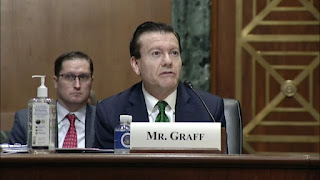
 Some numbers were put in front of the Senate Finance Committee last week—numbers that even the chairman of that powerful body called “jaw-dropping.” The numbers were 51 million and $6.2 trillion—the former the potential number of new retirement savers, the latter a separate projection of the potential new retirement savings (over a 10-year period) that could result if two pieces of existing retirement legislation were implemented, specifically the combination of some key provisions of the Automatic IRA Act and the Encouraging Americans to Save Act. Those projections—presented in  testimony  by American Retirement Association CEO Brian Graff—were the work (and rework) of many late (and early) hours by a number of individuals over a period of months. Key Assumptions  Now, predicting the behavior of human beings decades into the future may seem like the stuff of science fiction, but it can be parameterized. However, the key to a proje...

"Certain" Circumstances

Image
My wife and I recently celebrated our wedding anniversary—it was a “big” one, one of those that almost takes your breath away thinking about how rich your life together has been. If someone had asked on my wedding day if I thought I’d still be alive and married this many years hence, I’m sure that I would have expressed confidence, likely strong confidence, in both outcomes. However, if someone on that same day had asked me to guess then where I would be living now, what I would be doing for a living, or what my income would be (or need to be)—well, my responses would likely have been much less certain—and trust me, I would have been… wrong. Not that there haven’t been bumps along the road—life is a series of zig-zags, after all—and no matter how carefully you try to plan—well, life is what happens to you while you’re making other plans, right? There was the wedding limo with faulty air conditioning on the hottest July day in history, the flat tire in the middle of nowh...

Where’s Waldo? (and Mary…and Joe…and Pat)

Image
Every plan has participants—and, sooner or later, will therefore have “ex” participants—and sometimes those participants go…missing. And that can be a real problem for retirement plan fiduciaries. While most are likely aware of the fiduciary obligation to keep accurate records, many are less aware that there is also an obligation to take “appropriate steps” to ensure that the participants and beneficiaries are paid their full benefits when due. But what are the “appropriate steps”? Why It Matters This is a growing concern of regulators; in fact, (now former) Principal Deputy Assistant Secretary of Labor for the Employee Benefits Security Administration Jeanne Klinefelter Wilson has noted that, “In fiscal year 2020 alone, EBSA’s investigators helped missing and nonresponsive participants recover benefits with a present value in excess of $1.4 billion.” The good news is, the Labor Department has published some guidance on the subject—in fact, it’s a triple dose of g...

‘Hacking’ Stances

Image
A couple of Saturdays back I discovered that one of my online accounts had been “hacked.”  The good news is that I “discovered” this via transaction emails confirming what appeared to be purchases—a half dozen of them… for various, small-ish (though not small) amounts… all about 4:00 a.m. on a Saturday morning. And trust me, while the pandemic has certainly fueled my online purchases, both the number and the timing were  not  normal behaviors (nor was the Chinese text in those emails). The even better news was that I was able to flag those transactions via the provider—and via my credit card company— almost  immediately (apparently the foreign hackers and I were the only ones awake at that hour). Even though there was no damage done by this incursion (aside from some temporary heartburn), it brought home to me again the importance of protecting  all  of my online accounts. Like many, perhaps most, of you, I have long found managing the sheer v...

The "End" in Mind

Image
I was discussing the subject of retirement over the long holiday weekend with family.  There was a lot of talk about Social Security (or the looming lack thereof), the impact(s) of inflation, and how the markets (stock and housing) had boosted prospects, but ultimately decided we weren’t sure when that would happen, we weren’t even positive that it  would  happen (the so-called “ great resignation ” notwithstanding), or if it might consist of a gradual slowdown/pullback. Moreover, we really didn’t know what “it” would be like if and when it did happen, or where we might be living even if and when. Finally—it had been a pretty hectic week, after all—I somewhat playfully suggested that the best definition of retirement would be the absence of time-critical deadlines and Zoom meetings. Ah, now  that’s  something to look forward to! However, and as those who are already ensconced there can attest, retirement has its own set of pressures, and they go wel...

History’s Lessons for Plan Fiduciaries

Image
The study of history is a passion of mine, and while it seems a bit trite, the old adage that those who don’t remember the past are doomed to repeat it seems more apropos by the day. Regardless, I never cease to be touched by the experience of walking the grounds where famous individuals or great historic events took place.  A few years back I had the opportunity to be in Philadelphia for a few days beyond the customary speaking event “fly-by,” and was thrilled to be able to tour Independence Hall where, in 1776, the Continental Congress crafted what we will shortly celebrate as the Declaration of Independence. Those who think that partisan divides, cynical self-interest, and political acrimony are recent “innovations” in government would perhaps be shocked to learn that regional tensions have always been part-and-parcel of our republic… even before it was a republic.  The room was smaller than I had imagined—and I couldn’t imagine what it must have felt like o...