Posts

What’s Top of Mind for Retirement Plan Advisors?

Image
One of my favorite parts of the NAPA 401(k) Summit is a comprehensive annual survey we do of advisors in attendance at the Summit I call the Summit Insider . It’s a unique opportunity to get the perspective of hundreds of retirement plan-focused advisors in a unique window of time. A chance, if you will, to see what’s on the collective minds of a very special group of individuals. Like the networking experience of the Summit itself, it’s a chance to see what is actually on the minds and driving forces for the nation’s leading advisors. Sometimes it’s a validation—sometimes a repudiation—but it’s always insightful, all the more so in view of this year’s (record-breaking) response to the Summit Insider questionnaire. Over the past couple of weeks, I’ve shared some insights in the NAPA-Net daily—but if you’re looking for a quick sense of the advisor perspective(s) on business practices, industry trends, team building, or future focus—well, here you go: There have been BIG...

The True ‘Cost’ of ‘The True Cost of Forgotten 401(k) Accounts’

Image
An update of a so-called “study” has been making the rounds—again—and its authors have doubled-down (and then some) on the assumptions in an updated version. I’m referring to something called “ The True Cost of Forgotten 401(k) Accounts (2023) ”—an update to a report circulated about a year ago of the same title (sans the “2023” qualifier) by a firm called Capitalize. The first report claimed that there was $1.35 trillion in “forgotten” 401(k) accounts—the latest iteration has upped that number to $1.65 trillion. That’s right, $1.65 TRILLION. Not that the report’s authors make it hard to be incredulous about their results. Their executive summary claims that a full 25%—that’s a full QUARTER—of all 401(k) plan assets are, by their definition, “forgotten.” And if you’ve ever “left behind” a 401(k) account at a previous employer—well, apparently you’ve “forgotten” that account by their definition.   Now if that definition of “forgotten” winds up being more cr...

Does Your 401(k) Need ‘Guardrails?’

Image
A new WSJ op-ed says that 401(k)s “too often lead employees to make financially harmful mistakes.”  And yes, advisors are (apparently) part of the problem. The “problem”—at least according to the op-ed authors is that, left to their own devices participants are said to be inclined to overindulge in bad investment choices; choices they claim are the result of plan sponsors’ ignorance of how their workforce is actually using the options—an ignorance born of advisors failing to provide that information. Advisors, they comment, who “don’t have any financial incentive to provide such information, or to design plans in ways that would tend to reduce diversification mistakes to begin with.” Now I can’t speak for every advisor, but I know plenty who are actually devoting a fair amount of time and energy to tracking—and sharing, certainly in the aggregate—the asset allocation decisions of the participants in the plan with the plan committee. Beyond that, no small number of...

A Glidepath of/for Life

Image
I’ve been getting a lot of … comments … of late about my version of “retirement.” I heard it both a couple of weeks back speaking at an event sponsored by The Standard—and again last week at the NAPA DC Fly-In Forum—that I was setting a poor example for retirement aspirations (all good-natured, and generally followed by a quick comment that they were glad to see me nonetheless).  So much for long walks on the beach or reading in a rocking chair, I suppose. But it’s my first “go” at retirement, after all—no practice rounds (even my vacations over the years have been a bit “busy”) beyond the “space” provided by COVID’s lockdowns. That said, my days are definitely different now. And, though it’s perhaps not apparent from the content I (still) produce in any given week (blame the plaintiffs’ bar—if they’d quit suing, I’d have less to write about), I’m pleased to report that I’m (beginning) to ease into new daily patterns; (more) time on the treadmill, actually reading boo...

'Mission' Controls

Image
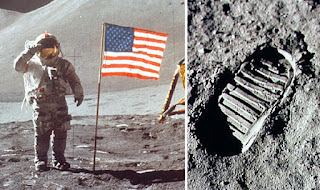
So, what did you want to be when you grew up? Now, I realize that some of you are still growing up—but I’ve never met ANYONE who said “I wanted to work with retirement plans”—and that includes me.  Indeed, what we aspire to become in our youth is complex—and often shaped by our experience(s) at the time. And while I am sure there was a period in my youth when I wanted to be a fireman, a cowboy, or maybe even a professional athlete (that one didn’t last long), my earliest memories are of wanting to be an astronaut—an aspiration that came to mind again last week on the anniversary of the Apollo 11 moon landing. It was a magical time for our nation’s space program. There was a plan, three separate programs (Mercury, Gemini and Apollo) designed with specific mission objectives to help us get there, and a vision—as President John F. Kennedy said in May 1961—of “achieving the goal, before this decade is out, of landing a man on the Moon and returning him safely to the Ea...

Social Security COLA ‘Click Bait’

Image
Over the past couple of years, one of the most-clicked posts on NAPA-Net has been on a topic that is a bit of a head-scratcher. I’m speaking, of course, of the (now-incessantly tracked), monthly projections of the (potential) cost of living adjustment (COLA) for Social Security. It started back when inflation emerged as a real consumer concern—and it was spurred by the efforts of a group called the Senior Citizens League in publishing—EVERY MONTH—a projected cost of living adjustment (COLA) for Social Security. [i] And our coverage of those projections has been, and continues to be, one of the most clicked-on stories [ii] (ditto other publications, apparently).   Like many, perhaps most, of you, I was initially intrigued by the reporting. Let’s face it, after a couple of decades of relative economic slumber, inflation has reared its ugly head in a way that reminds some of us of the days of our youth when inflation was an actual scary economic reality, rather tha...

Are Millennials’ Retirements ‘Doomed?’

Image
Millennials have had a rough week of it, at least in the financial press. First there was a report that they had established asset allocations that mirrored that of their grandparents (the respondents apparently never heard of a target-date fund). Then a separate survey that indicated they (70% of them, anyway) were ashamed to ask their parents for financial advice (we’ll set aside for a minute whether that would have been a good source), and then the pièce de résistance was a report that painted a pretty bleak retirement picture for a generation that “entered the workforce around the Great Recession, which began in late 2007, and experienced a difficult economy early in their careers. Now, they are confronting pandemic-related setbacks while trying to manage work-life balance.”  Indeed, the only bright note for this group—identified as those born between 1981 and 1996 - was a report that said the retirement savings gap between genders in that demographic was a m...

Independence 'Gaze'

Image
A week from today the nation will celebrate Independence Day—though of course independence didn’t actually occur on July 4. Let’s face it, the Declaration of Independence [i] was little more than that—a declaration. One that had yet to be backed by anything beyond the artfully crafted and narrow consensus of a handful of delegates appointed by a wide variety of means and mechanisms, with correspondingly disparate levels of responsibility and accountability for their alignment with the principles outlined in that document.  As practically meaningless as that declaration might have been, we commemorate and celebrate those actions because, eventually, events transpired that made those aspirations a reality. But it came only after years of hard-fought fighting, and while we don’t often talk about this, it ultimately divided the nation between those who wanted to be free from what they viewed as tyranny—and those who viewed those actions and aspirations as nothing less t...

Baby 'Steps'

Image
I recently ran across a survey that claimed 7 in 10 DC plan sponsors were “taking steps” to solve the retirement income challenge… but that looks to have been “aspirational.” While the survey’s [i] intro cautioned that there was more to be done, that struck me as a remarkably high (and reassuring) finding, though it didn’t mesh with my sense of the world at present. Sure enough, turns out, there is apparently a retirement income “journey”—one that apparently has several stages—all of which were (apparently) classified as “steps.” Those included: 34% – INITIAL (my emphasis, their wording) stages of learning about retirement income approaches 14% – in the process of better understanding participants’ retirement income needs 8% – in the process of evaluating specific retirement income solutions/products 7% – implementing/implemented a retirement income solution/product Indeed, the survey goes on to comment that another 8% have evaluated these type solutions, and decided not ...

A Father's Footsteps

Image
"A father is a man who expects his children to be as good as he meant to be.” – Carol Coats Like many, perhaps most, of you, as a parent I’ve tried to compensate for the ways in which I felt that my parents could have done . . . “better.”  My parents led mostly through example—and powerful as that can be, as a kid those messages are often too subtle to be noticed, much less appreciated. Indeed, my dad was a man of few words—spoken words, anyway. At 6’ 5” he was an imposing figure, all the more from the pulpit from which he did speak. He was a good speaker, but not a natural one. A minister, he worked hard at it, studied his subject matter, practiced his presentation relentlessly, each and every week. I always thought it amazing that such a quiet, introverted man would choose that career—but, and though it can’t have been easy, it was something he felt called to do at an early age. He had opinions, but didn’t impose them on others. Indeed, it was difficult (and some...

The Need to 'Know" Basics

Image
Back in the middle of the pandemic, my then 91-year-old mother was presented with two options—one a specialist recommended, the other favored by her trusted general practice physician. And of course, it was to be…her decision. This kind of thing happens all the time in the medical field where such things often seem as much art as science, with a myriad of factors to consider, not the least of which is the skill and experience of the medical professionals putting forth their recommendations. Not that it’s limited to life-and-death decisions. Indeed, it’s the kind of decision with which we’re often presented; when that annual auto inspection detects a hitherto undetected major repair need, when that leaky toilet repair uncovers some long-standing, but unobserved water damage, when that last minute call to fix a water heater or air conditioner reveals that it might—but might not—last the season. Those things routinely involve experts of one sort or another turning to us re...

The Fear of Finding Out

Image
I hadn’t been to the dentist in a long time. A VERY long time. Two weeks ago, and at the encouragement of my wife, I finally went back to the dentist. I hadn’t been since COVID, and that period provided a very good excuse for avoiding that visit. Turns out, I hadn’t been for quite a while before COVID—not so much intentionally, just life getting in the way. That’s not completely accurate, of course. On the best of visits, trips to the dentist had never been exactly “pleasant,” though I’ve been fortunate to be in the hands of friendly, patient and—gentle—staff over the years. That said, my last visit had involved what wound up being a unexpected and relatively involved procedure that, while it remedied a painful (and potentially dangerous) situation, left me with a certain, shall we say, “fear of finding out”… Now, avoiding the dentist didn’t prevent problems, of course. And many’s the day over the past several (gulp!) … years when I would tell myself that it would be b...

Survey Says—Or Does It?

Image
When you see a headline that confirms your sense of the world, you’re naturally predisposed to embrace, remember (and these days “share”) it as a validation of what you already perceive reality to be. Indeed, as human beings, we’re drawn to perspectives, surveys, and studies that validate our sense of the world. This “confirmation bias,” as it’s called, is the tendency to search for, interpret, favor, and recall information in a way that confirms our preexisting beliefs or hypotheses. It also tends to make us discount or dismiss findings that run afoul of our existing beliefs—even if the grounds supporting that premise are shaky, sketchy, or (shudder) downright scurrilous. Here are some things to look for—likely in the fine print or footnotes—as you evaluate those findings. There can be a difference between what people say they will (or might) do and what they actually will. No matter how well targeted they are, surveys (and studies that incorporate the outcome ...

Commencement "Address"

Image
This is the time of year when the nation’s graduates line up for accolades (and their diplomas). It is, for them, a beginning—a commencement of a new phase in their life.  But ahead of that, most are given the “opportunity” to hear some words of wisdom and inspiration from an individual that they have likely never heard of (though their parents may have). In that spirit, I’d like to offer the graduates of 2023 some lessons I’ve picked up along the way: Your first job can be like your first love—it will either bring a smile for years to come—or it can break your heart. And sometimes both.  Just because you’re young(er), people are going to assume you know things you don’t—and assume you don’t know things you do. Everything you’ve heard about your elders isn’t true. But some of it is. There actually ARE stupid questions. If your current boss doesn’t want to hear the truth, it may be time to look for a new one. There can be a “bad” time even for good ideas. ...

A New Fiduciary Standard?

Image
Resistance to retirement plan innovations (like automatic enrollment) have long been excused as being “too paternalistic” – but there might be a better standard. We’ve all heard it – concerns that imposing certain default choices on participants (and sometimes plan sponsors) are, however well-intentioned, intrusive and demeaning. Generally speaking, such concerns aren’t challenged – we “get it,” after all – most of “us” are do-it-for-myself types. Of course, most participants aren’t – and there’s plenty of anecdotal evidence that workers, and particularly younger workers, WANT that kind of proactive support from their employer. All of which calls to mind a new standard – one first (to my ears, anyway) articulated in the Nevin & Fred podcast by none other than Fred Reish. See, Fred was talking about explaining to his daughter what a fiduciary was – and she quickly grasped the concept, applying it to her mother and her support for her kids in looking out for them...