Posts

Showing posts matching the search for fighting

National Treasure

Image
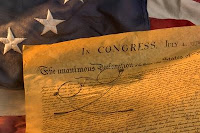
This coming Friday, the nation will, in large part, set aside its normal business for a three-day weekend filled with cookouts and fireworks displays, as we commemorate the birthday of our nation. Despite those “distractions,” some will think back on the courage of the nation’s founders and their vision in crafting a structure of government that remains a unique role model for the world—and well they should. Still, students of history—and even aficionados of the musical 1776 , readers of David McCullough’s John Adams , or its recent HBO miniseries adaptation—know that the decision to declare independence was no easy matter. Indeed, the political bartering involved in getting to a “ unanimous Declaration of the thirteen united States of America ” would have been all-too familiar to the legislators of today. While we celebrate the Fourth of July as Independence Day, that is neither the day on which the Continental Congress passed the resolution (July 2), nor the day on which the decl...

“Magic” Cull

Image
Participant education meetings have long touted the “magic” of compounding; that apparent miracle of finance whereby income earned on investments becomes part of an account balance, and earns more income that in turn adds to the account balance, which earns more income, and so on. The net result, of course, is that at the end of a savings career, you wind up with a lot more money than you ever thought possible. The funny thing is, I’ve known about this magic for so long, I had almost forgotten how impressive the results could be. Or had, until Russell Investments published a short paper with a long title— “ The 10/30/60 Rule: Where Do Defined Contribution (DC) Plan Benefits Come From? It’s Not Where You Think .” This paper wasn’t about compounding per se—if it had been, I doubt that I would have taken the time to read it. In fact, now that I’ve brought up the subject of compounding, you may have already gone on to other things—but stick around. We all know that compounding is a go...

Dividing Lines

Image
 It’s been said that there remains more that unites us than divides us—but that’s not how it feels most days.  However, such times are not all that unusual for this diverse nation. Indeed, if today’s battle lines do seem harsher and more extreme, my sense is that it’s only because they are magnified by media and social media, transported to us every minute of the day and night by devices we dare not relinquish any longer than to recharge the battery. Consider the nation’s declaration of independence which we will commemorate on Monday. Students of history—not to mention aficionados of the musical 1776 or   readers of David McCullough’s John Adams  or viewers of its HBO miniseries adaptation—know that the decision to declare independence was no easy matter. Indeed, the political bartering and frustrations involved in getting to a “unanimous Declaration of the thirteen United States of America” would have been all-too familiar to the legislators of today....

The Founding Fathers and Fiduciary Fundamentals

Image
Anyone who has ever found their grand idea shackled to the deliberations of a committee, or who has had to kowtow to the sensibilities of a recalcitrant compliance department, can empathize with the process that produced the Declaration of Independence we commemorate this week. Not that the machinations of a plan committee can be fairly equated to the deliberations—or impact—of the Second Continental Congress, but there are some parallels. Things like… Committee members should understand their obligations—and the risks. Those who gathered in Philadelphia that summer of 1776 came from all walks of life, but it seems fair to say that most had something to lose. True, many were merchants (some wealthy, including President of Congress John Hancock) already chafing under the tax burdens imposed by British rule, and perhaps they could see a day when their actions would (eventually) accrue to their economic benefit. Still, they could hardly have undertaken that declaration of ...

Independence 'Gaze'

Image
A week from today the nation will celebrate Independence Day—though of course independence didn’t actually occur on July 4. Let’s face it, the Declaration of Independence [i] was little more than that—a declaration. One that had yet to be backed by anything beyond the artfully crafted and narrow consensus of a handful of delegates appointed by a wide variety of means and mechanisms, with correspondingly disparate levels of responsibility and accountability for their alignment with the principles outlined in that document.  As practically meaningless as that declaration might have been, we commemorate and celebrate those actions because, eventually, events transpired that made those aspirations a reality. But it came only after years of hard-fought fighting, and while we don’t often talk about this, it ultimately divided the nation between those who wanted to be free from what they viewed as tyranny—and those who viewed those actions and aspirations as nothing less t...

5 Fiduciary Fundamentals: A Founding Fathers Perspective

Image
This week we’ll commemorate Independence Day – but with all of freedom’s lessons, there are certain things that plan committees (still) have in common with the Second Continental Congress. Certainly anyone who has ever found their grand idea shackled to the deliberations of a committee, or who has had to kowtow to the sensibilities of a recalcitrant compliance department, can empathize with the process that produced the Declaration of Independence we commemorate this week. Consider these similarities: Committee members should understand their obligations – and the risks. Those that gathered in Philadelphia that summer of 1776 came from all walks of life, but it seems fair to say that most had something to lose. True, many were merchants (some wealthy, including President of Congress John Hancock) already chafing under the tax burdens imposed by British rule, and perhaps they could see a day when their actions would (eventually) accrue to their economic be...

“Second” Opinion

Image
ERISA’s 404(c) has long been held out by some as something of a magic talisman: Comply with its strictures, they claim, and you have an iron-clad defense against participant lawsuits —and, IMHO, the implication is a defense against ALL participant lawsuits. Of course, any number of ERISA experts will tell you that it is nearly impossible to satisfy those strictures, certainly not for every transaction (and mind you, 404(c) is transactional protection)—not that that seems to dissuade plan fiduciaries from trying, nor plan advisers from purporting to help them achieve that end. Nor are plan fiduciaries, or the participants and beneficiaries they support, ill-served by those efforts. That said, I have long been surprised at how broadly the judiciary has been willing to extend those protections. Good news if you’re the plan sponsor getting sued, of course—but not-so-good if you’re a plan fiduciary looking for some consistency in the law. The most recent example was Hecker v. Deere (see ...

“Winning” Ways?

Image
We got another verdict on those infamous revenue-sharing lawsuits last week. Not a verdict in the sense of a Perry Mason trial, perhaps - but we did have two sides presenting their case to a judge who, once again, basically felt that the plaintiffs didn’t make their case. Personally, I find this entire class of revenue-sharing lawsuits abhorrent. Not that I don’t think there are some real issues to be had with regard to how some plans are being charged, and how some of those revenue-sharing arrangements are perhaps being abused. Rather, I resent them because, in large part, I think the cases brought to date—at least as I understand the facts—are probably not where the real problems lie. They do, however, represent huge piles of money—and if you’re a contingent-fee lawyer, that is (to borrow Willie Sutton’s famous phrase) “where the money is.” Consequently, back in 2007, when U.S. District Judge John Shabaz of the U.S. District Court for the Western District of Wisconsin tossed—and...

The Letter of the Law

Image
An early “win” for plan sponsors (perhaps more accurately, a win for a plan sponsor) was Hecker v. Deere & Co. That’s the case where, last June, U.S. District Judge John Shabaz tossed “with prejudice and costs” allegations that the plan had incurred excessive fees and had violated its fiduciary obligations by not disclosing revenue-sharing relationships to participants (see “ Fighting Words ”). It was, many experts said at the time (including this writer), a correct decision, but bad law, with Shabaz too broadly (IMHO) applying the shield of ERISA 404c to excuse an entire series of fiduciary responsibilities not encompassed by that statute. Not surprisingly, that decision has been appealed—and this time, the Department of Labor has offered its opinion as a “friend of the court” (see “ DoL: ERISA Fiduciaries Could Have Disclosure Mandate Not Specified in Law ”). And perhaps not surprisingly, the DoL also seems to think that Judge Shabaz missed the boat on a number of his conclusi...

The 'Terror' of 401(k) Litigation

Image
So much of our lives have been disrupted by the COVID-19 pandemic—but the pace of 401(k) litigation, it seems, has, if anything, accelerated. Now, some may find the label “terror” in the title extreme. In fact, it hadn’t really occurred to me until I read the response of defendants to a suit slapped on Genentech Inc. and the plan fiduciaries of its $7.6 billion 401(k) plan in early October. In a response to that excessive fee suit, the defendants’ attorneys referred to this suit—and others like it—as “an  in terrorem  attack on fiduciaries and employers seeking sweeping monetary and injunctive relief geared toward disrupting employee benefit relationships and causing protracted, expensive litigation.”  “In terrorem,” Latin for “into/about fear,” has a legal context—a legal threat, really—one generally voiced in hope of compelling an action (or lack of action) without resorting to a lawsuit or criminal prosecution. It normally arises in regard to a provision...

The "Burden" of Proof

Image
Recently the 7th Circuit responded to requests that it reconsider its opinion in the revenue-sharing/”excessive fee” case of Hecker v. Deere (see “7th Circuit Panel Limits Ruling’s 404(c) Effects” ). The case, of course, was one of the earliest in the litany of those cases to be filed in 2006, and the only one (thus far) to reach the appellate level. To date, the courts have, with little exception, dispensed with these cases harshly. Not that they aren’t entitled to do so, of course, and not that this particular generation of filings isn’t deserving of such treatment, IMHO. From the beginning, the plans targeted seemed better-designed to fill the pockets of plaintiffs’ counsel, if for no other reason than large employers frequently figure that it’s cheaper to settle than to fight (see “IMHO: Fighting Words” ). That said, the courts—including the 7th Circuit—seem to have a more “generous” view of what it takes to earn the protections of ERISA 404(c) than most ERISA lawyers I know. ...

Fighting Words

Image
“[T]he complaint is a rambling 38 page collection long on legal argument, public policy rhetoric and repetition, but vague in its allegations of facts which might be relevant to the claims alleged.” With all the tact of a law professor dressing down a first-year student, U.S. District Judge John Shabaz of the U.S. District Court for the Western District of Wisconsin last week dismissed one of the so-called 401(k) revenue-sharing lawsuits brought by the St. Louis-based law firm of Schlichter, Bogard & Denton – and did so in just 18 pages. And he did so “with prejudice and costs.” It was the second such case to be dismissed. In an even more succinct dismissal in February (two-pages), U.S. District Judge John Darrah said that the 401(k) participants in the Exelon Corp. plan failed to make a "link between the administrative fees they were charged and their market-based losses" (see Court Tosses 401(k) Participants’ Request for Investment Losses Relief ). Not that there wer...

The Duty To Ask

Image
Last week I mentioned a revenue-sharing case that could have far-reaching implications. That case, Tibble v. Edison International, was decided earlier this month (see “ Court Buys Retail vs. Institutional Share Fee Claims ”) and, IMHO, is a very interesting case for several reasons: First, most of these cases have been tossed before they actually got to trial; second, this one was decided in the plaintiff/participant’s favor (and that’s a rarer occurrence than much of the coverage and “chatter” would indicate). Moreover, here the court was far less deferential to the plan fiduciary decisions than other districts have been1. But what I found most interesting about this case wasn’t the decision or the court’s rationale, though both will certainly have ramifications beyond this case. Nor, in large part, were the plaintiffs’ arguments any more compelling than in previous actions. In fact, like many of the revenue-sharing/excessive-fee cases filed since 2006, the plaintiffs here made a...