Posts

“Staying” Power

Image
When we moved into our last home―an old house, and one in which the prior family had lived for quite some time―we found a set of markings on a doorframe.  Markings that appeared to indicate the height―and growth patterns over time―of the children of the former owners.  We took note of this at the time, but those markings didn’t last long after we moved in.  After all, while our kids were still growing, and they were now going to live in the same house, there was little point in assessing their progress against that of the former residents. We’ve noted before the shortcomings of metrics such as an “average” 401(k) balance (see “Above” Average, online here ), which generally aggregate the balances of participants in widely different circumstances of age and tenure―everything from those just entering the workforce who have relatively negligible 401(k) balances with those who may have been saving for decades.  While these averages can, over time, provide a sense of t...
Sooner or Later?

Image
On October 16, more than a hundred professionals gathered at the Fall 2013 ASEC Partners’ Meeting to discuss the obstacles to, and possible solutions for, retirement savings.  National Save for Retirement Week is upon us, and America Saves Week will be here before we know it.  So too, retirement – which seems far away to many, and IS far away for some – often seems to be a far off goal, something that can wait for another day, a more “convenient” time, when we have more free time, and perhaps fewer financial demands. Indeed, it’s easy, in the normal press of life, to put off thinking about retirement, much less thinking about saving for a period of life many can hardly imagine. We all know we should do it—but some figure that it will take more time and energy than they can afford just now, some assume the process will provide a depressing, perhaps even insurmountable target, and others  - well many don’t even know how to get started. Here are six reasons why you—...

Motive and Opportunity

Image
At some point in just about every police drama, potential suspects are vetted against the following criteria: Did they have the motive to commit the crime, and did they have the opportunity? Those who lack either are generally quickly dismissed as suspects because it is assumed that, lacking those two essential elements, they simply couldn’t—or wouldn’t—have done the crime. While it’s not generally couched in such terms, the focus on remedying retirement savings shortfalls often turns on those elements as well. Granted, most individuals would concede they have a motive for saving for retirement. After all, how many of us would consciously embrace the notion of a less-than-financially secure retirement, given a choice? Opportunity is another matter. We know that, given the opportunity to save in a workplace retirement plan, most do. However, we also know that, outside those workplace programs—despite a wide-range of available alternatives—the vast majority do not. Not surprisingly...

"After" Images

Image
“Replacement rates”—roughly defined as the percentage of one’s pre-retirement income available in retirement—arguably constitute a poor proxy for retirement readiness. Embracing that calculation as a retirement readiness measure requires accepting any number of imbedded assumptions, not infrequently that individuals will spend less in retirement. While there is certainly a likelihood that less may be spent on such things as taxes, housing, and various work-related expenses (including saving for retirement), there are also the often-overlooked costs of post-retirement medical expenses and long-term care that are not part of the pre-retirement balance sheet. That said, replacement rates are relatively easy to understand and communicate, and, as a result, they are widely used by financial planners to facilitate the retirement planning process. They are also frequently employed by policy makers as a gauge in assessing the efficacy of various components of the retirement system in ter...

System "Upgrades"

Image
I recently upgraded the operating system on my iPhone. Not that that would normally be a big deal—I generally try to keep such things current, despite the occasional “bumps” that inevitably come with software upgrades. But this time the upgrade wasn’t just about improving performance and fixing issues that had been identified since the last update.  No, this one not only LOOKED different, some core functions were said to work differently—and “different” in this case appeared to be a problem for a number of users. So, before I took the “plunge,” I spent some time trying to do some research—trying to find out what kinds of improvements I could anticipate, and to better understand the complaints associated with an upgrade from which there was, apparently, no “return.” The upgrades were readily quantified (on the vendor’s website most notably), although I think it’s fair to say they had a motivation in promoting the new system. However, most seemed to be relatively unimportant in ter...

Future Tense?

Image
Americans have long had a beef of sorts with the U.S. health care system. Asked to rate that system, a majority of workers describe it as poor (21 percent) or fair (34 percent), and while nearly a third consider it good, and less than half that many rate it as very good (12 percent) or excellent (2 percent), according to the 2013 Health and Voluntary Workplace Benefits Survey (WBS) . Perhaps more significantly, the percentage of workers rating the health care system as poor doubled between 1998 and 2006, according to the 1998–2012 Health Confidence Survey (HCS). On the other hand, workers’ ratings of their own health plans continue to be generally favorable. In fact, one-half (51 percent) of those with health insurance coverage are not just content with the coverage they have, they are extremely or very satisfied with it. Satisfaction with health care quality continues to remain fairly high, with 50 percent of workers saying they are extremely or very satisfied with the quality...

Thinking "Caps"

Image
In this era of “reality” TV, where the “antics” (and worse) of the formerly rich and infamous are on display in ways that could not even have been imagined a decade ago, I seem to find myself increasingly shaking my head and muttering “what were they thinking?” The answer, as often as not, seems to be “they weren’t.” And some, looking at the retirement savings behaviors and expectations of the American workforce over the years, might well wonder—and perhaps respond—the same way. Whether you are an employer trying to motivate workers to avail themselves of a new benefit (or to better utilize an existing one), an advisor looking to improve their portfolio diversification, a provider interested in expanding acceptance of your product set, or a regulator trying to fine-tune (or overhaul) the current legal boundaries, sooner or later you find yourself wanting (perhaps NEEDING) to know “what are ‘they’ thinking?” In just a few weeks, we’ll begin development of the 24th Retirement Con...

"Some" Totals

Image
There’s an old tale about a group of men that are blindfolded and then asked to describe an object (in the story, an elephant, though they don’t know what it is), based on their individual observations. In doing so, each one grasps a different part, but only one part, such as the side, the trunk, the tail, the ear, or a tusk. Following their individual assessments of what is ostensibly the same object, they compare notes―and are puzzled to find their conclusions about the object’s appearance to be in complete disagreement. A recent EBRI Notes article¹ examined retirement plan participation through the prism of data from the Survey of Income and Program Participation (SIPP), which is conducted by the U.S. Census Bureau to examine Americans’ participation in various government and private-sector programs that relate to their income and well-being. Now, as the EBRI analysis notes, the SIPP data have the advantage of providing relatively detailed information on workers’ retirement p...

How Much Would You Pay?

Image
Growing up, I remember late night television being broken up by commercials touting a series of interesting products, everything from a rod-and-reel contraption that would fit in your pocket to a special set of knives that would, apparently, slice through any substance in the known universe without ever being sharpened. But unlike the commercials that ran during prime time, having made the pitch, the announcer lead viewers through a series of additional product extensions, generally with the admonition, “but wait, there’s more…” Even with all that buildup, as the commercial closed viewers were reminded of the features of the product, and then asked, “Now, how much would you pay?” as several possible prices were suggested, then crossed off before being informed of the actual price (“plus shipping and handling”). And then, to close the deal, viewers were frequently told that they could have a SECOND version of the product for the same price (“just pay shipping and handling”). I’m hap...

"Lead" Times

Image
There’s an old saying that you can “lead a horse to water, but you can’t make him drink.” It’s a sentiment expressed by many a benefits manager who has devoted significant time and effort to plan design, only to find the adoption rate by individual workers to be “disappointing.” And yet, in the retirement savings context, there’s ample evidence that individuals who have access to a savings plan at work do, in large part, take advantage of that opportunity. Consider that average participation rates in excess of 70 percent are commonly reported in industry surveys, and that’s for plans that don’t take advantage of automatic enrollment. Moreover, previous EBRI research has pointed out that merely having access to a defined contribution plan at work can have a significant positive impact on one’s retirement readiness rating, simply because it greatly enhances the likelihood that those individuals WILL participate (1) . Those who say that you can only “lead a horse to water” might well ...

The Long Haul

Image
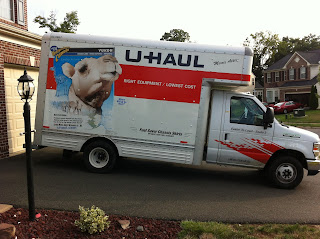
A recent long-distance family member move required that I rent a vehicle larger than the passenger cars that we generally rely on for transportation.  There were a number of considerations: cost, availability, the opportunity to drop off the vehicle on the other end, and the actual size of the vehicle.  I don’t really have much experience with such determinations; honestly, the carrying dimensions of the vehicle were posted, but I had no real idea how to equate what I needed to transport with those criteria.  I knew the individual pieces (certainly the large ones), but as you might imagine, they were of various shapes, sizes and weights, and worse, what needed to be carried was in multiple locations, which made it even more difficult to make a proper estimation. That said, I made my best guess – chose one that seemed big enough to handle the load but that was still small enough for me to handle comfortably – reserved the vehicle and waited for the pickup day to arri...

The Bigger Picture

Image
Over the weekend, my daughter shared with us an insurance quote she’d received.  It had been a while since I had focused on such things, but I was struck first by how much it was.  It was for insurance in a different state, so we worked through the particulars, trying to be certain that we understood what was covered, matched that against her needs.  Ultimately, while much of the quote made sense, there were a couple of items that seemed too high. As we probed those items, my daughter explained that the agent had made an effort to match those levels against her current coverage.  A logical enough inquiry and starting point, but one that (apparently) failed to take into account that her current coverage – as part of our family policy – would be quite different from what she needed on her own.  The agent got an accurate response to the question he asked – but it wasn’t the right question. Individual Retirement Accounts, or IRAs, hold more than 25 percent of a...

"Upside" Potential

Image
I once spent a very uncomfortable period of time stuck in one of those carnival rides that, for brief periods of time, spins riders in a circle as the cab you are in also twirls. As uncomfortable as the ride was, the “stuck” part came while my cab was high in the air—and turned upside down. In no time at all, it was obvious that this extended “upside down” state wasn’t contemplated by those who designed the seating compartment (nor, apparently, had they considered that my compartment “mate” would find it exciting to rock our stuck cab during our brief “internment”). One of the comments you hear from time to time is that the tax incentives for 401(k)s are “upside down,” that they go primarily to those at higher income levels, those who perhaps don’t need the encouragement to save. And from a pure financial economics perspective, those who pay taxes at higher rates might reasonably be seen as receiving a greater benefit from the deferral of those taxes. Indeed, if those “upside-down i...

Foregone “Conclusions”

Image
Behavioral finance drives much of the discussion around retirement plan design innovations these days, for the very simple reason that it seems to help explain what might otherwise be viewed as irrational behaviors. For example, human beings are prone to something that behaviorists call “confirmation bias,” a tendency to favor information that confirms what we already believe. While doing so generally contributes to quicker assessments of information, there are some obvious shortcomings to that approach in terms of critically evaluating new information, particularly information that contradicts what we have already chosen (rightly or wrongly) to accept as reality. Last month EBRI published an analysis of a direct comparison of the likely benefits under specific types of 401(k) plans and defined benefit (DB) pension plans.(1) As anyone who has worked with employment-based retirement plans knows, individual participant outcomes can vary widely based on a complex combination of decisio...

Cost Conscience

Image
In about a month my eldest will be setting up a new home in a different state. It won’t be her first time living in another state, and it won’t be her first apartment. It will, however, be her first apartment as an entrant into the full-time career workforce, and so the criteria—and budget—are quite different than our past experience(s). And while she’s done a great job of constructing a budget (including savings), I can’t help but notice that she also spends “her” money a little differently than when Dad was footing the bill. My daughter’s spending inclinations aren’t unusual, of course. As parents we tried to give our kids a sense of the cost of things, certainly as they grew older. There were, however, plenty of times over the years we didn’t share that information, either because it wasn’t important, or, in some cases, because we didn’t want them to make a decision based solely on price. There’s a similar logic afoot with consumer-driven health plans (CDHPs). Advocates of these...

"Game" Changers

Image
Major League Baseball recently showcased its best and most popular in the “Midsummer Classic,” better known as the All-Star Game. Purists can (and have) taken issue with the involvement of the fan vote, the intermittence of the designated hitter rule, and the impact that this contest can eventually have on the home field advantage in the World Series. Still, even casual fans of the game can relish the opportunity to see so many great players together on the field for one special night (those who don’t care about baseball can perhaps relish the fact that for a couple of days, there won’t be any baseball games or scores with which to contend). It has been my good fortune to have had the opportunity to spend my entire career working with employee benefits, in a widely varied range of capacities. It has also been my great pleasure over those years to meet, and in some cases, work directly with, some truly talented people—who care deeply, passionately, about helping others enjoy bette...

"Better" Business

Image
It has become something of a truism in our industry that defined benefit plans are “better” than defined contribution plans. We’re told that returns are higher(1) and fees lower in the former, that employees are better served by having the investment decisions made by professionals, and that many individuals don’t save enough on their own to provide the level of retirement income that they could expect from a defined benefit pension plan. Even the recent (arguably positive) changes in defined contribution design—automatic enrollment, qualified default investment alternatives, and the expanding availability of retirement income options(2)—are often said to represent the “DB-ification” of DC plans. However, a recent analysis by EBRI reveals that DB is not always “better,” at least not defined as providing financial resources in retirement. In fact, if historical rates of return are assumed, as well as annuity purchase prices reflecting average bond rates over the last 27 years, the me...

Rates of "Return"

Image
Having just concluded a long driving trip, I was reminded again just how helpful the technology under the hood of today’s automobiles can be: the warning lights when you’ve still got enough gas left to find a gas station, the low tire pressure light that tells you of a slow leak before you have a flat tire, the binging that lets you know you’ve left your headlights on (again), and my personal favorite, the klaxon-like bell that alerts you that your parking brake is still engaged (since that red “brake” light on the dashboard clearly wasn’t sufficient notice). Before such warning signs were standard features, I’ve had the decidedly unpleasant experience of running out of gas in the middle of nowhere, finding myself driving on (two) flat tires, and—many years ago—I’m pretty sure I was responsible for ruining the brakes on my Dad’s car simply because I didn’t realize that the smell of burning rubber was coming from the car I was driving. For some time now, the Federal Reserve has held...

Balancing "Acts?"

Image
Last week we looked at how the trends in employment-based retirement plans and employment-based health plans seem to be heading in opposite directions: fewer choices for workers to make in the former, more in the latter (see Consumer “Driven,” online here.  Recent EBRI research suggests a potential divergence in other areas as well. According to the EBRI/MGA Consumer Engagement in Health Care Survey, 26–40 percent of respondents reported some type of access-to-health-care issue for either themselves or family members last year. “Access” in this case refers not to availability, per se, but is broadly defined as not filling prescriptions due to cost, skipping doses to make medication last longer, or delaying or avoiding getting health care due to cost. Not surprisingly, access is more of a problem among those with lower incomes, who appear to be forgoing spending on health care. In fact, regardless of health plan type, individuals in households with less than $50,000 in annual ...