Posts

Regret Able?

Image
A new survey once again highlighted a consistent regret among American workers.  According to the survey by American Century Investments, they wish they had saved more for retirement.  Now, only about a third shared that regret—but it was more than twice the number that had regrets about career, personal relationships, not doing enough to enjoy life—not to mention “not being a better person overall.” [i] Now, we all have regrets about certain life decisions. There are regrets about that “Reply All” email that was perhaps a little  too  honest, the hours spent at work at the expense of family, perhaps the  cessation  of piano lessons, and even a (too) sedentary lifestyle and bad diet. Some we regret immediately—while some come only after the passage of time. Some we learn from—and vow never to repeat. And some—unfortunately—come too late to do anything but live with the consequences. And then there are those regrets—that could be remedied—but a...
The "Magic" of Compounding

Image
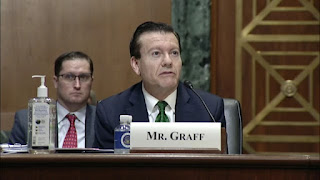
 Some numbers were put in front of the Senate Finance Committee last week—numbers that even the chairman of that powerful body called “jaw-dropping.” The numbers were 51 million and $6.2 trillion—the former the potential number of new retirement savers, the latter a separate projection of the potential new retirement savings (over a 10-year period) that could result if two pieces of existing retirement legislation were implemented, specifically the combination of some key provisions of the Automatic IRA Act and the Encouraging Americans to Save Act. Those projections—presented in  testimony  by American Retirement Association CEO Brian Graff—were the work (and rework) of many late (and early) hours by a number of individuals over a period of months. Key Assumptions  Now, predicting the behavior of human beings decades into the future may seem like the stuff of science fiction, but it can be parameterized. However, the key to a proje...

"Certain" Circumstances

Image
My wife and I recently celebrated our wedding anniversary—it was a “big” one, one of those that almost takes your breath away thinking about how rich your life together has been. If someone had asked on my wedding day if I thought I’d still be alive and married this many years hence, I’m sure that I would have expressed confidence, likely strong confidence, in both outcomes. However, if someone on that same day had asked me to guess then where I would be living now, what I would be doing for a living, or what my income would be (or need to be)—well, my responses would likely have been much less certain—and trust me, I would have been… wrong. Not that there haven’t been bumps along the road—life is a series of zig-zags, after all—and no matter how carefully you try to plan—well, life is what happens to you while you’re making other plans, right? There was the wedding limo with faulty air conditioning on the hottest July day in history, the flat tire in the middle of nowh...

Where’s Waldo? (and Mary…and Joe…and Pat)

Image
Every plan has participants—and, sooner or later, will therefore have “ex” participants—and sometimes those participants go…missing. And that can be a real problem for retirement plan fiduciaries. While most are likely aware of the fiduciary obligation to keep accurate records, many are less aware that there is also an obligation to take “appropriate steps” to ensure that the participants and beneficiaries are paid their full benefits when due. But what are the “appropriate steps”? Why It Matters This is a growing concern of regulators; in fact, (now former) Principal Deputy Assistant Secretary of Labor for the Employee Benefits Security Administration Jeanne Klinefelter Wilson has noted that, “In fiscal year 2020 alone, EBSA’s investigators helped missing and nonresponsive participants recover benefits with a present value in excess of $1.4 billion.” The good news is, the Labor Department has published some guidance on the subject—in fact, it’s a triple dose of g...

‘Hacking’ Stances

Image
A couple of Saturdays back I discovered that one of my online accounts had been “hacked.”  The good news is that I “discovered” this via transaction emails confirming what appeared to be purchases—a half dozen of them… for various, small-ish (though not small) amounts… all about 4:00 a.m. on a Saturday morning. And trust me, while the pandemic has certainly fueled my online purchases, both the number and the timing were  not  normal behaviors (nor was the Chinese text in those emails). The even better news was that I was able to flag those transactions via the provider—and via my credit card company— almost  immediately (apparently the foreign hackers and I were the only ones awake at that hour). Even though there was no damage done by this incursion (aside from some temporary heartburn), it brought home to me again the importance of protecting  all  of my online accounts. Like many, perhaps most, of you, I have long found managing the sheer v...

The "End" in Mind

Image
I was discussing the subject of retirement over the long holiday weekend with family.  There was a lot of talk about Social Security (or the looming lack thereof), the impact(s) of inflation, and how the markets (stock and housing) had boosted prospects, but ultimately decided we weren’t sure when that would happen, we weren’t even positive that it  would  happen (the so-called “ great resignation ” notwithstanding), or if it might consist of a gradual slowdown/pullback. Moreover, we really didn’t know what “it” would be like if and when it did happen, or where we might be living even if and when. Finally—it had been a pretty hectic week, after all—I somewhat playfully suggested that the best definition of retirement would be the absence of time-critical deadlines and Zoom meetings. Ah, now  that’s  something to look forward to! However, and as those who are already ensconced there can attest, retirement has its own set of pressures, and they go wel...

History’s Lessons for Plan Fiduciaries

Image
The study of history is a passion of mine, and while it seems a bit trite, the old adage that those who don’t remember the past are doomed to repeat it seems more apropos by the day. Regardless, I never cease to be touched by the experience of walking the grounds where famous individuals or great historic events took place.  A few years back I had the opportunity to be in Philadelphia for a few days beyond the customary speaking event “fly-by,” and was thrilled to be able to tour Independence Hall where, in 1776, the Continental Congress crafted what we will shortly celebrate as the Declaration of Independence. Those who think that partisan divides, cynical self-interest, and political acrimony are recent “innovations” in government would perhaps be shocked to learn that regional tensions have always been part-and-parcel of our republic… even before it was a republic.  The room was smaller than I had imagined—and I couldn’t imagine what it must have felt like o...

Does Financial Wellness (Still) Need an ROI?

Image
 The ROI for financial wellness has always been elusive—but a new survey suggests that it might not matter. Asked “Why are you creating or expanding your financial wellbeing program?”, respondents to Alight’s 17th edition of Hot Topics in Retirement & Financial Wellbeing  said that not only was financial wellness their top priority, more than half (56%) said that the importance of financial wellbeing has increased at their organization over the last two years, and none said the focused has decreased.  But—asked why they were creating or expanding their financial wellbeing program, the respondents largely ignored the traditional ROI metrics. The most common answer was nothing more concrete than to “enhance the overall employee experience (85%), and right behind that was the simple proposition that “we believe it is the right thing to do (84%). Even HR’s traditional favorite—“increase employee engagement”—at 72%—was well behind those arguably subjective gau...

Things You Don’t Learn in School

Image
 Life has many lessons to teach us, some more painful than others—and some we’d just as soon be spared. But the graduates of 2021—well, they’ve been through a lot, arguably more than most—but with any luck at all, the days and years ahead will be brighter.  Regardless, if you have a graduate—or if you  are  a graduate, here are some insights I’ve picked up along the way…    ASAP is never as soon as people think. Even those who work for themselves have bosses (they’re called “clients”). Emails (generally) don’t have to be answered right this minute. Bad news doesn’t improve with age. Your first job can be like your first love—it will either bring a smile for years to come—or it can break your heart. And sometimes both.   Don’t expect your job to respect personal boundaries without some “help.” Don’t be afraid to pick up the phone. If the only time your boss hears from you is when there’s trouble, don’t be surprised if the...

Second Opinion(s) on Health Cost ‘Coverage’

Image
As if retirement savers didn’t have enough to worry about, last week a report reminded us how much money they’re going to need in retirement… just for health care. In fact, Fidelity Investments’ 20th annual Retiree Health Care Cost Estimate  claims that a 65-year-old, opposite-gender couple [i]  retiring this year can expect to spend a whopping $300,000 in health care and medical expenses throughout retirement—an 88% increase since 2002.  This year’s estimate is a new high, and even if it’s up just 1.7% from 2020 ($295,000), it’s 30% higher than 10 years ago when the amount was $230,000. What Are the Odds? Now, if you’re finding all that a bit depressing, you might turn instead to the work that the Employee Benefit Research Institute (EBRI) did a year ago , when the group examined those needs. However, they found that the overall projected savings needed to have a 90% chance of having enough money to pay for premiums, Part B deductibles  and  ...

Guidance ‘Counseling’

Image
 When the Labor Department issued last month what it called “new guidance” that it further described as “the first time the department’s Employee Benefits Security Administration has issued cybersecurity guidance”—well, I, for one, was expecting… guidance.  However, rather than an advisory opinion, information letter or even a field assistance bulletin, it turned out instead to be three documents outlining what were termed “ best practices  for maintaining cybersecurity.” The issue of cybersecurity has, of course, loomed large in recent months, reportedly emerging as a focus in Labor Department audits  and as a point of contention [i]  in participant lawsuits. In fact, even the preamble to the final e-delivery regulations  stated a year ago that “…the Department expects that many plan administrators, or their service or investment providers, already have secure systems in place to protect covered individuals’ personal information.”  ...

The Problem(s) with Financial ‘Literacy’

Image
April is, of course, National Financial Literacy Month—and for as long as I can remember, the retirement industry has been talking about the need for some kind of personal finance education in public schools—there’s just one problem. First off, there actually  are  such programs already in existence at the moment. Half the country (25 states) now requires  high school students to take a course in economics, and 21 states now require high school students to take a course in personal finance. Granted, they may still be too well dispersed to show up on your normal “radar”—but they’re growing in number and dispersion.  Those efforts [i]  notwithstanding—and while there’s some anecdotal evidence that this has helped (some) with regard to better decisions with regard to college financing—I’ve little sense that it’s moved the needle much with regard to participant knowledge or financial decision making (feel free to disagree in the comments below, if you...

Does Health Care Need a Behavioral Finance ‘Fix’?

Image
An important decision, made in minutes. No, that’s not retirement plan savings—though various consumer surveys have suggested that many spend more time mapping out their annual vacations than how they’ll fund their retirement needs.  Rather, that’s how a new whitepaper  by Voya’s Thought Leadership Council and SAVVI Financial LLC characterizes the 17 minutes that the average employee spends enrolling in benefits—including health plan selection, voluntary benefits and more.  Now, in fairness, health care plan choices are, in my experience, less complicated that those associated with retirement. Not that they aren’t complicated, mind you—and there’s certainly concern associated with that choice (and “do overs” are hard to come by). But I suspect for most they are really “only” choosing between two, or at most three, different options—essentially packages carefully constructed by their HR groups (likely with the assistance of a benefits broker).  When ...

Could the Super Bowl Batter or Burnish Your 401(k)?

Image
Will your 401(k) be bumped up by a Buccaneers victory—or chipped by the Chiefs? That’s what adherents of the so-called Super Bowl Theory would likely conclude, after all. The theory is that when a team from the old National Football League wins the Super Bowl, the S&P 500 will rise, and when a team from the old American Football League prevails, stock prices will fall. It’s a “theory” that has been found to be correct nearly 80% of the time—for 40 of the 54 Super Bowls, in fact.  Not that it hasn’t had its shortcomings. One need look back no further than last year’s win by the AFC’s Kansas City Chiefs (yes,  these  Kansas City Chiefs) over the NFC Champion San Francisco 49ers to refute the applicability (or did your 401(k) miss that 18.4% rise in the S&P 500?). Or how about the year before that when the AFC’s New England Patriots (who once were the AFL’s Boston Patriots) bested the NFC champion Los Angeles Rams (the S&P 500 was up more...